Category Health/Medical

Patient-specific Cells Generated from Thymus Organoids

Figure thumbnail gr1
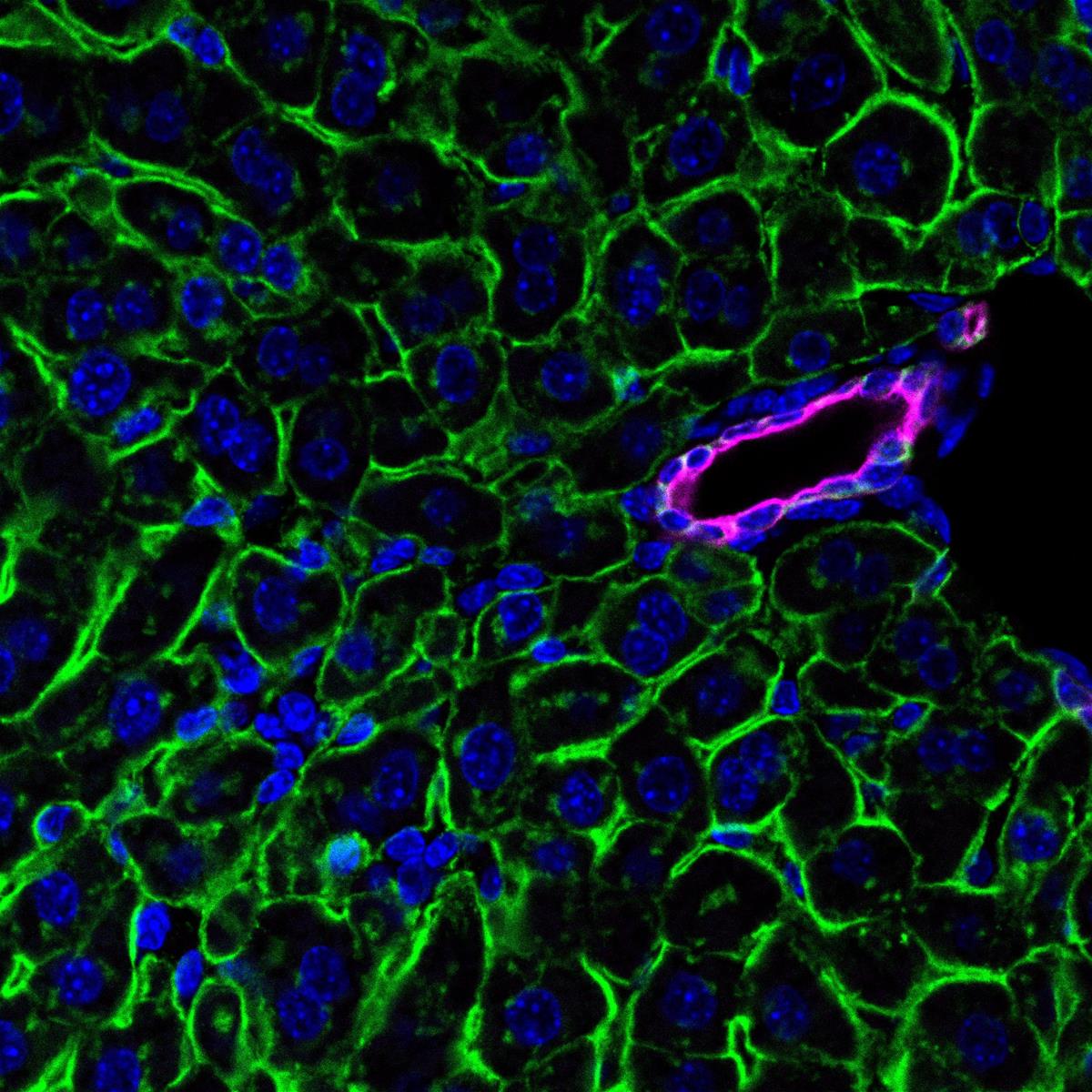
Generation of hPSC-derived TECs in vitro
(A) Schematic of TEP-only sTOs.
(B) Representative IF images of KRT8 (green) and KRT5 (magenta) in day 16–22 TEPs and week 2 TEP-only sTOs (TEPs, n = 2 indepdendent experiment (ind. exp.), 2 hPSC lines; sTOs, n = 3 ind. exp., 2 hPSC lines).
(C–H) FC plots and quantification of EPCAM/HLA-DR (C and D), EPCAM/CD205 (E and F), and EPCAM/GFP (G and H) expression in day 16–22 TEPs and week 2 TEP-only sTOs.
(I) tSNE plots of EPCAM, HLA-DR, CD205, and GFP expression in 16–22 TEPs and week 2 TEP-only sTOs, n = 3 ind. exp., 1 hPSC line.
Plots show percentage of the mean; data are shown as mean Â±
± SEM.

Researchers have used pluripotent stem cells to make thymus organoids that support the development of patient-specific T cells, researchers report Marc...

Read More

A Plant-based Compound that Inhibits Reactivation of HIV viral Reservoir, giving the Immune System a break

Researchers identify a plant-based compound that inhibits reactivation of the HIV viral reservoir, giving the immune system a br
Overview of HIV inhibitor screening strategy and identification of (–)-hopeaphenol. (A) Representative flow cytometry examples of HIV-GFP reporter expression in unstimulated live J-Lat 9.2 cells treated with 0.1% DMSO control (left), live cells stimulated to express HIV-GFP by 0.1 μg/mL of the control latency-reversing agent PMA (center), and suppression of PMA-induced virus expression in live cells by 10 μM hopeaphenol (right); (B) chemical structure of (–)-hopeaphenol; (C) effects of hopeaphenol on PMA-induced HIV production in J-Lat 9.2 cells. Blue dotted line denotes half-maximal inhibition. In panel C, results denote the mean ± SD from three independent experiments. Credit: Antimicrobial Agents and Chemotherapy (2023). DOI: 10.1128/aac.01600-22

As of 2022, approximately...

Read More

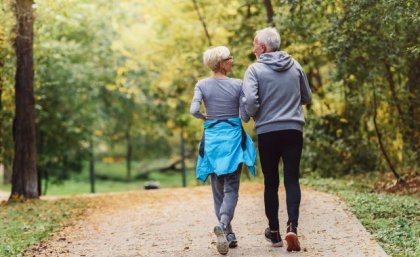
How Fit is your Gut Microbiome? New research shows duration and not intensity of exercise is most important

How fit is your gut microbiome?
Riley Brandt, University of Calgary

It is well known that the microbiomes of athletes are different from of those who are sedentary. To investigate how exercise shapes the gut microbiota in non-athletes, the study assessed information on the type, time and intensity of exercise in relation to microbiomes in a large cohort of middle-aged adults.

Exercise has many benefits – strengthening muscles and bones, preventing disease and extending lifespan. It is also known to change the composition and activity of the trillions of microbes in our guts known as the microbiome.

It is well known that the microbiomes of athletes are different from those who are sedentary. This is not overly surprising according to the author and PhD student Shrushti Shah...

Read More

Potential Relief for Osteoarthritis moves to Clinical Trial after Animal Studies

The image on the left shows damaged osteoarthritic cartilage without treatment in animal studies, and the image on the right shows regeneration of articular cartilage after knee injection of the new drug R805/CX-011. (Image: Evseenko Lab/USC Stem Cell)

A team of researchers at the Keck School of Medicine of USC have found a drug with the potential for curbing painful hyperinflammation from osteoarthritis, according to results of an animal study.

The findings, published March 22nd in Science Translational Medicine, indicate that a drug compound, R805/CX-011, may modulate an important cell receptor in the body’s immune system, GP130, that signals when antibodies should attack a virus or infection...

Read More