Category Health/Medical

Digital Twin Opens Way to Effective Treatment of Inflammatory Diseases

A vision of how digital twins can be used to tailor drugs: (A) Patients with different immune diseases. (B) Computers construct (C) digital twins of each patient’s disease mechanisms. These interact in molecular programmes, controlled by (D) switch proteins, which are measured in blood or tissue to (E) find the dominant protein(s) at which to target therapy. Illustration: The research group.

Inflammatory diseases like rheumatoid arthritis have complex disease mechanisms that can differ from patient to patient with the same diagnosis. This means that currently available drugs have little effect on many patients. Using so-called digital twins, researchers at Karolinska Institutet have now obtained a deeper understanding of the “off and on” proteins that control these diseases...

Read More

Study finds Common Artificial Sweetener linked to Higher Rates of Heart Attack and Stroke

New Cleveland Clinic research showed that erythritol, a popular artificial sweetener, is associated with an increased risk of heart attack and stroke. Findings were published today in Nature Medicine.

Researchers studied more than 4,000 people in the U.S. and Europe and found those with higher blood erythritol levels were at elevated risk of experiencing a major adverse cardiac event such as heart attack, stroke or death. They also examined the effects of adding erythritol to either whole blood or isolated platelets. Results revealed that erythritol made platelets easier to activate and form a clot. Pre-clinical studies confirmed ingestion of erythritol heightened clot formation.

“Sweeteners like erythritol, have rapidly increased in popularity in recent years but there needs to...

Read More

Researchers use Artificial Intelligence to Predict Cardiovascular Disease

Researchers use artificial intelligence to predict cardiovascular disease
Study design, workflow, and bioinformatics. Overall research methodology includes, (1) clinical data analysis; (2) cohort building; (3) cardiovascular disease-based sample collection; (4) sample management and tracking; (5) RNA extraction, and high-throughput sequencing; (6) pipeline and bioinformatics application development for RNA-seq data processing, quality checking, gene-disease annotation, and phenotyping; and (7) implementation of artificial intelligence and machine learning techniques for predictive analysis. Credit: Genomics (2023). DOI: 10.1016/j.ygeno.2023.110584

Researchers may be able to predict cardiovascular disease — such as arterial fibrillation and heart failure — in patients by using artificial intelligence (AI) to examine the genes in their DNA, according to a new ...

Read More

Impact of Key Alzheimer’s Protein depends on type of Brain Cell in which it is produced

Scientists Yadong Huang and Nicole Koutsodendris looking at a monitor in the lab at Gladstone Institutes
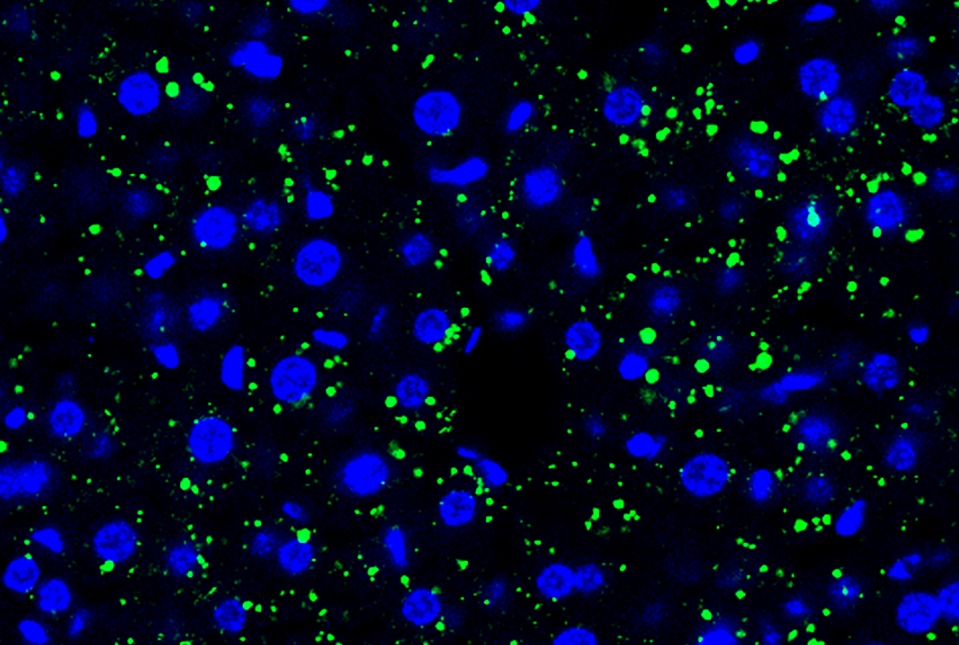
Yadong Huang and his team demonstrated in mice that the ApoE4 protein from neurons plays a much bigger disease-driving role in Alzheimer’s than previously thought.

Of all the known genetic risk factors for late-onset Alzheimer’s disease, the strongest is a gene for the protein called ApoE4. People with one copy of this gene are 3.5 times more likely, on average, to develop Alzheimer’s than others, and those with two copies face a 12-fold increased risk. However, exactly how ApoE4 boosts the risk of Alzheimer’s remains unclear.

Multiple types of cells in the brain make ApoE4—some of it is produced by neurons, but other brain cells called glia make it in higher quantities. For that reason, most prior research on this protein has focused on ApoE4 from glia.

Now, researchers at G...

Read More