Research published Wednesday from University of California, Berkeley, sleep scientists suggests that deep sleep might help alleviate some of dementia’s most devastating outcomes. (Graphic by Neil Freese. Unsplash images courtesy Peyman Farmani, Nigel Tadyanehondo, Zoe Gayah Jonker and Yan Berthemy)
Deep sleep, also known as non-REM slow-wave sleep, can act as a ‘cognitive reserve factor’ that may increase resilience against brain protein beta-amyloid that is linked to memory loss caused by dementia.
Disrupted sleep has previously been associated with faster accumulation of beta-amyloid protein in the brain...
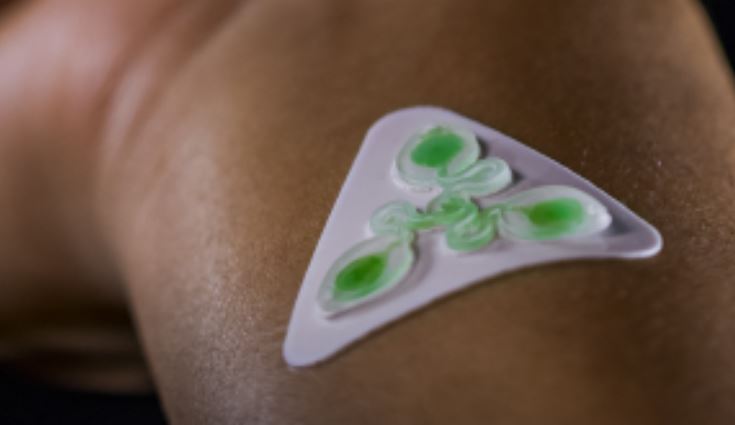
Sweat is more than just a sign of a good workout. It holds vital information about our health, providing clues to dehydration, fatigue, blood sugar levels and even serious conditions such as cystic fibrosis, diabetes and heart failure. Researchers at the University of Hawaii at Manoa College of Engineering have taken a giant leap forward in sweat analysis with an innovative 3D-printed wearable sweat sensor called the “sweatainer.”
Harnessing the power of additive manufacturing (3D-printing), the researchers have developed a new type of wearable sweat sensor that expands the capability of wearable sweat devices. The sweatainer is a small, wearable device similar in size to a child’s sticker that collects and analyzes sweat, offering a glimpse into the future of health monitoring...
Neuropathic pain – abnormal hypersensitivity to stimuli – is associated with impaired quality of life and is often poorly managed. Estimates suggest that 3 percent to 17 percent of adults suffer from neuropathic pain, including a quarter of people with diabetes and a third of people with HIV.
In a paper published in the journal Neuron, researchers report that a mechanism involving the enzyme Tiam1 in dorsal horn excitatory neurons of the spinal cord both initiates and maintains neuropathic pain. Moreover, they show that targeting spinal Tiam1 with anti-sense oligonucleotides injected into the cerebrospinal fluid effectively alleviated neuropathic pain hypersensitivity.
“Thus, our study has uncovered a pathophysiological mechanism that initiates, ...
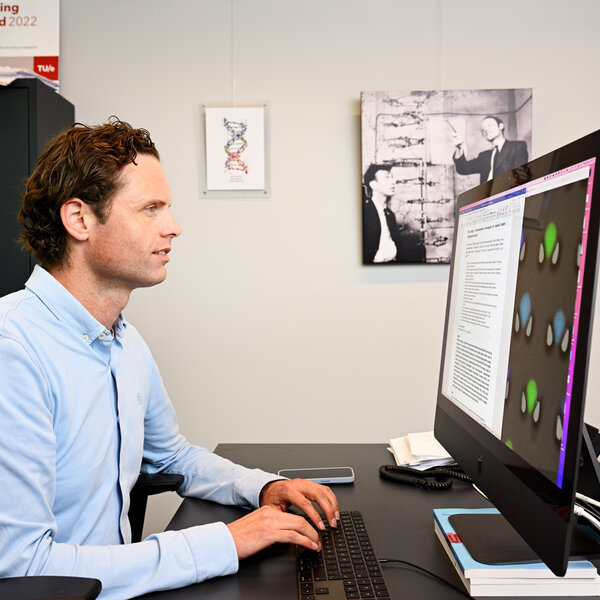
DNA archival storage within reach thanks to new PCR technique. Storing data in DNA sounds like science fiction, yet it lies in the near future. Professor Tom de Greef expects the first DNA data center to be up and running within five to ten years. Data won’t be stored as zeros and ones in a hard drive but in the base pairs that make up DNA: AT and CG. Such a data center would take the form of a lab, many times smaller than the ones today. De Greef can already picture it all. In one part of the building, new files will be encoded via DNA synthesis. Another part will contain large fields of capsules, each capsule packed with a file. A robotic arm will remove a capsule, read its contents and place it back.






Recent Comments