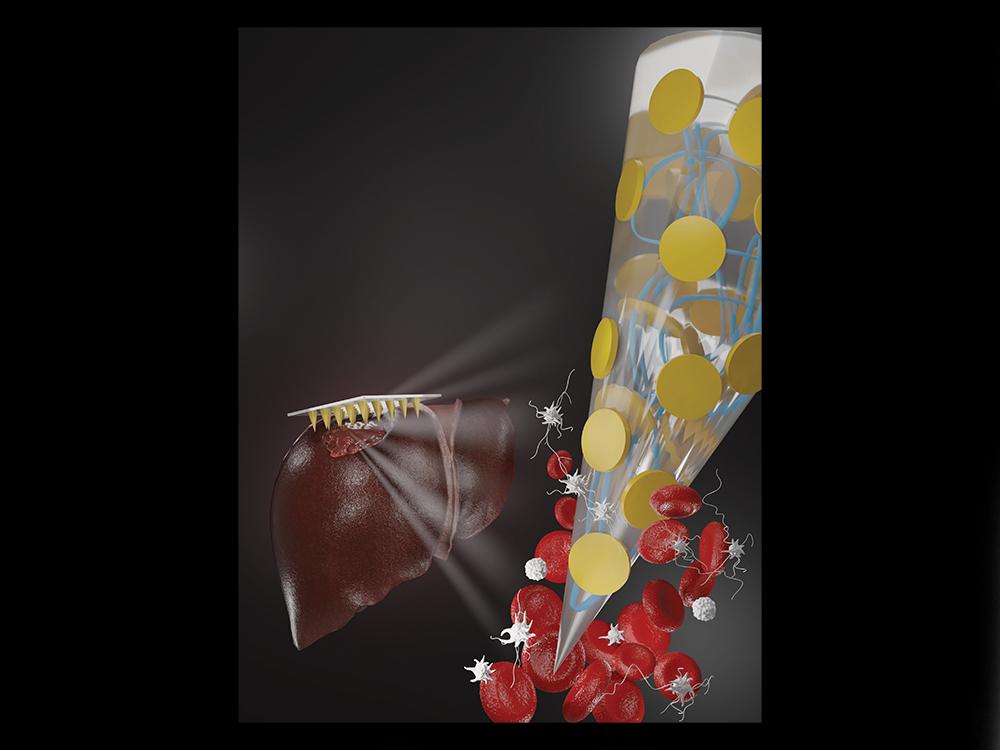
Hemostatic microneedle technology can be applied like a typical adhesive bandage to quickly stop bleeding. The biocompatible and biodegradable microneedle arrays (MNAs) on the patch increase its surface contact with blood to accelerate the clotting process and also increase the adhesive properties of the patch via mechanical interlocking to promote wound closure. Credit: Designed by Amir Sheikhi and Reihaneh Haghniaz/Executed by Natan Barros. All Rights Reserved.
A soldier suffers a serious gunshot wound on a remote battlefield or a machinist has a work accident and gets stuck in traffic on the way to the hospital. Secondary, uncontrolled bleeding from traumatic injury is the leading cause of death of Americans from ages one to 46.
Amir Sheikhi, assistant professor of chemical engin...
Published in Aging Cell, the findings show that animals treated with rilmenidine, currently used to treat hypertension, at young and older ages increases lifespan and improves health markers, mimicking the effects of caloric restriction.
They also demonstrate that the healthspan and lifespan benefits of rilmenidine treatment in the roundworm C. elegans are mediated by the I1-imidazoline receptor nish-1, identifying this receptor as a potential longevity target.
Unlike other drugs previously studied for this purpose by the researchers, the widely-prescribed, oral antihypertensive rilmenidine has potential for future translatability to humans as side-effects are rare and non-severe.
To date, a caloric restriction diet has been considered the most robust anti-aging intervention,...
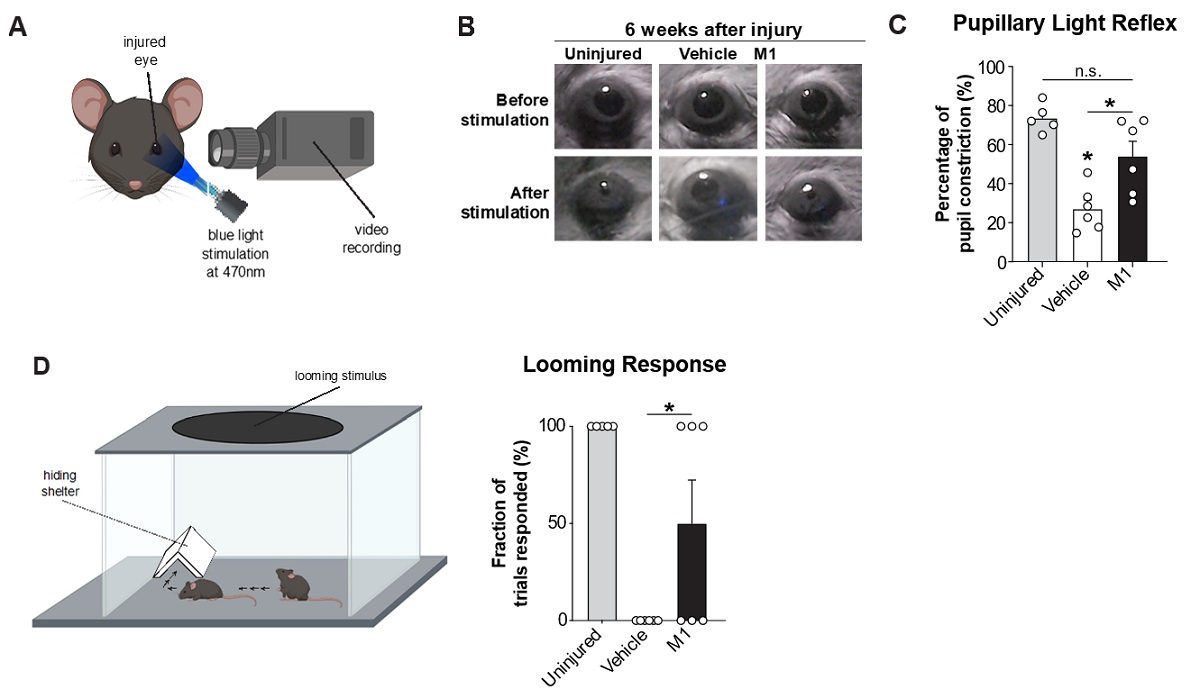
Traumatic injury to the brain, spinal cord and optic nerve in the central nervous system are the leading cause of disability and the second leading cause of d...

Medical science has not yet been able to explain why the Epstein-Barr virus triggers infectious mononucleosis (IM) in some people with initial infections and not in others. But now, a research team led by Elisabeth Puchhammer-Stöckl, head of the Center for Virology at MedUni Vienna, has identified a specific immune response to the virus as the cause, and as a potential target for the development of vaccines. The findings were recently published in the American Society of Hematology’s journal Blood.
Proliferation of the Epstein-Barr virus (EBV) in humans is normally combated by T cells as part of an antiviral immune response. By means of this important mechanism, certain EBV components (peptides) are presented to the T cells by a specific1LA-E molecules on EBV-infected cells.






Recent Comments