Category Health/Medical

New Vaccine Type Overcomes Cancerous Tumor Defenses

vaccine
Credit: Pixabay/CC0 Public Domain

A team of researchers affiliated with multiple institutions in the U.S. and one in Japan has developed a new type of vaccine that helps the immune system destroy cancerous tumors by overcoming their defense system. In their paper published in the journal Nature, the group describes the new vaccine and its effects in mouse and rhesus macaque models.

Until recently, the only tools available to doctors treating cancer patients have been chemotherapy, radiation treatment and surgery. More recently, medical researchers have been exploring vaccines in the fight against cancer—the development of a vaccine against HPV-related diseases, for example, has reduced the risks of cervical and other types of cancers...

Read More

Researchers find New Mechanism to turn on Cancer-killing T cells

Over the past decade, researchers have made great strides in the development and administration of cancer immunotherapies, which use the body’s own immune system to treat disease. However, the therapies don’t work for every person or with every type of cancer, and gaps in our understanding of exactly how the body mounts an anti-cancer immune response has slowed progress toward making them universally effective.

In a new study, researchers at the University of Chicago Medicine Comprehensive Cancer Center and the University of Amsterdam have brought insight into one crucial step in the anti-cancer immune response process: T cell priming.

Previous studies implied that a single mechanism—antigen cross presentation—is responsible for priming T cells, the immune system’s disease fight...

Read More

Type 2 Diabetes Accelerates Brain Aging and Cognitive Decline

Aging effects on the brain, further exacerbated in type 2 diabetes. Image credit: Lilianne Mujica-Parodi (CC BY 4.0)

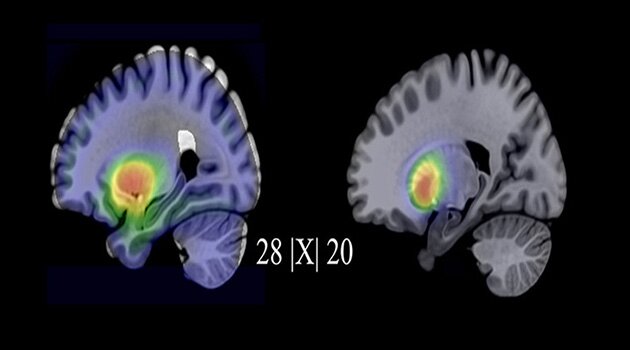
Scientists have demonstrated that normal brain aging is accelerated by approximately 26% in people with progressive type 2 diabetes compared with individuals without the disease, reports a study published today in eLife.

The authors evaluated the relationship between typical brain aging and that seen in type 2 diabetes, and observed that type 2 diabetes follows a similar pattern of neurodegeneration as aging, but which progresses faster. One important implication of this finding is that even typical brain aging may reflect changes in the brain’s regulation of glucose by insulin.

The results further suggest that by the time type 2 diabetes is formally diagnosed, the...

Read More

Significant Energy Savings using Neuromorphic Hardware

One of Intel’s Nahuku boards, each of which contains eight to 32 Intel Loihi neuromorphic chips. © Tim Herman/Intel Corporation

For the first time TU Graz’s Institute of Theoretical Computer Science and Intel Labs demonstrated experimentally that a large neural network can process sequences such as sentences while consuming 4X – 16X less energy while running on neuromorphic hardware than non-neuromorphic hardware. The new research based on Intel Labs’ Loihi neuromorphic research chip that draws on insights from neuroscience to create chips that function similar to those in the biological brain.

The research was funded by The Human Brain Project (HBP), one of the largest research projects in the world with more than 500 scientists and engineers across Europe studying the human bra...

Read More