
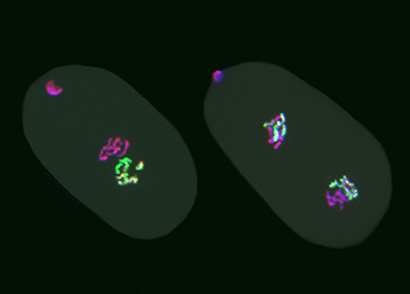
Without altering the genetic code in the DNA, epigenetic modifications can change how genes are expressed, affecting an organism’s health and development...
Read More

September 28, 2022,
 Health/Medical, Biology/Biotechnology
Without altering the genetic code in the DNA, epigenetic modifications can change how genes are expressed, affecting an organism’s health and development...
Read More
September 27, 2022,
Health/Medical, Biology/Biotechnology

Because three percent of the world population possesses these gene variants, the findings may have implications for hundreds of millions of individuals around the world
It may be the most baffling quirk of COVID: What manifests as minor, flu-like symptoms in some individuals spirals into severe disease, disability, and even death in others. A new paper published in Nature may explain the genetic underpinnings of this dichotomy.
The researchers demonstrated that mice with gene variants previously linked to Alzheimer’s disease were at greater risk of dying when infected with COVID. And a retrospective analysis suggests that patients with those same gene variants were more likely to have died of COVID throughout the pandemic...
Read More
September 23, 2022,
Biology/Biotechnology, Health/Medical

It’s long been recommended as a way of easing eye strain while working at a computer screen. Now the 20-20-20 rule—taking a break of at least 20 seconds, every 20 minutes, to look at least 20 feet away—has been confirmed by scientists at Aston University to help ease some of the symptoms of prolonged computer use.
It’s estimated that at least half of people using computers in their regular work have some form of digital eye strain, resulting in eye surface problems including irritation and dryness, or vision issues such as headaches or blurred vision. Humans normally blink around 15 times each minute. When staring at screens, this number decreases generally to half that rate or less...
Read More
September 21, 2022,
Health/Medical, Biology/Biotechnology

A study suggests that high-fat diets fuel the creation of inflammatory immune cells in the bone marrow of mice. The results may help explain how high-fat diets trigger inflammation, which can contribute to the development of insulin resistance, type 2 diabetes and other complications in individuals with obesity.
An invasion of inflammatory immune cells, called monocytes, into fat tissue is a hallmark of obesity, but what leads to this harmful phenomenon is unclear. Many immune cells, including monocytes, are produced in the bone marrow, which is very sensitive to environmental changes. Scientists have already shown that fat cells in the bone marrow rapidly expand in response to a high-fat diet.
“We wanted to know ...
Read More
Recent Comments