Category Health/Medical

Engineered Nanomaterial Captures Off-Target Cancer Drug to Prevent Tissue Damage

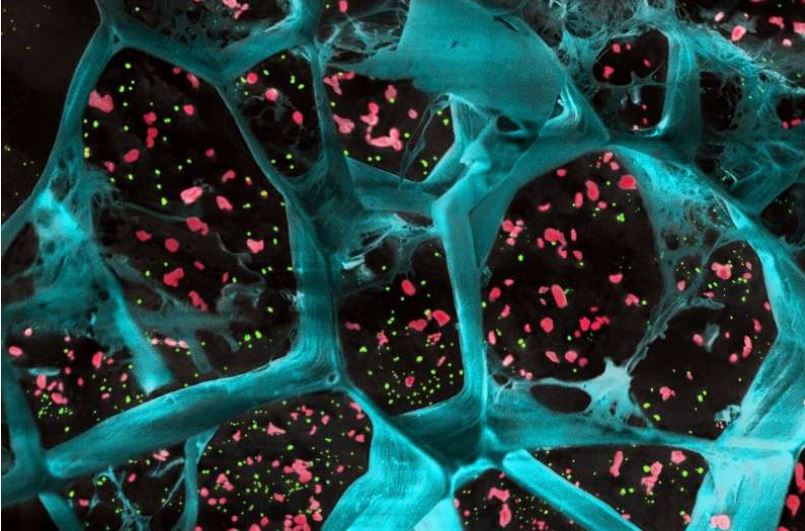
Super-capacity, cellulose-based material may enable high-dose targeted treatments. Standard chemotherapies may efficiently kill cancer cells, but they also pose significant risks to healthy cells, resulting in secondary illness and a diminished quality of life for patients. To prevent the previously unavoidable damage, researchers, led by Penn State, have developed a new class of nanomaterials engineered to capture chemotherapy drugs before they interact with healthy tissue.

“To reduce the off-target effects of cancer drugs during and after localized chemotherapy, eliminating their systemic circulation is necessary,” said principal investigator Amir Sheikhi, assistant professor of chemical engineering and biomedical engineering at Penn State...

Read More

New Route for Regulating Blood Sugar Levels Independent of Insulin

Insulin and FGF1 both regulate blood sugar levels using independent pathways.
Credit: Salk Institute

New molecular pathway controls blood glucose, circumventing insulin resistance. The discovery of insulin 100 years ago opened a door that would lead to life and hope for millions of people with diabetes. Ever since then, insulin, produced in the pancreas, has been considered the primary means of treating conditions characterized by high blood sugar (glucose), such as diabetes. Now, Salk scientists have discovered a second molecule, produced in fat tissue, that, like insulin, also potently and rapidly regulates blood glucose. Their finding could lead to the development of new therapies for treating diabetes, and also lays the foundation for promising new avenues in metabolism research.

...Read More

More Insight into How Vision Works

PSI scientists have shed light on an important component of the eye: a protein in the rod cells of the retina which helps us see in dim light. Acting as an ion channel in the cell membrane, the protein is responsible for relaying the optical signal from the eye to the brain. If a genetic disorder disrupts the molecular function in a person, they will go blind. Scientists have deciphered the protein’s three-dimensional structure, preparing the way for innovative medical treatments. The study is published in the scientific journal Nature Structural & Molecular Biology.

“It’s thanks to the rod cells in our eye that we can observe the stars in the night sky,” explains Jacopo Marino, a biologist with PSI’s Laboratory of Biomolecular Research...

Read More

Neuroprotective Mechanism Altered by Alzheimer’s Disease Risk Genes

Researchers have discovered that gene variants associated with risk of developing Alzheimer’s disease disturb the brain’s natural protective mechanism against the condition.

The brain has a natural protective mechanism against Alzheimer’s disease, and researchers at Baylor College of Medicine, Texas Children’s Hospital and collaborating institutions have discovered that gene variants associated with risk of developing the disease disturb the protective mechanism in ways that can lead to neurodegeneration. The researchers also showed in a fruit fly model of the condition that a chemical known as ABCA1 agonist can restore certain alterations of the brain protective mechanism.

The team reveals evidence supporting reactive oxygen species (ROS), natural byproducts of cellular metabol...

Read More