Category Health/Medical

Using T cells to Target Malignant Brain Tumors

© Adobe Stock

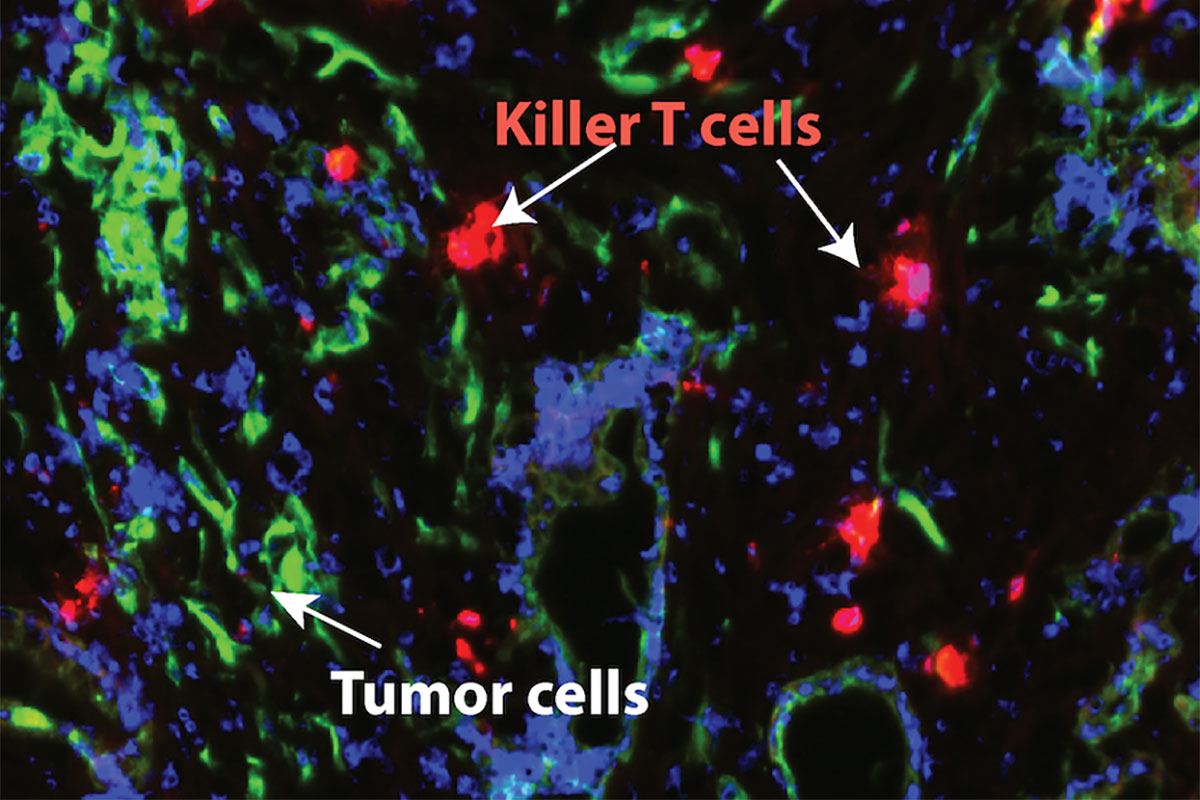
Doctors and scientists from the German Cancer Research Center (DKFZ) and from Heidelberg University’s Medical Faculty Mannheim have successfully tested a neoantigen-specific transgenic immune cell therapy for malignant brain tumors for the first time using an experimental model in mice.

Cellular immunotherapies that specifically target malignant tumors are thought to be a promising approach in cancer medicine. However, a basic requirement for this kind of targeted immunotherapy is to identify target molecules that are found exclusively on the tumor cells and are recognized by the immune system.

Malignant gliomas are incurable brain tumors that spread in the brain and cannot be completely removed by surgery...

Read More

For Stem Cells, Bigger Doesn’t Mean Better

cell
Credit: CC0 Public Domain

MIT biologists have answered an important biological question: Why do cells control their size? Cells of the same type are strikingly uniform in size, while cell size differs between different cell types. This raises the question of whether cell size is important for cellular physiology.

The new study suggests that cellular enlargement drives a decline in function of stem cells. The researchers found that blood stem cells, which are among the smallest cells in the body, lose their ability to perform their normal function — replenishing the body’s blood cells — as they grow larger. However, when the cells were restored to their usual size, they behaved normally again.

The researchers also found that blood stem cells tend to enlarge as they age...

Read More

Compound provides innovative Pain Relief

Compound 194 (left) was developed by researchers to uncouple the interaction between CRMP2 and the enzyme Ubc9, which indirectly regulates the sodium ion channel NaV1.7. A new study showed that the resulting reduction in sodium currents reduced pain. (Image: Samantha Perez-Miller, Aude Chefdeville and Rajesh Khanna)

Researchers targeted a common sodium ion channel to reverse pain, with positive results that could lead to a non-addictive solution to treat pain. Researchers at the University of Arizona Health Sciences are closer to developing a safe and effective non-opioid pain reliever after a study showed that a new compound they created reduces the sensation of pain by regulating a biological channel linked to pain.

Most people experience pain at some point in their lives, and the...

Read More

Seizure Forecasting with Wrist-Worn Devices possible for People with Epilepsy

medical illustration or graphic of a brain having a seizure representing epilepsy

A new study found patterns could be identified in patients who wear a special wristwatch monitoring device for six to 12 months, allowing about 30 minutes of warning before a seizure occurred. This worked well most of the time for five of six patients studied.

Despite medications, surgery and neurostimulation devices, many people with epilepsy continue to have seizures. The unpredictable nature of seizures is severely limiting. If seizures could be reliably forecast, people with epilepsy could alter their activities, take a fast-acting medication or turn up their neurostimulator to prevent a seizure or minimize its effects.

A new study in Scientific Reports by Mayo Clinic researchers and international collaborators found patterns could be identified in patients who wear a specia...

Read More