Category Health/Medical

Study finds unleashing Treg cells may lead to Treatments for Multiple Sclerosis

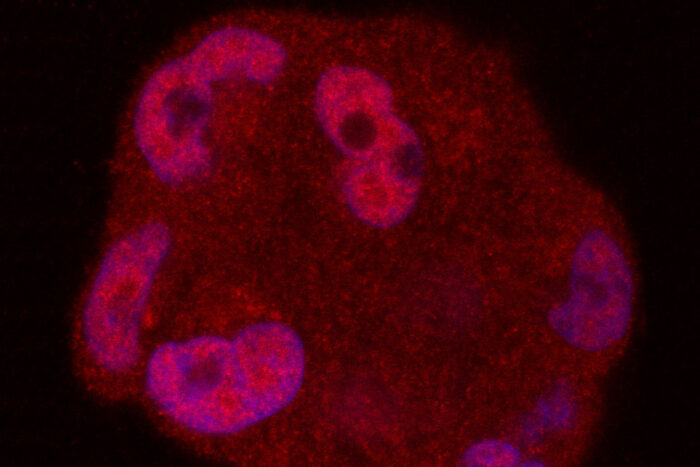
Genetic deletion of Piezo1 in T cells leads to protection in autoimmunity: In the absence of Piezo1, Tregs expand more and, due to their increased numbers, are more effective in containing the damage inflicted by the effector T cells during an autoimmune neuroinflammation. Effector T cell function is not affected in the absence of Piezo1.
CREDIT
UCI School of Medicine

In a new University of California, Irvine-led study, researchers found that a certain protein prevented regulatory T cells (Tregs) from effectively doing their job in controlling the damaging effects of inflammation in a model of multiple sclerosis (MS), a devastating autoimmune disease of the nervous system.

Published this month in Science Advances, the new study illuminates the important role of Piezo1, a specialized p...

Read More

A New Way to Treat Chronic Wounds

A Spartan-led team is developing an inexpensive biopolymer dressing to heal injuries like diabetic foot ulcers that affect millions of patients all over the world.

Tens of millions of patients around the world suffer from persistent and potentially life-threatening wounds. These chronic wounds, which are also a leading cause of amputation, have treatments, but the cost of existing wound dressings can prevent them from reaching people in need.

Now, a Michigan State University researcher is leading an international team of scientists to develop a low-cost, practical biopolymer dressing that helps heal these wounds.

“The existing efficient technologies are far too expensive for most health care systems, greatly limiting their use in a timely manner,” said Morteza Mahmoudi, an as...

Read More

A Noninvasive Test to Detect Cancer Cells and Pinpoint their Location

nanosensors detecting tumor microenvironment
Multimodal nanosensors (1) are engineered to target and respond to hallmarks in the tumor microenvironment. The nanosensors provide both a noninvasive urinary monitoring tool (2) and an on-demand medical imaging agent (3) to localize tumor metastasis and assess response to therapy.
Credits:Image: Liangliang Hao

Most of the tests that doctors use to diagnose cancer—such as mammography, colonoscopy, and CT scans—are based on imaging. More recently, researchers have also developed molecular diagnostics that can detect specific cancer-associated molecules that circulate in bodily fluids like blood or urine.

MIT engineers have now created a new diagnostic nanoparticle that combines both of these features: It can reveal the presence of cancerous proteins through a urine test, and it fu...

Read More

3D ‘Assembloid’ shows how SARS-CoV-2 infects Brain Cells

Figure depicts SARS-CoV-2 spreading through blood vessels (green) to infect pericytes (red), which amplify infection and can spread infection to other cell types in the brain.
CREDIT
UC San Diego Health Sciences

Researchers at University of California San Diego School of Medicine and Rady Children’s Institute for Genomic Medicine have produced a stem cell model that demonstrates a potential route of entry of SARS-CoV-2, the virus that causes COVID-19, into the human brain.

The findings are published in the July 9, 2021 online issue of Nature Medicine.

“Clinical and epidemiological observations suggest that the brain can become involved in SARS-CoV-2 infection,” said senior author Joseph Gleeson, MD, Rady Professor of Neuroscience at UC San Diego School of Medicine and director of n...

Read More