Category Health/Medical

Link found between Gut Microbes and Stroke

Findings lay the groundwork for new stroke treatments, prevention strategies. New findings from Cleveland Clinic researchers show for the first time that the gut microbiome impacts stroke severity and functional impairment following stroke. The results, published in Cell Host & Microbe, lay the groundwork for potential new interventions to help treat or prevent stroke.

The research was led by Weifei Zhu, Ph.D., and Stanley Hazen, M.D., Ph.D., of Cleveland Clinic’s Lerner Research Institute. The study builds on more than a decade of research spearheaded by Dr...

Read More

Convergent Mechanism of Aging discovered

Fig. 3
dhfr-1i affects the methionine cycle and mimics methionine restriction.

Several different causes of ageing have been discovered, but the question remains whether there are common underlying mechanisms that determine ageing and lifespan. Researchers from the Max Planck Institute for Biology of Ageing and the CECAD Cluster of Excellence in Ageing research at the University Cologne have now come across folate metabolism in their search for such basic mechanisms. Its regulation underlies many known ageing signalling pathways and leads to longevity. This may provide a new possibility to broadly improve human health during ageing.

In recent decades, several cellular signalling pathways have been discovered that regulate the lifespan of an organism and are thus of enormous importance for a...

Read More

New Treatment Stops Progression of Alzheimer’s disease in Monkey Brains

Rendering of Tau Protein in Alzheimer's Disease
PHOTO: JUAN GAERTNER/SCIENCE PHOTO LIBRARY/GETTY

A new therapy prompts immune defense cells to swallow misshapen proteins, amyloid beta plaques and tau tangles, whose buildup is known to kill nearby brain cells as part of Alzheimer’s disease, a new study shows.

Led by researchers at NYU Grossman School of Medicine, the investigation showed that elderly monkeys had up to 59 percent fewer plaque deposits in their brains after treatment with CpG oligodeoxynucleotides (CpG ODN), compared with untreated animals. These amyloid beta plaques are protein fragments that clump together and clog the junctions between nerve cells (neurons).

Brains of treated animals also had a drop in levels of toxic tau...

Read More

An Omega-3 that’s Poison for Tumors

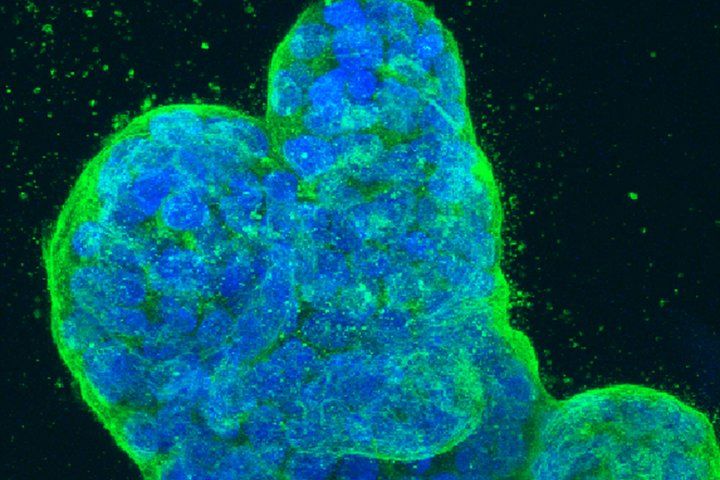
UCLouvain researchers used a 3D tumour cell culture system, called spheroidsIn the presence of DHA, spheroids first grow and then implode

3D tumors that disintegrate within a few days thanks to the action of a well-known omega-3 (DHA, found mainly in fish) – this is a promising discovery. Hungry for fatty acids, tumor cells in acidosis gorge themselves on DHA but are unable to store it correctly and literally poison themselves. The result? They die.

So-called “good fatty acids” are essential for human health and much sought after by those who try to eat healthily. Among the Omega-3 fatty acids, DHA or docosahexaenoic acid is crucial to brain function, vision and the regulation of inflammatory phenomena.

In addition to these virtues, DHA is also associated with a reduction in ...

Read More