Category Health/Medical

Anti-Tumor Agent from the Intestine

Certain metabolites of bacteria from the intestine make immune cells more aggressive as a new study conducted by scientists reveals. The findings could help improve cancer therapies.

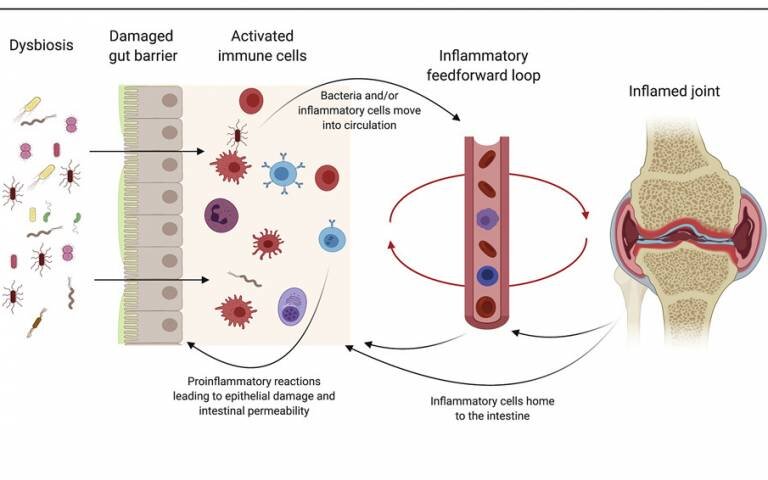
It is believed to be involved in the development of chronic inflammatory intestinal diseases, to trigger diabetes, to be responsible for obesity, even neurological diseases such as multiple sclerosis and Parkinson’s could have their causes here — not to mention depressions and autistic disorders. We are talking about the microbiome — the vast collection of bacteria in the human gut. It is estimated that each person carries around 100 trillion bacterial cells in their digestive tract, belonging to several thousand species.

Scientists at the Universities of Würzburg and Marburg have now succeeded for ...

Read More

Stem Cells can use Same Method as Plants and Insects to Protect against Viruses

 Microscopy image of a brain organoid infected with SARS-CoV-2.
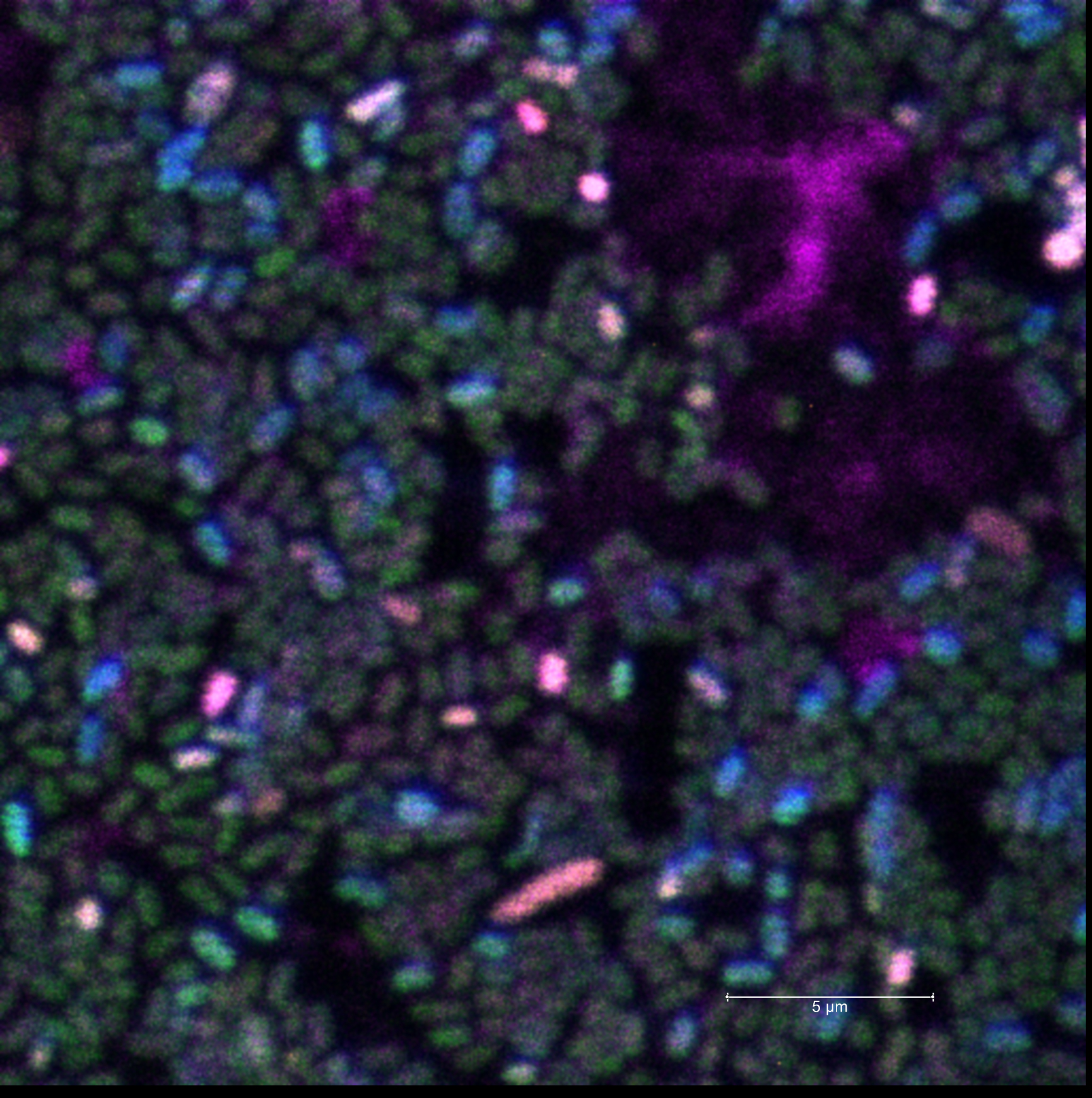
Microscopy image of a brain organoid infected with SARS-CoV-2. Cell nuclei are in blue, neural stem cells in green and infected cells in magenta. 

Researchers at the Francis Crick Institute have found a vital mechanism, previously thought to have disappeared as mammals evolved, that helps protect mammalian stem cells from RNA viruses such as SARS-CoV-2 and Zika virus. The scientists suggest this could one day be exploited in the development of new antiviral treatments.

On infecting a host, a virus enters cells in order to replicate. For most cells in mammals the first line of protection are proteins, called interferons. Stem cells, however, lack the ability to trigger an interferon response and there has been uncertainty about how they protect themselves.

In their study, publishe...

Read More

Our Genes Shape our Gut Bacteria

Our gut microbiome — the ever-changing “rainforest” of bacteria living in our intestines — is primarily affected by our lifestyle, including what we eat or the medications we take, most studies show. But a University of Notre Dame study has found a much greater genetic component at play than was once known.

In the study, published recently in Science, researchers discovered that most bacteria in the gut microbiome are heritable after looking at more than 16,000 gut microbiome profiles collected over 14 years from a long-studied population of baboons in Kenya’s Amboseli National Park. However, this heritability changes over time, across seasons and with age. The team also found that several of the microbiome traits heritable in baboons are also heritable in humans.

“The environme...

Read More

New Imaging Technique may Boost Research in Biology, Neuroscience

Mouse muscle.
TFM and DEEP-TFM images of a mouse muscle specimen at a 190-um-deep imaging plane. The blue and red channels are respectively nucleus (stained with Hoechst 33342) and F-actin (stained with Alexa Fluor 568 Phalloidin). Courtesy of Dushan N. Wadduwage

Scientists hope it will allow them to see inner workings of systems. A research team presents a new process that uses computational imaging to get high resolution images at a rate 100 to 1,000 times faster than other state-of-the-art technologies that use complex algorithms and machine learning.

Microscopists have long sought to find a way to produce high-quality, deep-tissue imaging of living subjects in a timely fashion...

Read More