Category Health/Medical

How a Longevity Gene protects Brain Stem Cells from Stress

cells under a microscope
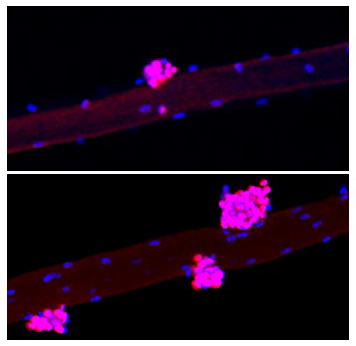
Antioxidant treatment boosts the birth of new neurons from stem cells by suppressing stress signaling. Image courtesy of the Paik lab.

A gene linked to unusually long lifespans in humans protects brain stem cells from the harmful effects of stress, according to a new study by Weill Cornell Medicine investigators.

Studies of humans who live longer than 100 years have shown that many share an unusual version of a gene called Forkhead box protein O3 (FOXO3). That discovery led Dr. Jihye Paik, associate professor of pathology and laboratory medicine at Weill Cornell Medicine, and her colleagues to investigate how this gene contributes to brain health during aging.

In 2018, Dr...

Read More

New Potential Therapy for Crohn’s disease in Children

High magnification micrograph of Crohn’s disease. Biopsy of esophagus. H&E stain. Credit: Nephron/Wikipedia

Scientists from the Stanley Manne Children’s Research Institute at Ann & Robert H. Lurie Children’s Hospital of Chicago demonstrated that a nanotherapy reduces intestinal inflammation and shrinks lesions in a rodent model of severe Crohn’s disease. This approach could become an alternative to biologic antibody therapies that carry many side effects, including increased risk of certain cancers. It might also prevent the need for surgery in the future. Findings were published in the journal Advanced Therapeutics.

Crohn’s disease is an inflammatory bowel disease characterized by chronic inflammation of the digestive tract, most often in the small intestine...

Read More

Gut Microbiome implicated in Healthy Aging and Longevity

gut
Credit: CC0 Public Domain

Data from over 9,000 people reveal a distinct gut microbiome signature that is associated with healthy aging and survival in the latest decades of life. The gut microbiome is an integral component of the body, but its importance in the human aging process is unclear. ISB researchers and their collaborators have identified distinct signatures in the gut microbiome that are associated with either healthy or unhealthy aging trajectories, which in turn predict survival in a population of older individuals. The work is set to be published in the journal Nature Metabolism.

The research team analyzed gut microbiome, phenotypic and clinical data from over 9,000 people — between the ages of 18 and 101 years old — across three independent cohorts...

Read More

New link between Personality and Risk of Early Death

Dr Páraic Ó Súilleabháin, from the Department of Psychology and Health Research Institute at University of Limerick, who was principal investigator on the study

Ground-breaking research led by University of Limerick has revealed for the first time that the immune system directly links personality to long-term risk of death. The study sheds new light on why people who are more conscientious tend to live longer.

Results from the new international study published in the journal Brain, Behavior, and Immunity have found that the immune system plays a previously unknown role in the link between personality traits and long-term risk of death.

“Personality is known to be associated with long-term risk of death, it is a well replicated finding observed across numerous research studies...

Read More