Category Health/Medical

Astrocytes eat Connections to maintain Plasticity in Adult Brains

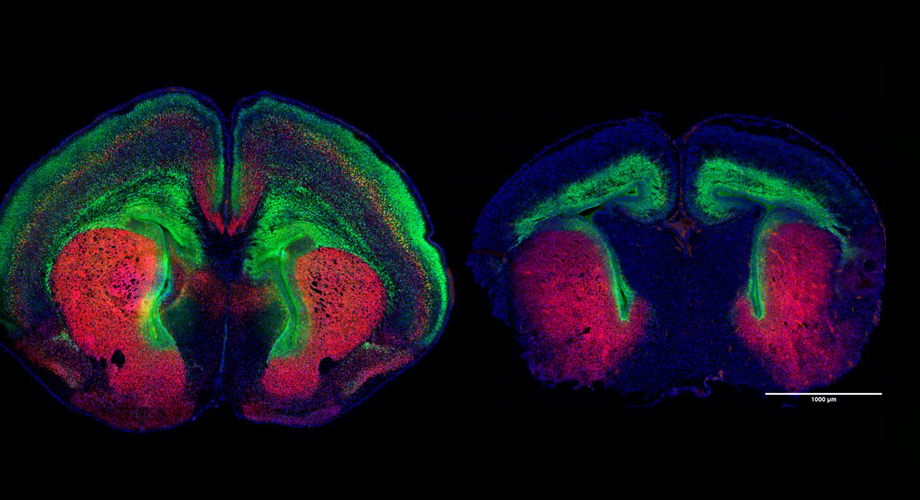
Image: A 3-D animated image showing our synapse phagocytosis reporter in mouse hippocampus. Presynapses in green, astrocytes in white, and microglia in blue. Phagocytosed presynapses by glia were shown in red.
 Image: A 3-D animated image showing our synapse phagocytosis reporter in mouse hippocampus. Presynapses in green, astrocytes in white, and microglia in blue. Phagocytosed presynapses by glia were shown in red.

Developing brains constantly sprout new synapses as they learn and remember. Important connections — the ones that are repeatedly introduced, such as how to avoid danger — are nurtured and reinforced, while connections deemed unnecessary are pruned away. Adult brains undergo similar pruning, but it was unclear how or why synapses in the adult brain get eliminated.

Now, a team of researchers based in Korea has found the mechanism underlying plasticity and, potentially, neurological disorders in adult brains. They published their findings on December 23 in Nature.

“Our findi...

Read More

New Drug Inhibits the Growth of Cancer cells

Cartoon representation of the POLRMT-Inhibitor complex.
© Hauke S. Hillen

Blocking gene expression in mitochondria in mice stops cancer cells from growing. A newly developed compound starves cancer cells by attacking their “power plants” — the mitochondria. The new compound prevents the genetic information within mitochondria from being read. Researchers from the Max Planck Institute for Biology of Ageing in Cologne, the Karolinska Institute in Stockholm and the University of Gothenburg report in their study that this compound could be used as a potential anti-tumour drug in the future; not only in mice but also in human patients.

Mitochondria provide our cells with energy and cellular building blocks necessary for normal tissue and organ function...

Read More

Breaking bad: How Shattered Chromosomes make Cancer Cells Drug-Resistant

In this scanning electron micrograph of inside the nucleus of a cancer cell, chromosomes are indicated by blue arrows and circular extra-chromosomal DNA are indicated by orange arrows. Image courtesy of Paul Mischel, UC San Diego.

Scientists describe how a phenomenon known as ‘chromothripsis’ breaks up chromosomes, which then reassemble in ways that ultimately promote cancer cell growth.

In a paper published in the December 23, 2020 online issue of Nature, researchers at University of California San Diego School of Medicine and the UC San Diego branch of the Ludwig Institute for Cancer Research, with colleagues in New York and the United Kingdom, describe how a phenomenon known as “chromothripsis” breaks up chromosomes, which then reassemble in ways that ultimately promote cancer ce...

Read More

New class of Antibiotics active against a Wide Range of Bacteria

Dual-acting immuno-antibiotics block an essential pathway in bacteria and activate the adaptive immune response. Wistar Institute scientists have discovered a new class of compounds that uniquely combine direct antibiotic killing of pan drug-resistant bacterial pathogens with a simultaneous rapid immune response for combatting antimicrobial resistance (AMR). These finding were published today in Nature.

The World Health Organization (WHO) has declared AMR as one of the top 10 global public health threats against humanity. It is estimated that by 2050, antibiotic-resistant infections could claim 10 million lives each year and impose a cumulative $100 trillion burden on the global economy...

Read More