Category Health/Medical

Lithium loss ignites Alzheimer’s, but lithium compound can reverse disease in mice

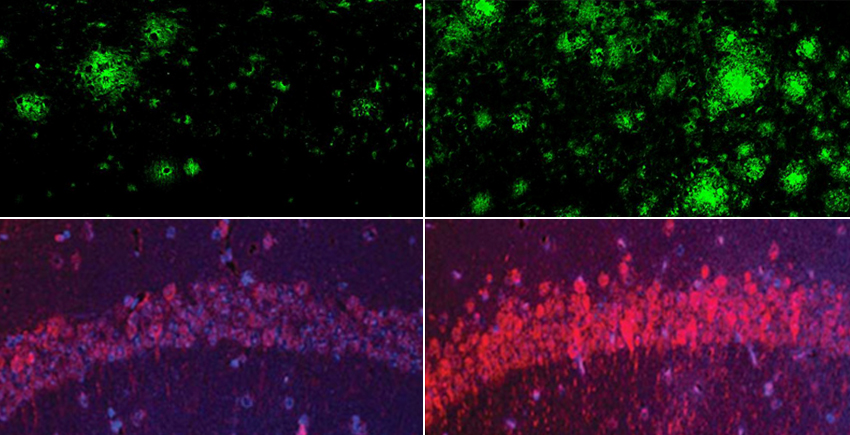
One pair of boxes shows fewer green amyloid clusters on the left and more on the right. Another pair of boxes shows a dim arc of purple and red tau on the left and a brighter arc on the right.
Top row: In a mouse model of Alzheimer’s disease, lithium deficiency (right) dramatically increased amyloid beta deposits in the brain compared with mice that had normal physiological levels of lithium (left). Bottom row: The same was true for the Alzheimer’s neurofibrillary tangle protein tau. Images: Yankner Lab

What is the earliest spark that ignites the memory-robbing march of Alzheimer’s disease? Why do some people with Alzheimer’s-like changes in the brain never go on to develop dementia? These questions have bedeviled neuroscientists for decades.

Now, a team of researchers at Harvard Medical School may have found an answer: lithium deficiency in the brain.

The work, published in Nature, shows for the first time that lithium occurs naturally in the brain, shields it from ...

Read More
Discovery of a new analgesic promises pain relief with fewer downsides

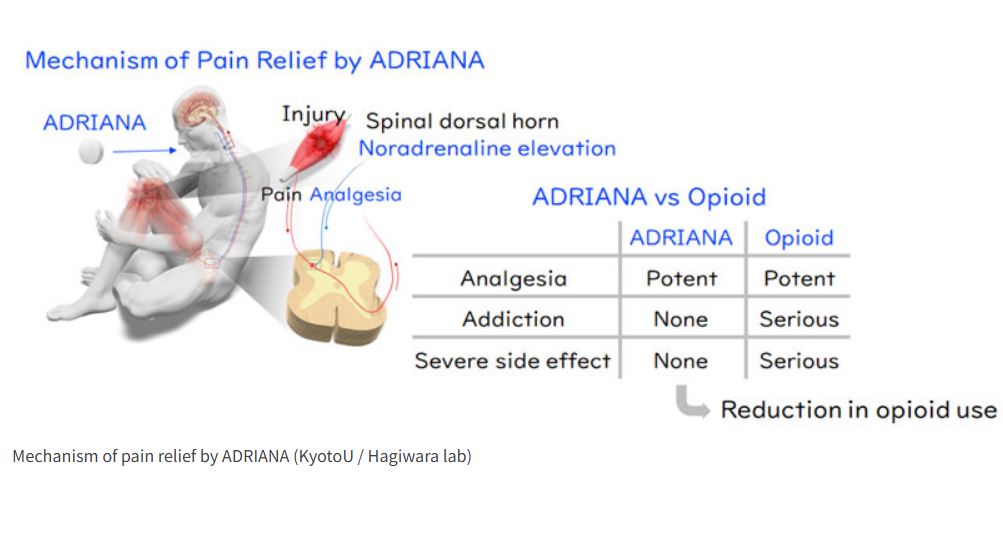
Opioids like morphine are widely used in medical practice due to their powerful pain-relieving effects, yet they carry the risk of serious adverse effects such as respiratory depression and drug dependence. For this reason, Japan has strict regulations in place to ensure that these medications are prescribed only by authorized physicians.

In the United States, the opioid OxyContin was once frequently prescribed, triggering a surge in the misuse of synthetic opioids such as fentanyl. As a result, the number of deaths caused by opioid overdose surpassed 80,000 in 2023, escalating into a national public health crisis now referred to as the “opioid crisis.”

Opioids may soon have a rival, however...

Read More

New AI tool learns to read medical images with far less data

New AI tool learns to read medical images with far less data
GenSeg improves in-domain and out-of-domain generalization performance across a variety of segmentation tasks covering diverse diseases, organs, and imaging modalities. Credit: Nature Communications (2025). DOI: 10.1038/s41467-025-61754-6

A new artificial intelligence (AI) tool could make it much easier—and cheaper—for doctors and researchers to train medical imaging software, even when only a small number of patient scans are available.

The AI tool improves upon a process called medical image segmentation, where every pixel in an image is labeled based on what it represents—cancerous or normal tissue, for example. This process is often performed by a highly trained expert, and deep learning has shown promise in automating this labor-intensive task.

The big challenge is t...

Read More

Sleep disruption damages blood vessels in brain and may increase dementia risk: study

A new study reveals that fragmented sleep causes cellular damage to the brain’s blood vessels, providing further evidence to suggest that sleep disruption predisposes the brain to dementia.

The research, published in the journal Brain, is the first to offer cellular and molecular evidence that sleep disruption directly causes damage to brain blood vessels and blood flow.

“We found that individuals who had more fragmented sleep, such as sleeping restlessly and waking up a lot at night, had a change in their balance of pericytes—a brain blood vessel cell that plays an important role in regulating brain blood flow and the entry and exit of substances between the blood and the brain,” said Andrew Lim, principal investigator of the study and a sleep neurologist and scientist at Sunny...

Read More