Category Health/Medical

Data-driven discovery of Biomarkers pave way for improved Diagnosis of Contact Allergy

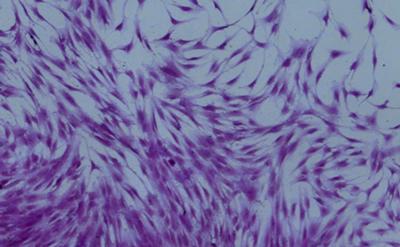
IHC staining of chemical exposed human skin. 

With the help of algorithms, researchers at Karolinska Institutet in Sweden have identified markers that can differentiate between irritant eczema and contact allergy, two skin reactions that look similar but require different treatment. Their findings, which are published in the journal Proceedings of the National Academy of Sciences (PNAS), support the further development of an alternative to today’s diagnostic patch tests.

About 20 percent of the population of high-income countries are troubled by contact eczema, a disease often associated with exposure to chemicals in the working environment...

Read More

Compound derived from Thunder god vine could help Pancreatic Cancer patients

Thunder God Vine

The results of a pre-clinical study led by researchers at the Translational Genomics Research Institute (TGen), an affiliate of City of Hope, suggest how a compound derived from the thunder god vine — an herb used in China for centuries to treat joint pain, swelling and fever — is able to kill cancer cells and potentially improve clinical outcomes for patients with pancreatic cancer.

The medicinal plant’s key ingredient, triptolide, is the basis of a water-soluble prodrug called Minnelide, which appears to attack pancreatic cancer cells and the cocoon of stroma surrounding the tumor that shields it from the body’s immune system. Investigators recently published the study results in the journal Oncogenesis.

The study found that the compound’s mechanism of action is the ability of...

Read More

Scientists build whole functioning Thymus from Human Cells

Images of stages of the researchers repopulating the scaffold.

Scientists at the Francis Crick Institute and University College London have Rebuilt a human Thymus, an essential organ in the Immune system, using human stem cells and a bioengineered scaffold. Their work is an important step towards being able to build artificial thymi which could be used as transplants.

The thymus is an organ in the chest where T lymphocytes, which play a vital role in the immune system, mature. If the thymus does not work properly or does not form during fetal development in the womb, this can lead to diseases such as severe immunodeficiency, where the body cannot fight infectious diseases or cancerous cells, or autoimmunity, where the immune system mistakenly attacks the patient’s own healthy tissue.

In their proof-of-concept study, published in Nature Comm...

Read More

Hydrogels with Fine-Toothed Molecular Combs may make enduring Glucose-Monitoring Implants

Hydrogels With Fine-Toothed Molecular Combs Could Make Enduring Glucose-Monitoring  Implants - Texas A&M Today
Hydrogels infused with comb-like molecules may monitor blood sugar longer than current implants. Getty Images

In a new study, published online in the journal American Chemical Society (ACS) Applied Polymer Materials, scientists at Texas A&M University reported they have designed a hydrogel membrane that may be used to house optical glucose sensing materials, toward building a biosensor for monitoring sugar levels in diabetics.

By incorporating dangling, comb-type molecular chains within a type of hydrogel called poly(N-isopropylacrylamide) or poly NIPAAm for short, they showed that the membrane could prevent leakage of small-sized molecules, like the ones for glucose-sensing, while still allowing glucose to freely diffuse in and out.

When ready for clinical use, the researchers s...

Read More