Category Health/Medical

Engineers put Tens of Thousands of Artificial Brain Synapses on a Single chip

The new chip (top left) is patterned with tens of thousands of artificial synapses, or “memristors,” made with a silver-copper alloy. When each memristor is stimulated with a specific voltage corresponding to a pixel and shade in a gray-scale image (in this case, a Captain America shield), the new chip reproduced the same crisp image, more reliably than chips fabricated with memristors of different materials.
Image courtesy of the researchers

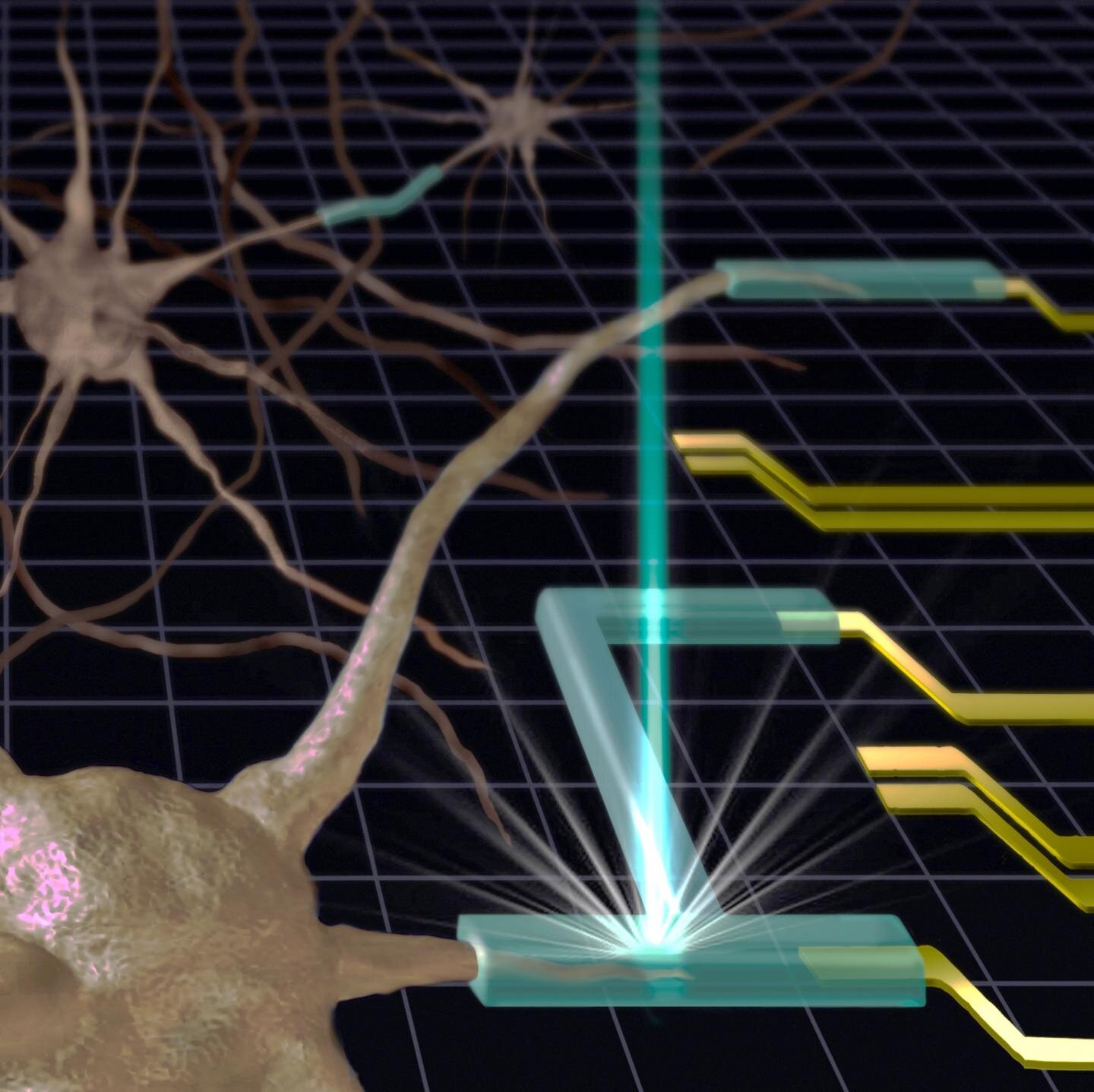
The design could advance the development of small, portable AI devices. MIT engineers have designed a “brain-on-a-chip,” smaller than a piece of confetti, that is made from tens of thousands of artificial brain synapses known as memristors — silicon-based components that mimic the information-transmitting synapses in the human brain.

The res...

Read More

Drug researcher develops ‘Fat Burning’ Molecule

Schematic showing key energy production pathways. Metabolites colour-coded by fold change of WD + BAM15 compared with WD, scale of twofold positive (red) to twofold negative (blue).

Scientists have recently identified a small mitochondrial uncoupler, named BAM15, that decreases the body fat mass of mice without affecting food intake and muscle mass or increasing body temperature.

Obesity affects more than 40 percent of adults in the United States and 13 percent of the global population. With obesity comes a variety of other interconnected diseases including cardiovascular disease, diabetes, and fatty liver disease, which makes the disease one of the most difficult — and most crucial — to treat.

“Obesity is the biggest health problem in the United States...

Read More

Paper-based Technology Advances Earlier Cancer Detection

Image of the paper-based isotachophoresis (ITP) device that isolates, enriches, and detects exosomes from a prostate cancer cell line.

Washington State University researchers have developed a technology that is more than 30 times more sensitive than current lab-based tests in finding early stage cancer biomarkers in blood.

The technology uses an electric field to concentrate and separate cancer biomarkers onto a paper strip. It could someday become a kind of liquid biopsy and could lead to earlier detection of and faster treatments for cancer, a disease that causes more than 9.6 million deaths a year around the world.

Led by Wenji Dong, associate professor in the Gene and Linda Voiland School of Chemical Engineering and Bioengineering, and graduate student Shuang Guo, the researc...

Read More

Scientists develop unique polymer coating to tackle harmful fungi

Fungi on different surfaces

Scientists from the University of Nottingham have developed a new way to control harmful fungi, without the need to use chemical bioactives like fungicides or antifungals.

Fungi cause diverse, serious societal and economic problems in the UK and globally. As well as causing fatal diseases in humans, fungi devastate food crops and spoil valuable products and materials. This has led to an antifungals/fungicide industry worth around $30bn globally.

There are tight regulations around the use of fungicides and antifungals and there is also growing resistance of fungi to these agents.

In a paper published today in Science Advances, experts from the University’s Schools of Life Sciences, Pharmacy, and Engineering, show how they have developed an innovative...

Read More