Category Health/Medical

Antibodies from llamas could help in fight against COVID-19, study suggests

A Llama Named Winter (and Friends)
Scientists were inspired by antibodies produced by this llama, named Winter, to develop their antibody against SARS-CoV-2. Winter is four years old and still living on a farm in the Belgian countryside operated by Ghent University’s Vlaams Institute for Biotechnology. Photo credit: Tim Coppens.

Researchers linked two copies of a special kind of produced by llamas to create a new antibody that binds tightly to the spike protein on the coronavirus that causes COVID-19. This spike protein allows the virus to break into host cells. Initial tests indicate that the antibody blocks viruses that display this spike protein from infecting cells in culture.

The hunt for an effective treatment for COVID-19 has led one team of researchers to find an improbable ally for their work: a llama name...

Read More

Scientists Regenerate Neurons in mice with Spinal Cord Injury and Optic Nerve damage

Injured CNS axons fail to regenerate in adult mammals and there are no effective regenerative strategies to treat patients with CNS injuries. Dr. Li’s group demonstrates that upregulating Lin28 gene in mature neurons induces significant long distance regeneration of both spinal cord axons and optic nerve in adult mice.

Each year thousands of patients face life-long losses in sensation and motor function from spinal cord injury and related conditions in which axons are badly damaged or severed. New research by scientists at the Lewis Katz School of Medicine Temple University (LKSOM) shows, however, that gains in functional recovery from these injuries may be possible, thanks to a molecule known as Lin28, which regulates cell growth...

Read More

Nanodevices for the Brain could thwart formation of Alzheimer’s Plaques

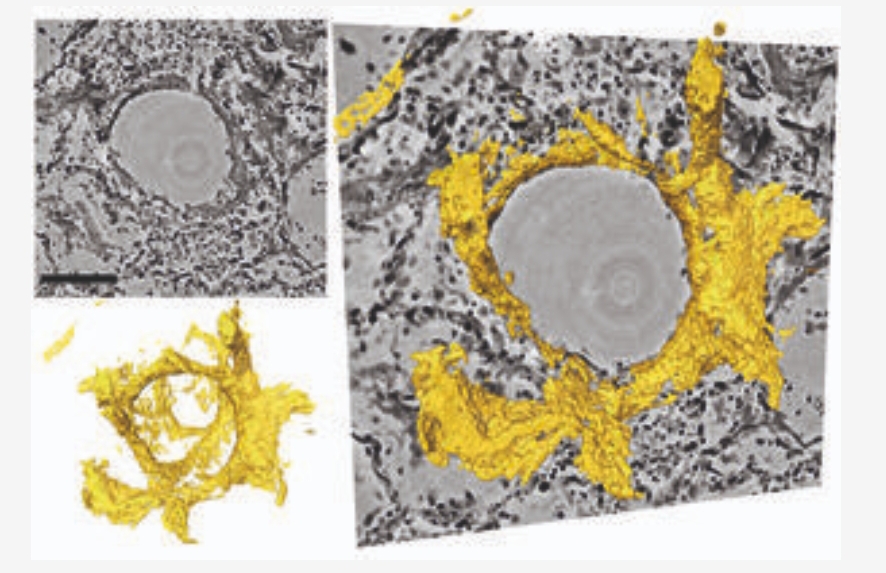
Scanning Electron Microscopy (SEM) images of the porous silica nanodevices. The exposed amount of surface area provides high opportunity to attach the peptide-attracting antibody fragments. (Image by Center for Nanoscale Materials, Argonne National Laboratory.)

Researchers designed a nanodevice with the potential to prevent peptides from forming dangerous plaques in the brain in order to halt development of Alzheimer’s disease. Alzheimer’s disease is the sixth leading cause of death in the United States, affecting one in 10 people over the age of 65. Scientists are engineering nanodevices to disrupt processes in the brain that lead to the disease.

People who are affected by Alzheimer’s disease have a specific type of plaque, made of self-assembled molecules called β-amyloid (Aβ) pep...

Read More

NIH clinical trial shows Remdesivir Accelerates Recovery from Advanced COVID-19

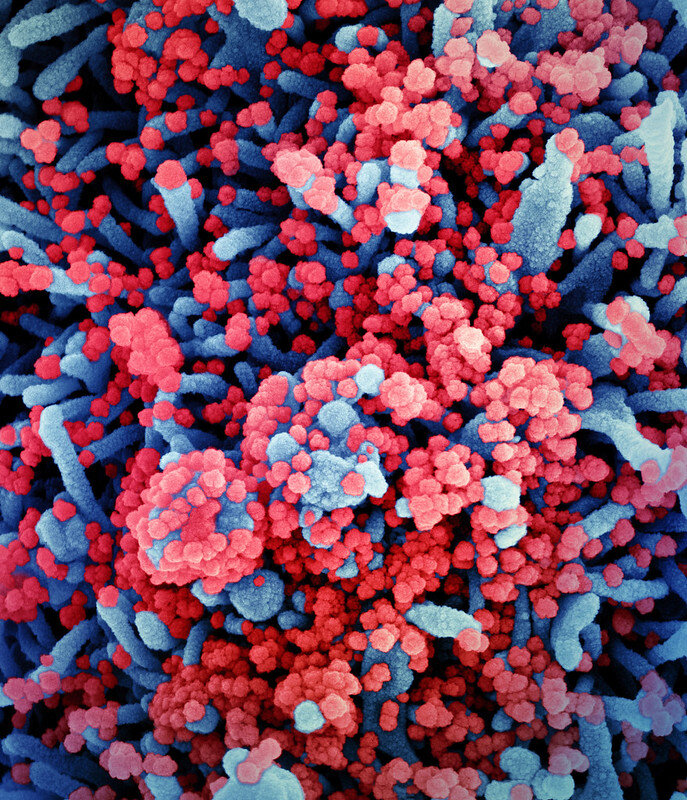
Colorized scanning electron micrograph of an apoptotic cell (red) heavily infected with SARS-COV-2 virus particles (yellow), isolated from a patient sample. Image captured at the NIAID Integrated Research Facility (IRF) in Fort Detrick, Maryland. NIAID

Hospitalized patients with advanced COVID-19 and lung involvement who received remdesivir recovered faster than similar patients who received placebo, according to a preliminary data analysis from a randomized, controlled trial involving 1063 patients, which began on February 21...

Read More