The authors see the newly developed synthetic host as a city. On the one hand, typical cellular processes — seen as encapsulated, isolated, and made up of non-interchangeable elements — are represented as repetitive structures: squared, isolated blocks which are always fenced, just like membranous organelles. On the other hand, the image highlights the making of a new organelle — a new building that is not fenced — which is accessible to the rest of the city while having its own identity, a building which is more dynamic and flexible. Credit: Gemma Estrada Girona
Scientists create membraneless organelle to build proteins in living cell. For the first time, scientists have engineered the complex biological process of translation into a designer organelle in a living mammalian cell...
The dentate gyrus of mouse hippocampus at postnatal day 7, blue is nuclei marker, green is progeny of HOPX-expressing progenitor cells, and red is marker of cell proliferation. Credit: Daniel A. Berg and Allison M. Bond
Findings extend understanding of how a continuous supply of neurons throughout life is connected with learning and memory. Researchers have shown, in mice, that one type of stem cell that makes adult neurons is the source of this lifetime stock of new cells in the hippocampus. These findings may help neuroscientists figure out how to maintain youthful conditions for learning and memory, and repair and regenerate parts of the brain after injury and aging.
“We’ve shown for the first time, in mammals, that neurons in the dentate gyrus of the hippocampus grow and develo...
Top 15 risk factor variables for predicting mortality listed in descending order of “importance” by algorithm derived from the training cohort of 376,971 patients.
Computers which are capable of teaching themselves to predict premature death could greatly improve preventative healthcare in the future, suggests a new study by experts at the University of Nottingham. The team of healthcare data scientists and doctors have developed and tested a system of computer-based ‘machine learning’ algorithms to predict the risk of early death due to chronic disease in a large middle-aged population.
They found this AI system was very accurate in its predictions and performed better than the current standard approach to prediction developed by human experts...
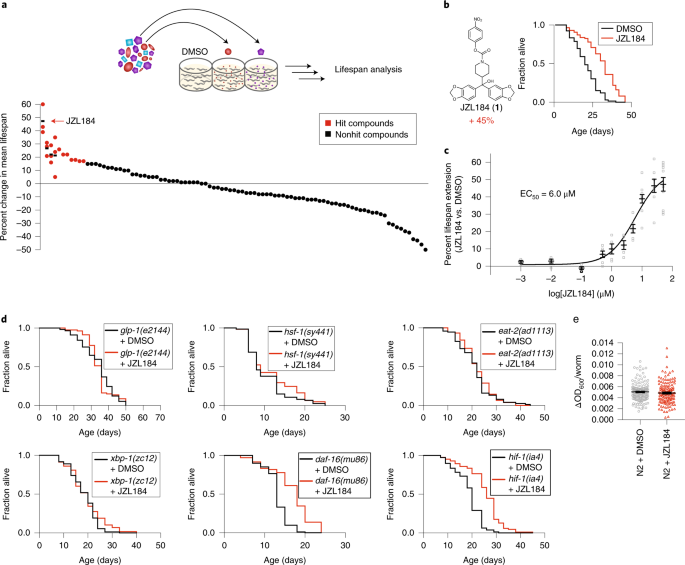
Phenotypic screening identifies SH-directed inhibitors that extend lifespan in C.elegans.
New method could enable faster study of strategies to combat age-related diseases. An enzyme-blocking molecule can extend the lifespan of Caenorhabditis elegans roundworms by as much as 45%, largely by modulating a cannabinoid biological pathway, according to a study from scientists at Scripps Research.
The scientists, whose work is published on March 25 in Nature Chemical Biology, also showed that the lifespan-extending cannabinoid pathway in C. elegans is related in unexpected ways to cannabinoid pathways found in humans and other mammals.
“This study reveals a new life-extension pathway, but more broadly, it introduces a powerful method for applying chemical probes to lab animals such as worm...





Recent Comments