Category Health/Medical

Tiny Gold Particles could be key to developing a Treatment for Pancreatic Cancer

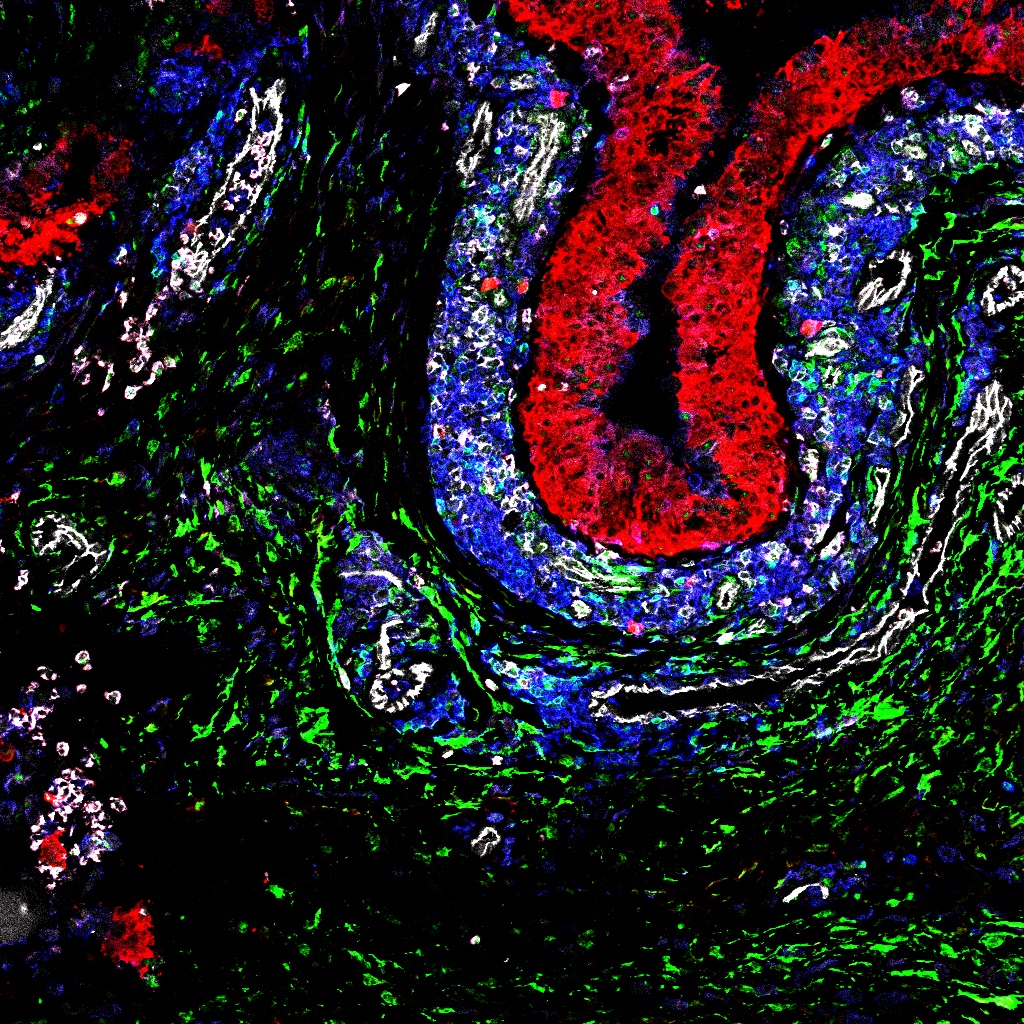
Gold Nanoparticle Reprograms Pancreatic Tumor Microenvironment and Inhibits Tumor Growth

Gold Nanoparticle Reprograms Pancreatic Tumor Microenvironment and Inhibits Tumor Growth

A diagnosis of pancreatic cancer is often a death sentence because chemotherapy and radiation have little impact on the disease. In the U.S. this year, some 53,000 new cases will be diagnosed, and 42,000 patients will die of the disease, according to the National Institutes of Health. But research now being reported in ACS Nano could eventually lead to a new type of treatment based on gold nanoparticles.

Scientists have previously studied these tiny gold particles as a vehicle to carry chemotherapy drug molecules into tumors or as a target to enhance the impact of radiation on tumors...

Read More

Gene Deletion Points way to Flu Treatment

TRIM29 binds to and colocalizes with NEMO in the lysosome.

TRIM29 binds to and colocalizes with NEMO in the lysosome.

Houston Methodist researchers kept mice from getting the flu by removing a gene that regulates their immune system. According to a study recently published in Nature Immunology, mice missing the gene Trim29 eliminated human influenza virus within 48 hours, protecting them from infection.

“Influenza is the leading cause of death from infections worldwide. An effective treatment is vital, especially for children, the elderly and patients with compromised immune systems,” said Zhiqiang Zhang, Ph.D. “Mice lacking Trim29 kept them from a full blown infection and completely cleared them of the virus. This finding points the way to a potential flu treatment.”

Immune cells around the lungs are the first line of defense against infections...

Read More

A New Player in Appetite Control

DREADDs are specifically expressed in glial cells. Astrocytes, but not tanycytes, are activated by DREADDs and fasting. Morphological changes in astrocytes are also induced by DREADDs and fasting.

DREADDs are specifically expressed in glial cells. Astrocytes, but not tanycytes, are activated by DREADDs and fasting. Morphological changes in astrocytes are also induced by DREADDs and fasting.

MIT neuroscientists have discovered that glial cells play a critical role in controlling appetite and feeding behavior. In a study of mice, activating these cells stimulates overeating, and that when the cells are inhibited, appetite is also suppressed. The findings could offer scientists a new target for developing drugs against obesity and other appetite-related disorders. The study is also the latest in recent years to implicate glial cells in important brain functions. Until about 10 years ago, glial cells were believed to play more of a supporting role for neurons.

“In the last few years, ab...

Read More

Folinic Acid could help children with Autism Communicate better

Folinic acid

Folinic acid

Prescription doses of folinic acid, which is a reduced form of a B vitamin known as folate, could help improve the language and communication skills of children with autism spectrum disorder (ASD). These are the preliminary findings from a placebo-controlled trial in which children were randomized to receive either high-dose folinic acid or a placebo, says lead author Richard Frye of Arkansas Children’s Research Institute in the US. The study also identified a specific blood marker that can be used to predict which patients have the best chance to respond to the treatment.

Up to 2% of American children are said to experience symptoms that place them on the autism spectrum...

Read More