

Researchers from Mass General Brigham and collaborating institutions have developed a non-invasive approach to manipulate cardiac tissue activity by using light to stimulate an innovative ink incorporated into bioprinted tissue...
Read More

January 27, 2025,
 Health/Medical, Biology/Biotechnology
Researchers from Mass General Brigham and collaborating institutions have developed a non-invasive approach to manipulate cardiac tissue activity by using light to stimulate an innovative ink incorporated into bioprinted tissue...
Read More
January 24, 2025,
Health/Medical, Biology/Biotechnology
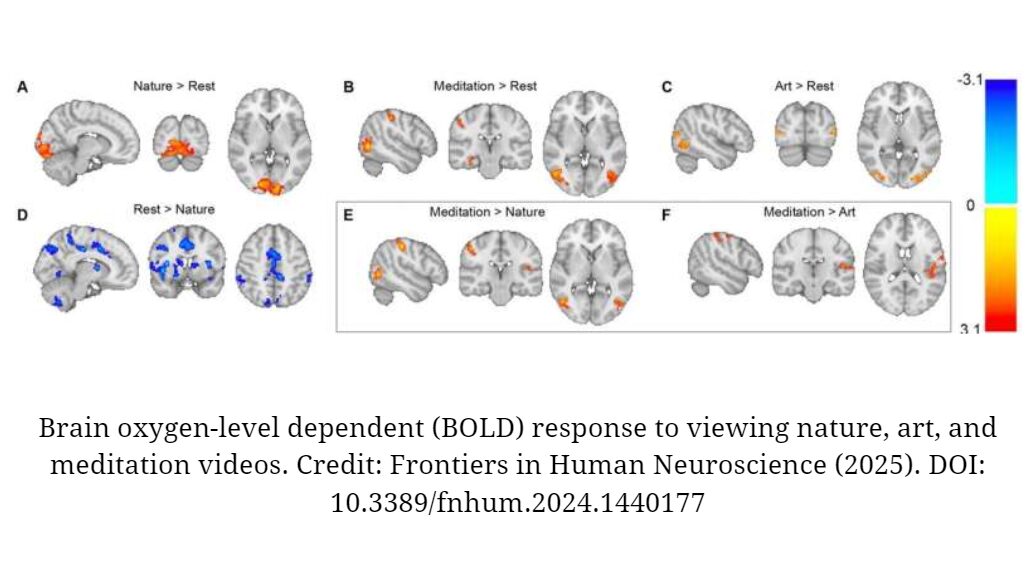
Past research suggests that meditation and exposure to art or nature can positively impact people’s well-being and brain health, in some cases even reducing stress and supporting the processing of emotions. Yet most past studies focused on each of these experiences individually, rather than comparing their effects on brain activity.
Researchers at University of California Los Angeles set out to examine the brain activation patterns associated with a visualization-based transcendental meditation of connecting to the cosmic soul and compare them to those from people watching evocative digital art or nature videos.
Their findings, published in Frontiers in Human Neuroscience, suggest that these different types of transcending experiences prompt different brain activation patterns.
...Read More
January 22, 2025,
Health/Medical, Biology/Biotechnology

Gardenias are known for their rich, earthy fragrance, waxy petals and brilliant white color that contrasts with the deep emerald green of their leaves. The plant has long been prized by herbalists, seekers of food and fabric dyes, and even pharmaceutical companies.
Now, a collaborative team of scientists at several research centers in the United States has found that a compound known as genipin, derived from the gardenia plant called Cape jasmine, can prompt nerve regeneration. Neurons damaged and stunted by disease find new life in the lab when exposed to the plant-derived compound.
The chemical comes from the fruit of this extraordinarily versatile plant...
Read More
January 20, 2025,
Health/Medical, Biology/Biotechnology

People with pockets of fat hidden inside their muscles are at a higher risk of dying or being hospitalized from a heartattack or heart failure, regardless of their body mass index, according to research published in the European Heart Journal.
This ‘intermuscular’ fat is highly prized in beef steaks for cooking. However, little is known about this type of body fat in humans, and its impact on health...
Read More
Recent Comments