Category Health/Medical

‘The Dress’: Explanation of Optical Illusion of Colors of Striped Dress

In Feb 2015, the photo of a striped dress stirred a worldwide internet debate ; now, neuroscientists have further decoded the phenomenon, demonstrating optical illusion is linked to specific brain activation patterns.

For some, it is black-blue, for others, it is white-gold. In a fMRI study, the neuroplasticity group headed by Prof. T. Schmidt-Wilcke solved the riddle of the illusion. In no time at all, the dress had captured the attention of media and scientists worldwide. Many research institutes have explored the phenomenon from various angles, by analyzing psychophysics or details of the image components...

Read More

New Study provides Key Insights into how Aspirin reduces the risk of cardiac disease and certain cancers

BTI Professor Daniel Klessig and lab members Research Associate Hyong Woo Choi, and Postdoctoral scientist Murli Manohar.

BTI Professor Daniel Klessig and lab members Research Associate Hyong Woo Choi and Postdoctoral scientist Murli Manohar.

Aspirin’s active form, salicylic acid, blocks a protein called HMGB1, which triggers inflammation in damaged tissues. The new findings may explain the disease-preventing effects of a low-dose aspirin regimen and offer hope that more effective aspirin-like drugs may be developed for a wide variety of diseases.

“We’ve identified what we believe is a key target of aspirin’s active form in the body, salicylic acid, which is responsible for some of the many therapeutic effects that aspirin has...

Read More

3D image of a Key Protein known to be involved in the development of Blood and other Cancers created by scientists

Murphy et al. describe a novel pseudokinase architecture from human TRIB1 and characterize its substrate-recognition motif within the C/EBPα transcription factor. Combined with biophysical studies, this shows how Tribbles proteins eschew catalytic activity in favor of function as signaling scaffolds.

Murphy et al. describe a novel pseudokinase architecture from human TRIB1 and characterize its substrate-recognition motif within the C/EBPα transcription factor. Combined with biophysical studies, this shows how Tribbles proteins eschew catalytic activity in favor of function as signaling scaffolds.

Protein Trib1 plays a vital role in controlling how and when other proteins are degraded, which is essential for managing protein levels in the cell. The finding could be used to develop new drugs to treat cancers such as leukaemia, caused by malfunctioning of the Trib1 protein.

Trib1 is part of the protein family Tribbles, which play diverse roles in cell signalling and development. Tribbles are named after the small, furry creatures from Star Trek that reproduce uncontrollably...

Read More

Genentech Announces favorable results for MS drug Ocrelizumab

Phase III clinical trials has been released for its multiple scleroses drug ocrelizumab, for use in relapsing forms of the disease or in cases of primary progressive multiple sclerosis (PPMS)—and the results appear to be very promising.

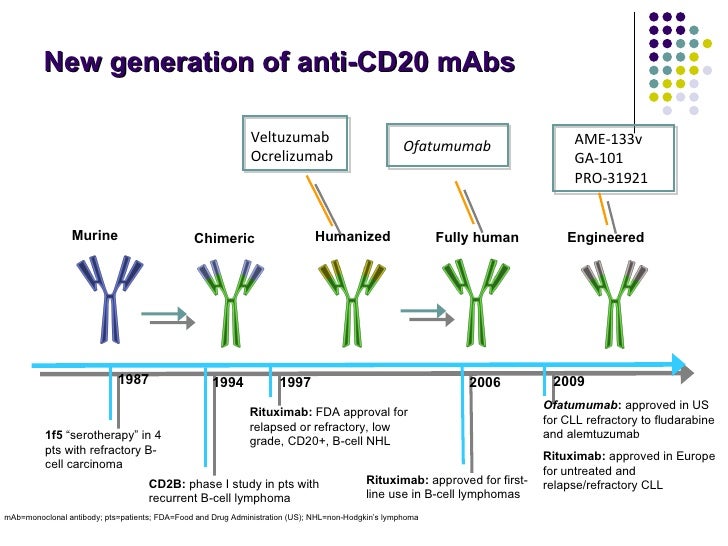
Ocrelizumab is a recombinant humanized monoclonal antibody against immune B cells that express CD20 proteins at their surface. These cells are thought to be a key contributor to the myelin and neuron damage that leads to motor function impairment, irreversible neurological disability and paralysis in MS patients. “B cells can contribute to the pathophysiology of MS,” explained Dr. Hauser during his presentation, “targeting CD20-B cells may preserve B cell reconstitution and long-term immune memory.”

85% of patients with MS experience relapse, wit...

Read More