Category Physics

Metasurface Antenna could enable Future 6G Communications Networks

Metasurface antenna could enable future 6G communications networks
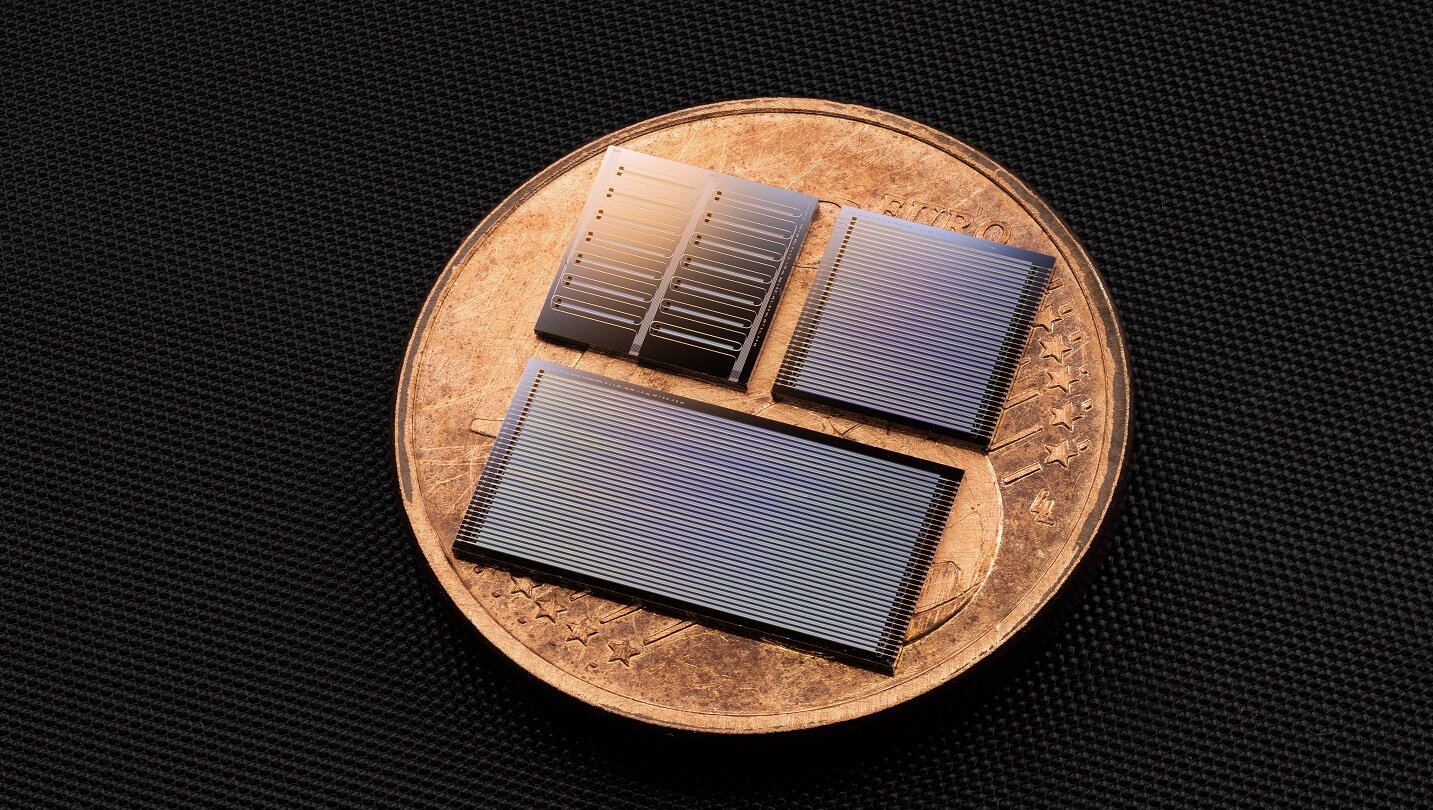
DMA prototype 1. Credit: University of Glasgow

A team led by researchers from the University of Glasgow has developed an innovative wireless communications antenna that combines the unique properties of metamaterials with sophisticated signal processing to deliver a new peak of performance.

In a paper published in the IEEE Open Journal of Antennas and Propagation, titled “60 GHz Programmable Dynamic Metasurface Antenna (DMA) for Next-Generation Communication, Sensing, and Imaging Applications: From Concept to Prototype,” the researchers showcase their development of a prototype digitally coded dynamic metasurface antenna, or DMA, controlled through high-speed field-programmable gate array (FPGA).

Their DMA is the first in the world designed and demonstrated at the operating frequ...

Read More

Engineers Recreate Star Trek’s Holodeck using ChatGPT and Video Game Assets

Penn Engineers recreate Star Trek's Holodeck using ChatGPT and video game assets
Essentially, Holodeck engages a large language model (LLM) in a conversation, building a virtual environment piece by piece. Credit: Yue Yang

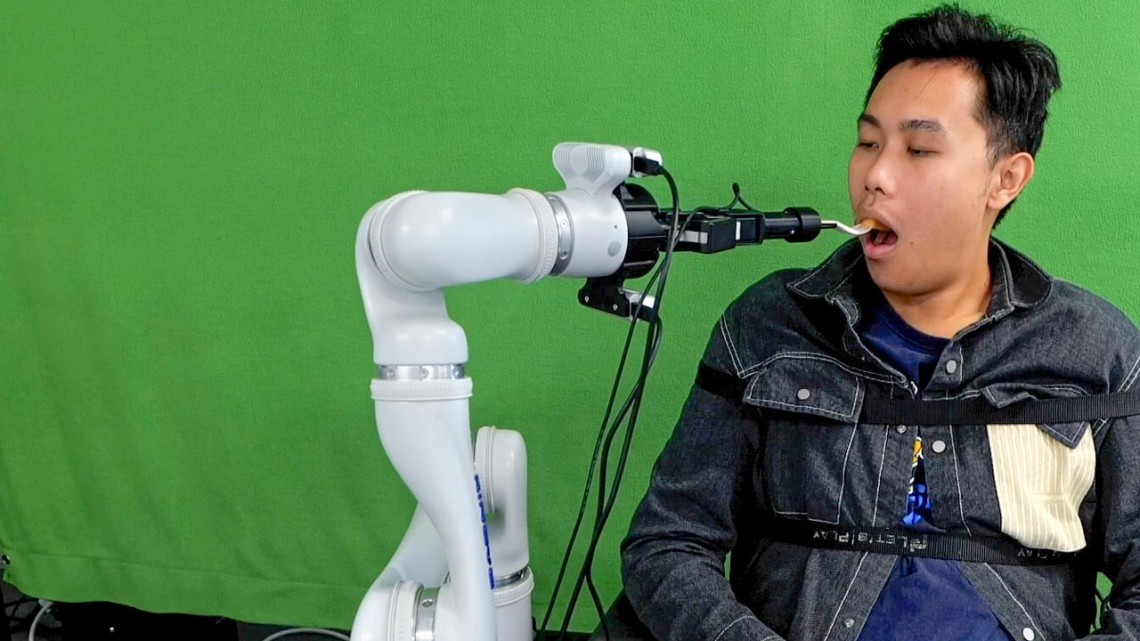
In “Star Trek: The Next Generation,” Captain Picard and the crew of the U.S.S. Enterprise leverage the Holodeck, an empty room capable of generating 3D environments, of preparing for missions and entertaining them, simulating everything from lush jungles to the London of Sherlock Holmes.

Deeply immersive and fully interactive, Holodeck-created environments are infinitely customizable, using nothing but language; the crew has only to ask the computer to generate an environment, and that space appears in the Holodeck.

Today, virtual interactive environments are also used to train robots prior to real-world deployment in a process called “Sim2...

Read More

Physicists discover a Novel Quantum State in an Elemental Solid

Blue and purple concentric circles
A representation of data visualization of quantum states of electrons on the surface and edge of grey arsenic crystal obtained using a scanning tunneling microscope at Princeton’s physics department. Credit: Image based on STM data simulations prepared by Shafayat Hossain and the Zahid Hasan group at the Laboratory for Topological Quantum Matter at Princeton University.

Physicists have observed a novel quantum effect termed “hybrid topology” in a crystalline material. This finding opens up a new range of possibilities for development of efficient materials and technologies for next-generation quantum science and engineering.

The finding, published in Nature, came when Princeton scientists discovered that an elemental solid crystal made of arsenic (As) atoms hosts a never-before-ob...

Read More

ATLAS provides First Measurement of the W-Boson Width at the LHC

The discovery of the Higgs boson in 2012 slotted in the final missing piece of the Standard Model puzzle. Yet, it left lingering questions. What lies beyond this framework? Where are the new phenomena that would solve the universe’s remaining mysteries, such as the nature of dark matter and the origin of matter-antimatter asymmetry?

One parameter that may hold clues about new physics phenomena is the “width” of the W boson, the electrically charged carrier of the weak force. A particle’s width is directly related to its lifetime and describes how it decays to other particles. If the W boson decays in unexpected ways, such as into yet-to-be-discovered new particles, these will influence the measured width.

As the Standard Model precisely predicts its value based on the strength o...

Read More