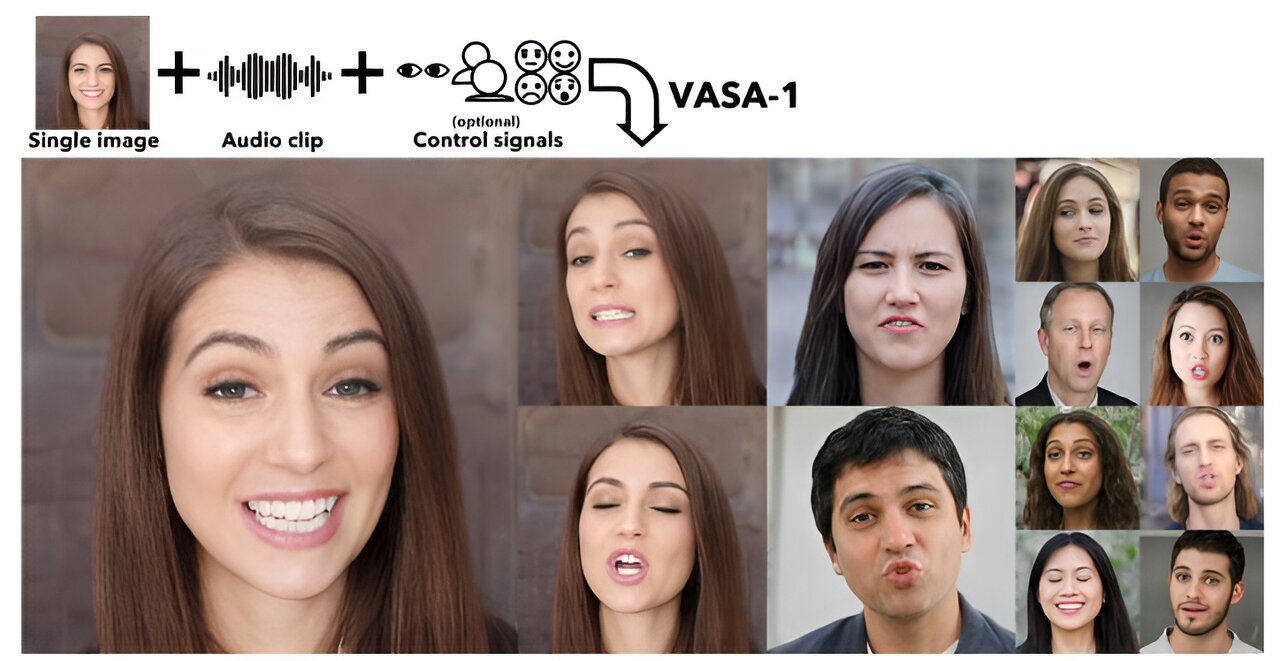
Given a single portrait image, a speech audio clip, and optionally a set of other control signals, our approach produces a high-quality lifelike talking face video of 512× 512 resolution at up to 40 FPS. The method is generic and robust, and the generated talking faces can faithfully mimic human facial expressions and head movements, reaching a high level of realism and liveliness. (All the photorealistic portrait images in this paper are virtual, non-existing identities.). Credit: arXiv (2024). DOI: 10.48550/arxiv.2404.10667
A team of AI researchers at Microsoft Research Asia has developed an AI application that converts a still image of a person and an audio track into an animation that accurately portrays the individual speaking or singing the audio track with appropriate facial ...
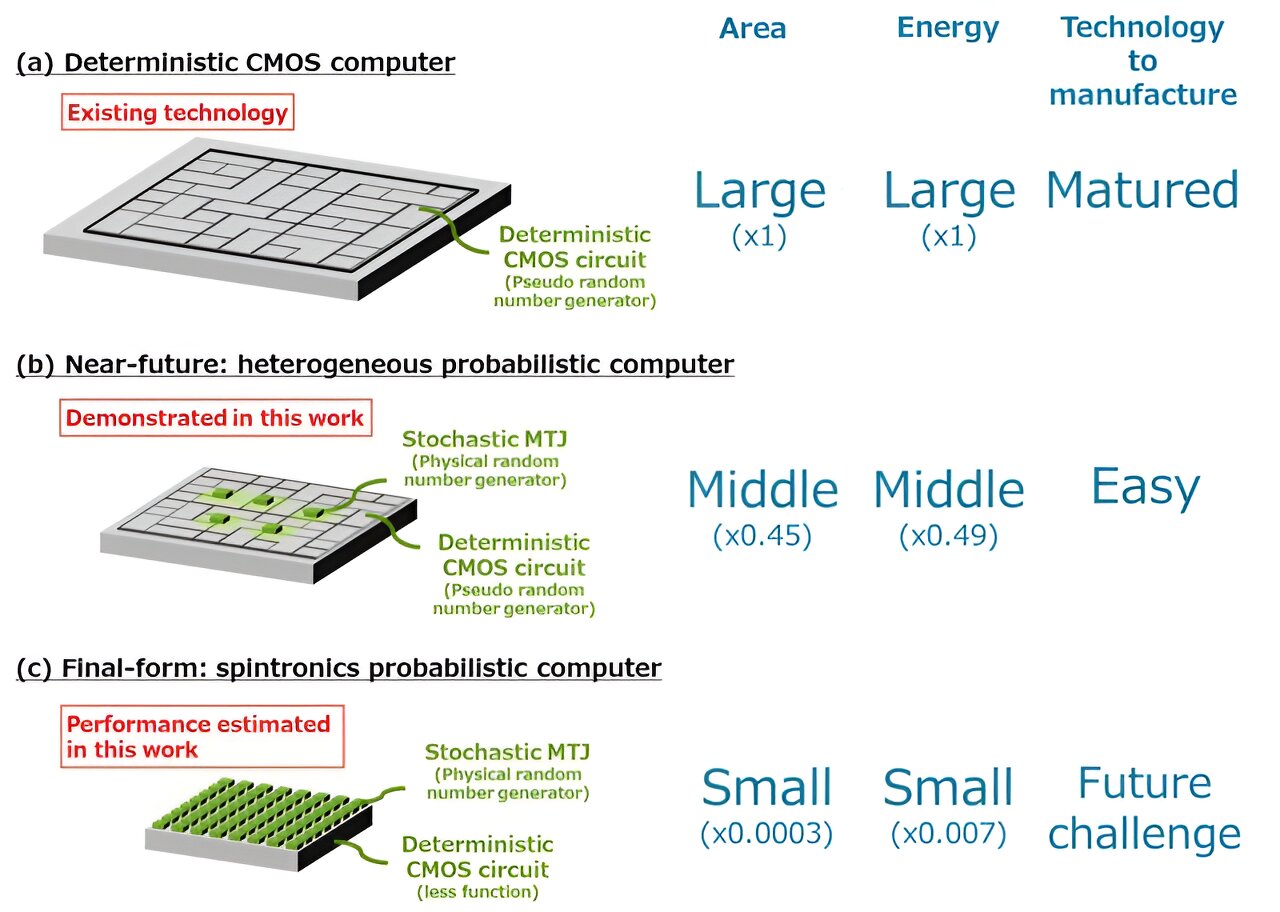
A schematic illustrating the difference in the current deterministic CMOS computer (a), near-future heterogeneous version of the probabilistic computer, and (c) the final form of the probabilistic computer fully based on the spintronics technology. The table on the right side represents the comparison between them in terms of the chip area, energy consumption, and manufacturability. Credit: Shunsuke Fukami and Kerem Camsari
Researchers at Tohoku University and the University of California, Santa Barbara, have unveiled a probabilistic computer prototype. Manufacturable with a near-future technology, the prototype combines a complementary metal-oxide semiconductor (CMOS) circuit with a limited number of stochastic nanomagnets, creating a heterogeneous probabilistic computer.
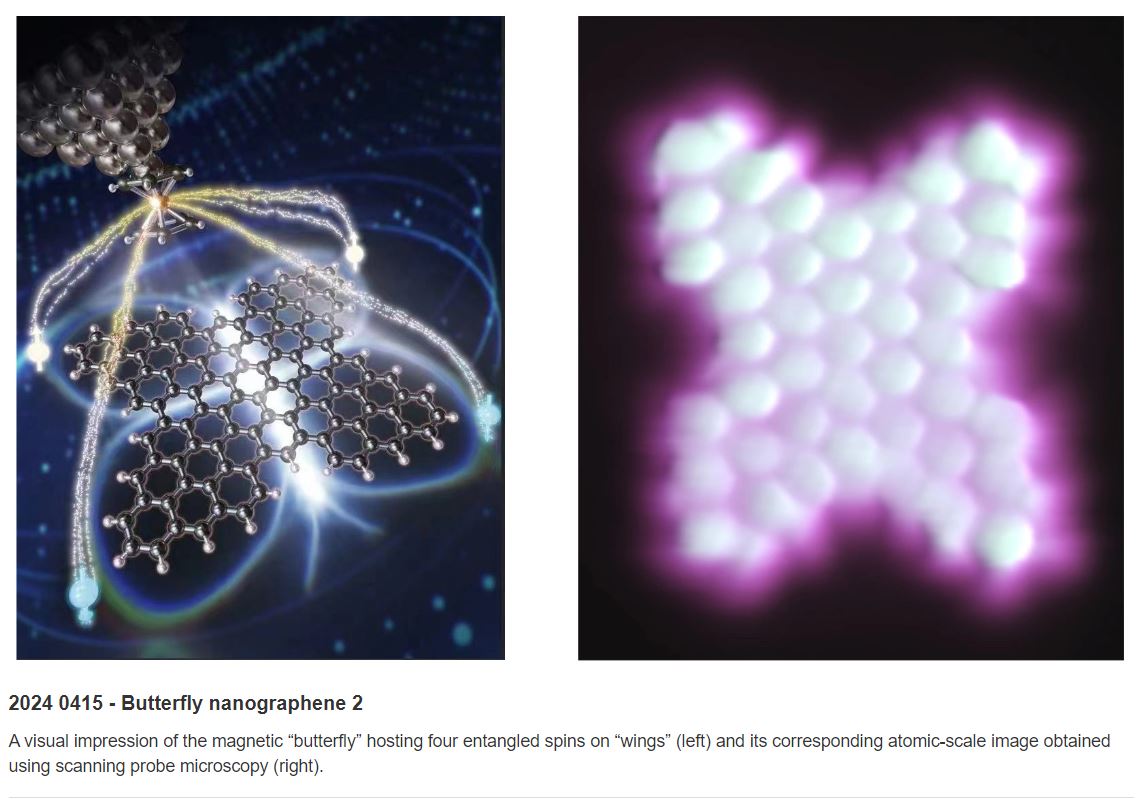
Researchers from the National University of Singapore (NUS) have developed a new design concept for creating next-generation carbon-based quantum materials, in the form of a tiny magnetic nanographene with a unique butterfly-shape hosting highly correlated spins. This new design has the potential to accelerate the advancement of quantum materials which are pivotal for the development of sophisticated quantum computing technologies poised to revolutionize information processing and high density storage capabilities.
The team was led by Associate Professor Lu Jiong from the NUS Department of Chemistry and Institute for Functional Intelligent Materials, together with Professor Wu Jishan who is also from the NUS Department of Chemistry, and international collaborators...
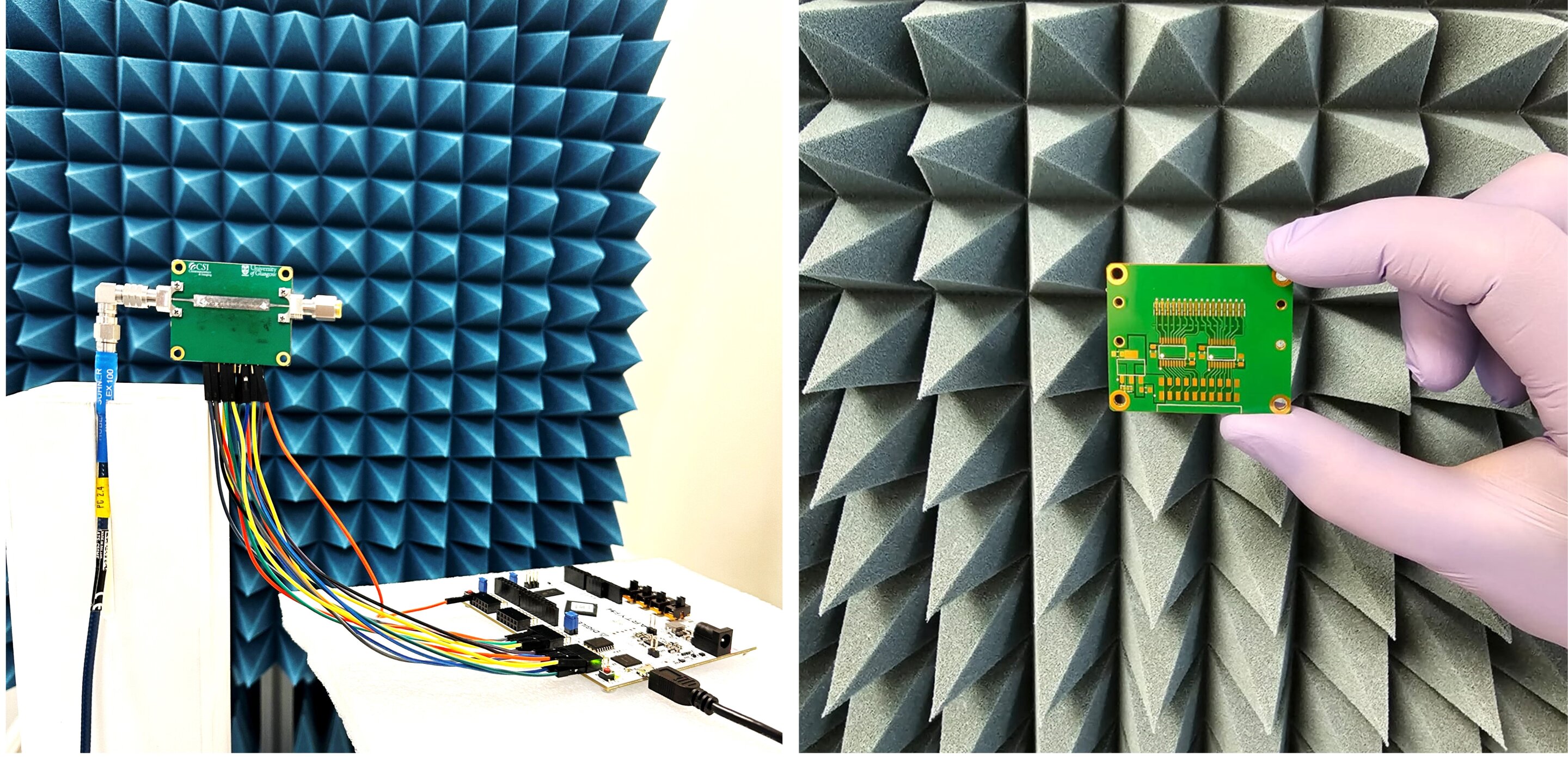
A team led by researchers from the University of Glasgow has developed an innovative wireless communications antenna that combines the unique properties of metamaterials with sophisticated signal processing to deliver a new peak of performance.
In a paper published in the IEEE Open Journal of Antennas and Propagation, titled “60 GHz Programmable Dynamic Metasurface Antenna (DMA) for Next-Generation Communication, Sensing, and Imaging Applications: From Concept to Prototype,” the researchers showcase their development of a prototype digitally coded dynamic metasurface antenna, or DMA, controlled through high-speed field-programmable gate array (FPGA).
Their DMA is the first in the world designed and demonstrated at the operating frequ...





Recent Comments