Category Physics

Machine Learning gives users ‘Superhuman’ ability to Open and Control Tools in Virtual Reality

Machine learning gives users 'superhuman' ability to open and control tools in virtual reality

Researchers have developed a virtual reality application where a range of 3D modeling tools can be opened and controlled using just the movement of a user’s hand.

The researchers, from the University of Cambridge, used machine learning to develop ‘HotGestures’—analogous to the hot keys used in many desktop applications.

HotGestures give users the ability to build figures and shapes in virtual reality without ever having to interact with a menu, helping them stay focused on a task without breaking their train of thought.

The idea of being able to open and control tools in virtual reality has been a movie trope for decades, but the researchers say that this is the first time such a ‘superhuman’ ability has been made possible...

Read More

Powered by AI, new system makes Human-to-Robot Communication more Seamless

Powered by A.I., new system makes human-to-robot communication more seamless
The new software system, called Lang2LTL, marks an important contribution toward more seamless communications between humans and robots. Photo by Juan Siliezar

The black and yellow robot, meant to resemble a large dog, stood waiting for directions. When they came, the instructions weren’t in code but instead in plain English: “Visit the wooden desk exactly two times; in addition, don’t go to the wooden desk before the bookshelf.”

Four metallic legs whirred into action. The robot went from where it stood in the room to a nearby bookshelf, and then, after a brief pause, shuffled to the designated wooden desk before leaving and returning for a second visit to satisfy the command.

Until recently, such an exercise would have been nearly impossible for navigation robots like this one t...

Read More

Late not great – Imperfect Timekeeping places Significant Limit on Quantum Computers

Late not great – imperfect timekeeping places significant limit on quantum computers

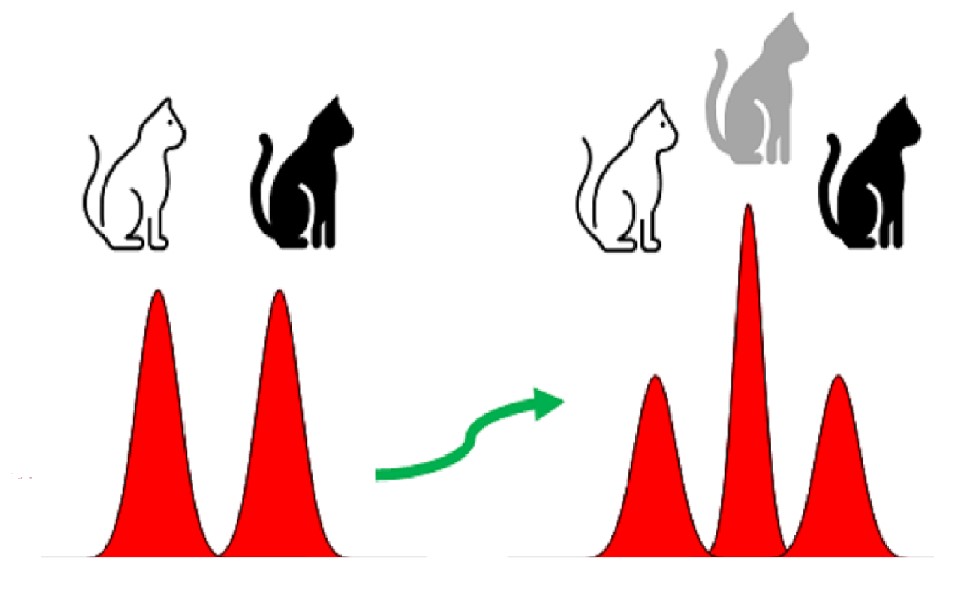
Quantum physicists show that imperfect timekeeping places a fundamental limit to quantum computers and their applications. The team claims that even tiny timing errors add up to place a significant impact on any large-scale algorithm, posing another problem that must eventually be solved if quantum computers are to fulfill the lofty aspirations that society has for them.

New research from a consortium of quantum physicists, led by Trinity College Dublin’s Dr Mark Mitchison, shows that imperfect timekeeping places a fundamental limit to quantum computers and their applications...

Read More

Deep Learning Speeds up Galactic Calculations

Four square images showing dark backgrounds with stars and galaxies
Divide and conquer. The upper images show a wide area of a galaxy being simulated. The time resolution is very low, in which each “step” of the simulation is around 100,000 years. The lower images show the specific area affected by a supernova explosion and have a finer time resolution where each step is under 10,000 years. These regions are combined with the more general simulation to improve the overall accuracy and efficiency of the simulation. ©2023 Hirashima et al., NASA/JPL-Caltech/ESO/R. Hunt/Hubble/L. Calçada CC-BY-ND

A new way to simulate supernovae may help shed light on our cosmic origins. Supernovae, exploding stars, play a critical role in the formation and evolution of galaxies...

Read More