



- A molecular switch syncs fat burning to the body clock, our diet and the temperature around us
- Ions help electrons hop through porous material with potential for brain-inspired computing
- Webb provides crash course on planet-shattering collisions
- An omega-3 paradox: When ‘healthy fats’ shut down defenses against cancer
Category Physics
Toward Metropolitan Free-Space Quantum Networks
October 13, 2023,
 Technology/Electronics, Physics
Successful Morphing of Inorganic Perovskites Without Damaging their Functional Properties
October 9, 2023,
Physics, Technology/Electronics
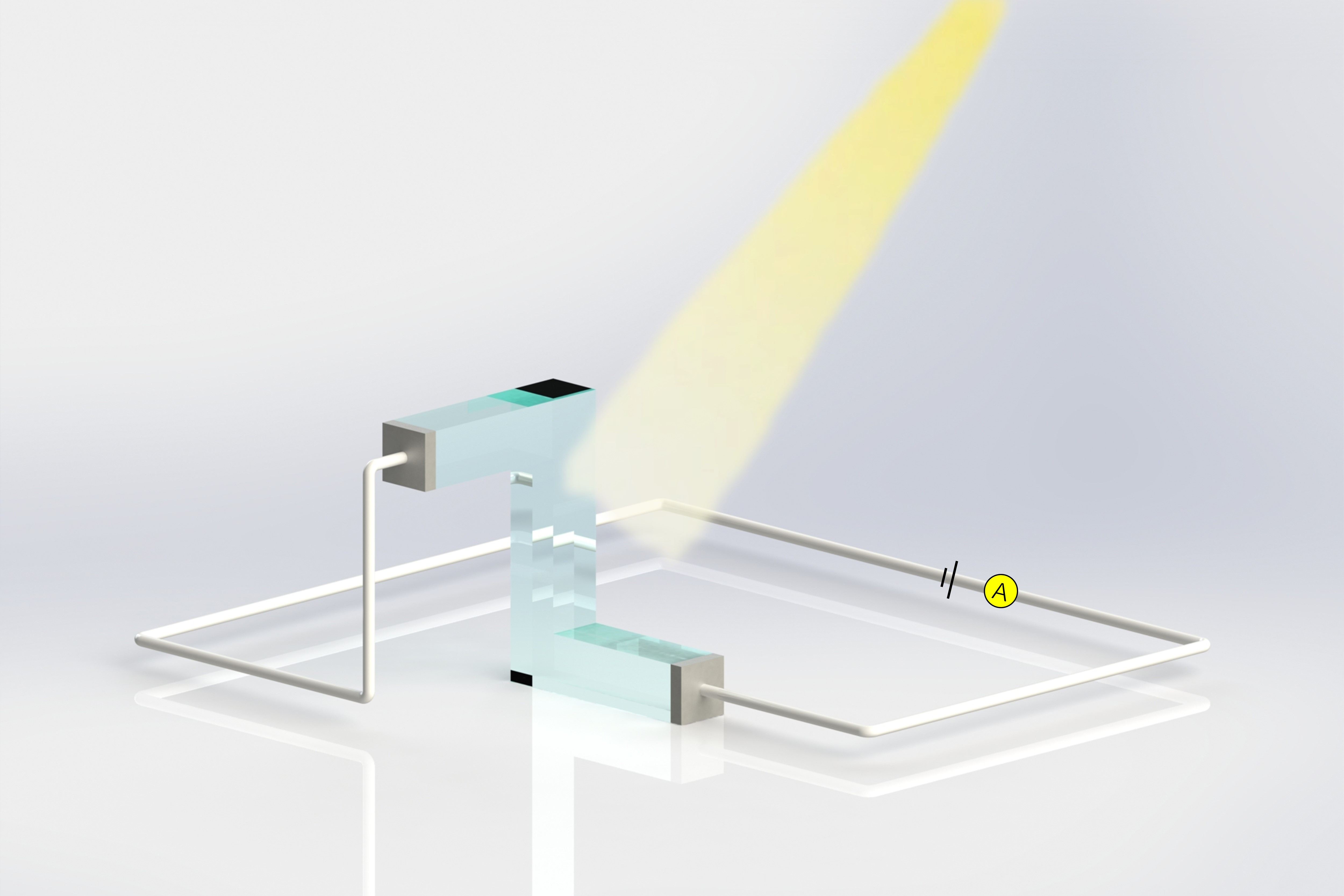
A research team co-led by scholars from City University of Hong Kong (CityU) has successfully morphed all-inorganic perovskites at room temperature without compromising their functional properties. Their findings demonstrate the potential of this class of semiconductors for manufacturing next-generation deformable electronics and energy systems in the future.
All-inorganic lead halide perovskites are becoming increasingly important semiconducting materials in energy conversion and optoelectronics because of their outstanding performance and enhanced environmental stability.
“However, unlike metal materials or polymers, inorganic semiconductors ar...
Read MorePhysicists Coax Superconductivity and more from Quasicrystals
October 4, 2023,
Physics, Chemistry/Nanotechnology

Credit: Sergio C. de la Barrera, University of Toronto
In research that could jumpstart interest into an enigmatic class of materials known as quasicrystals, MIT scientists and colleagues have discovered a relatively simple, flexible way to create new atomically thin versions that can be tuned for important phenomena. In work reported in Nature they describe doing just that to make the materials exhibit superconductivity and more.
The research introduces a new platform for not only learning more about quasicrystals, but also exploring exotic phenomena that can be hard to study but could lead to important applications and new physics...
Read MoreScientists Unveil Fire-Safe Fuel. It Won’t Burn Without Electric Current
October 3, 2023,
Physics, Chemistry/Nanotechnology

UC Riverside chemical engineers have designed a fuel that ignites only with the application of electric current. Since it doesn’t react to flames and cannot start accidental fires during storage or transport, it is a “safe” liquid fuel.
“The fuel we’re normally using is not very safe. It evaporates and could ignite, and it’s difficult to stop that,” said Yujie Wang, UCR chemical engineering doctoral student and co-author of a new paper about the fuel. “It is much easier to control the flammability of our fuel and stop it from burning when we remove voltage.”
The Journal of the American Chemical Society paper describes how the team created the fuel, and additional technical details are also included i...
Read More
Recent Comments