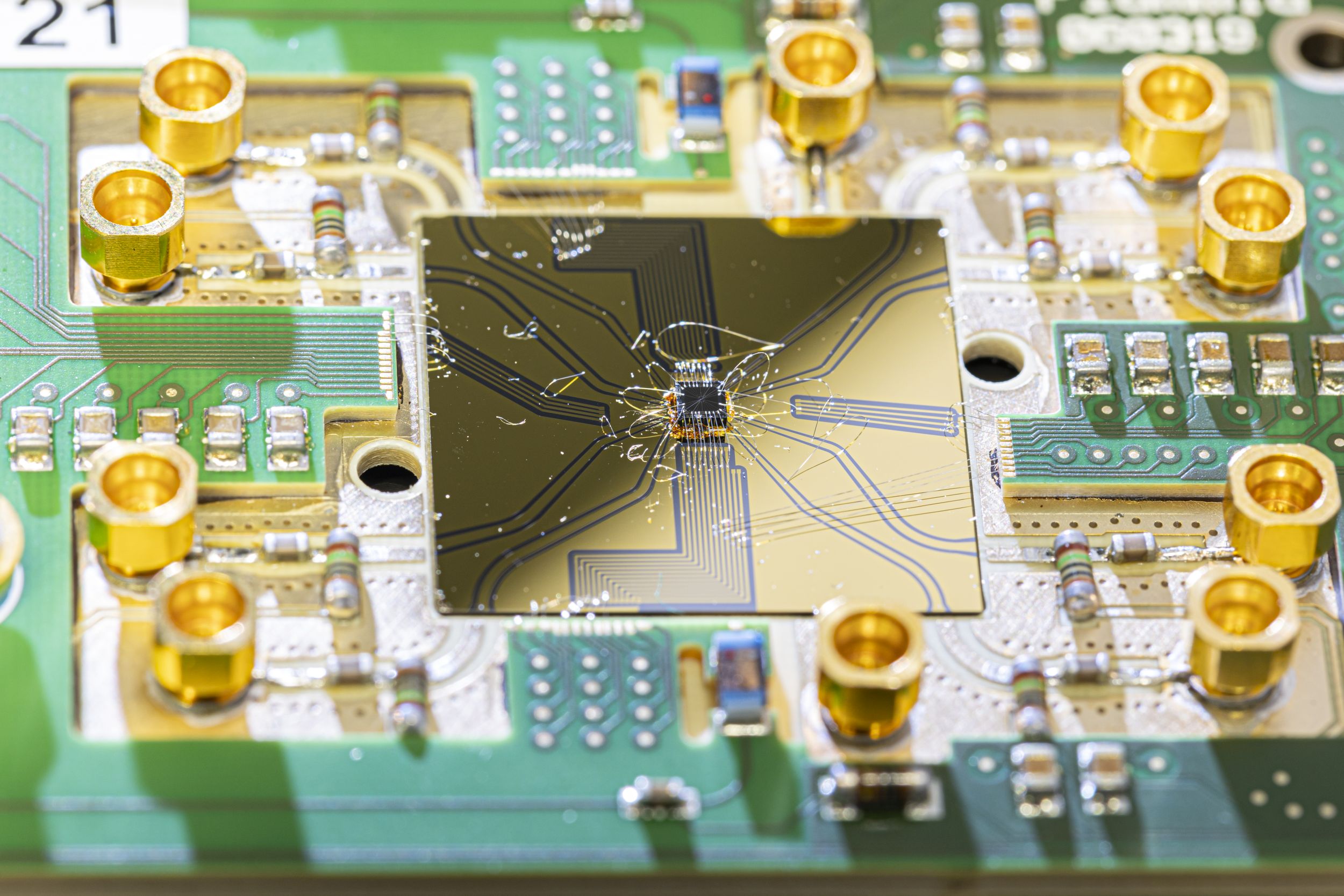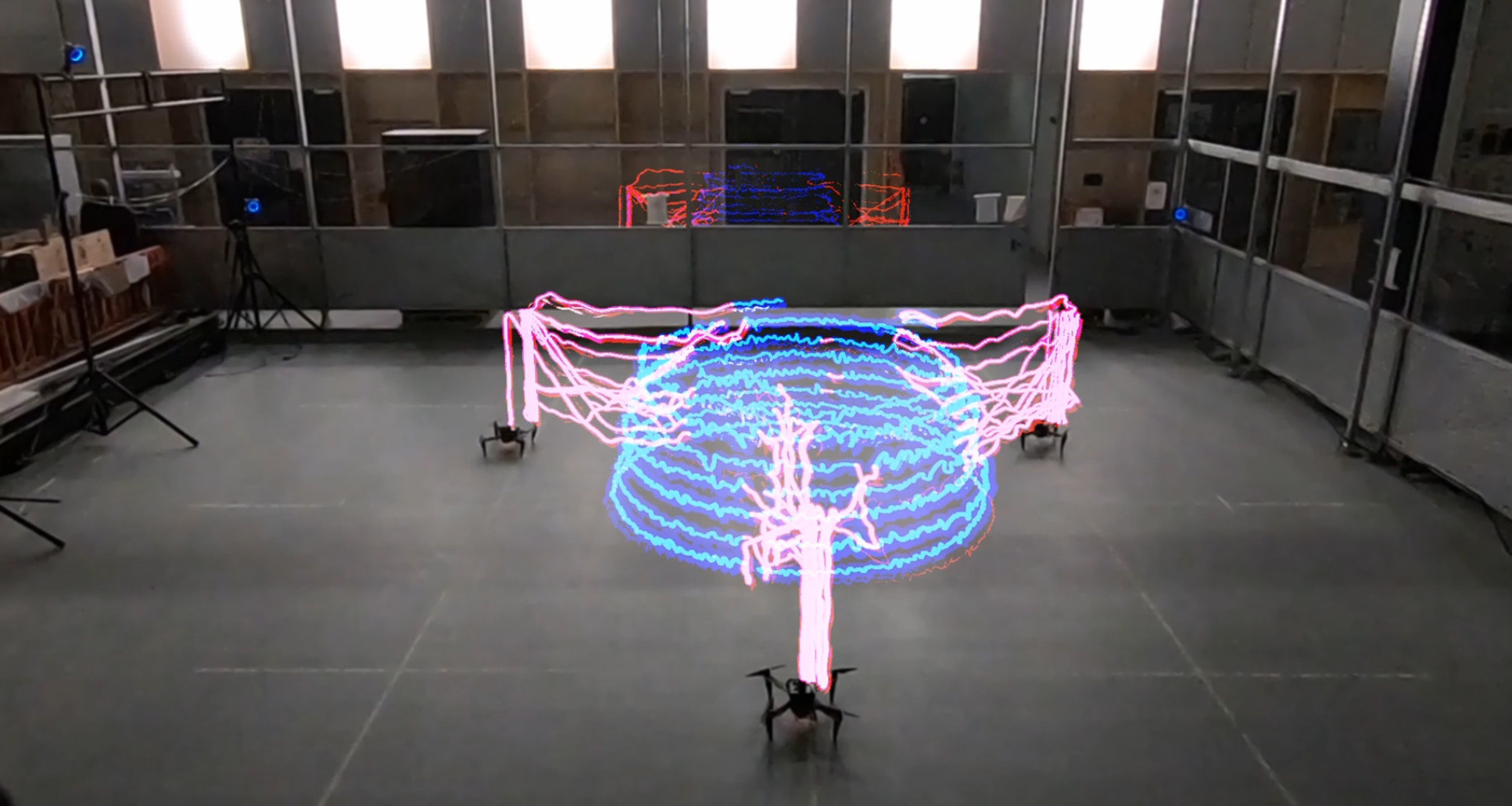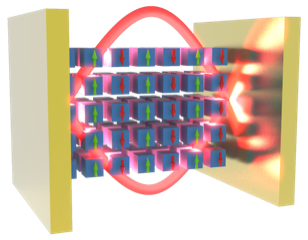
Caption:MIT researchers have developed a method to enable quantum sensors to detect any arbitrary frequency, with no loss of their ability to measure nanometer-scale features. Quantum sensors detect the most minute variations in magnetic or electrical fields, but until now they have only been capable of detecting a few specific frequencies, limiting their usefulness. Pci Credits:Credit: Guoqing Wang
Engineers expand the capabilities of these ultrasensitive nanoscale detectors, with potential uses for quantum computing and biological sensing. Quantum sensors, which detect the most minute variations in magnetic or electrical fields, have enabled precision measurements in materials science and fundamental physics...
Advance shows promise for ”meta-bots’ designed to deliver drugs or aid rescue missions. A team of UCLA engineers and their colleagues have developed a new design strategy and 3D printing technique to build robots in one single step.
A study that outlined the advance, along with the construction and demonstration of an assortment of tiny robots that walk, maneuver and jump, was published in Science.
The breakthrough enabled the entire mechanical and electronic systems needed to operate a robot to be manufactured all at once by a new type of 3D printing process for engineered active materials with multiple functions (also known as metamaterials)...
5G networks are becoming more prevalent worldwide. Many consumer devices that support 5G are already benefiting from increased speeds and lower latency. However, some frequency bands allocated for 5G are not effectively utilized owing to technological limitations. These frequency bands include the New Radio (NR) 39 GHz band, but actually span from 37 GHz to 43.5 GHz, depending on the country. The NR band offers notable advantages in performance over other lower frequency bands 5G networks use today. For instance, it enables ultralow latency in communication along with data rates of over 10 Gb/s and a massive capacity to accommodate several users.
However, these feats come at a cost. High-frequency signals are attenuated quickly as they travel through space...
New research is adding further weight to the argument that prolonged sitting may be hazardous to your health. An international study surveying more than 100,000 individuals in 21 countries found that people who sat for six to eight hours a day had a 12-13 per cent increased risk for early death and heart disease, while those who sat for more than eight hours daily increased that to a sobering 20 per cent.
The study, co-led by Simon Fraser University health sciences professor Scott Lear and Wei Li of Beijing’s Chinese Academy of Medical Sciences, is published today in the journal Jama Cardiology...
Recent Comments