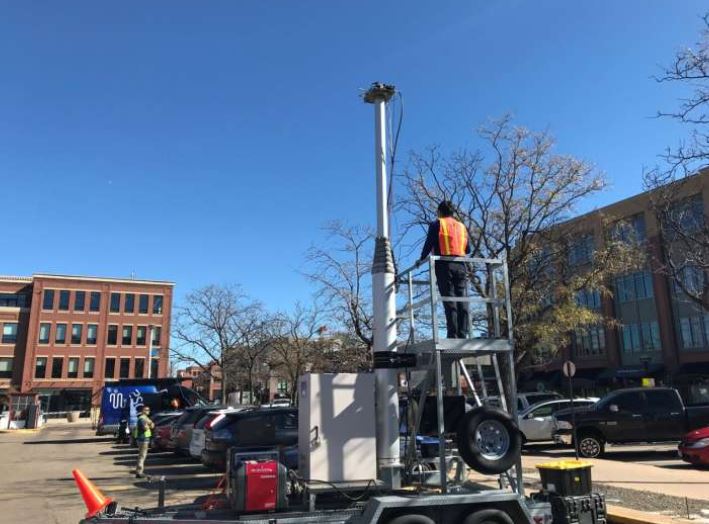
NIST communications researchers traveled to downtown Boulder, Colorado, to verify their channel model for evaluating high-frequency wireless network designs. Sung Yun Jun is checking the alignment of the transmitter, mounted 6 meters high on a mast, with the receiver antenna array on the roof of the blue van. Derek Caudill, barely visible inside the van, is preparing software programs to collect measurement data. Justin Sadinski, in a yellow vest, is checking equipment on the masts. Credit: NIST
As Wi-Fi is deployed more widely in cities, and perhaps at higher frequencies, it may depend on an abundant urban asset: streetlight poles.
To help ensure these networks work well, researchers at the National Institute of Standards and Technology (NIST) have developed and verified a novel mo...
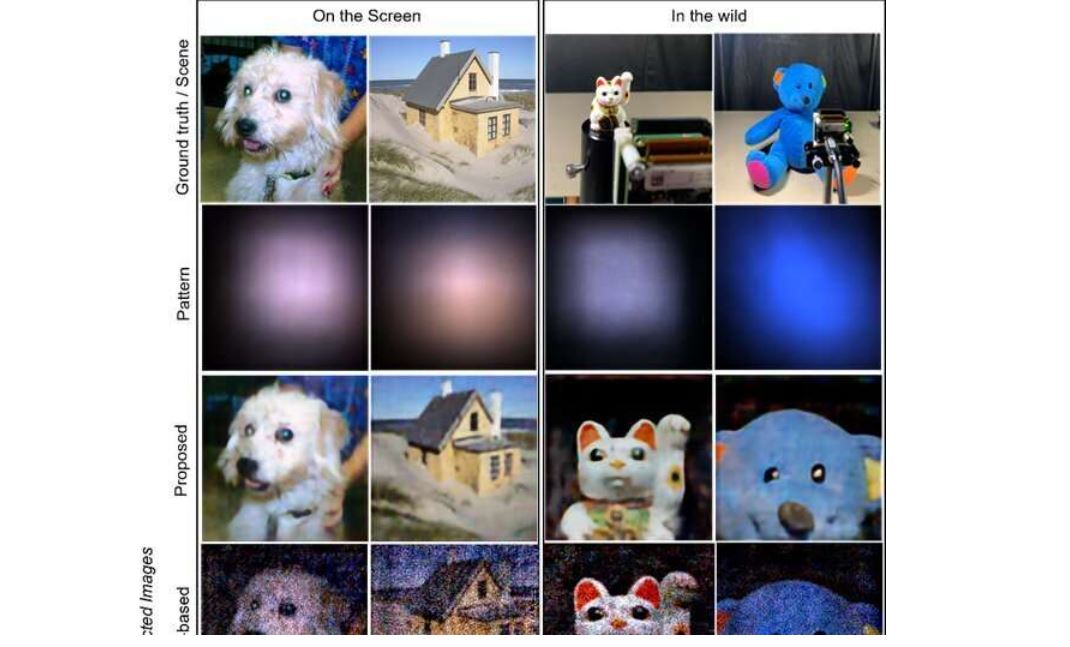
The targets are the images displayed on an LCD screen (left two columns) and the objects in the wild (right two columns; beckoning cat doll and stuffed bear), respectively. The first row shows the ground truth images displayed on the screen and the shooting scenes for in-the-wild objects. The second row shows the captured patterns on the sensor. The last three rows illustrate the reconstructed images by the proposed, model-based, and CNN-based methods, respectively. The proposed method produces the most high-quality and visually appealing images. Credit: Xiuxi Pan from Tokyo Tech
A camera usually requires a lens system to capture a focused image, and the lensed camera has been the dominant imaging solution for centuries...
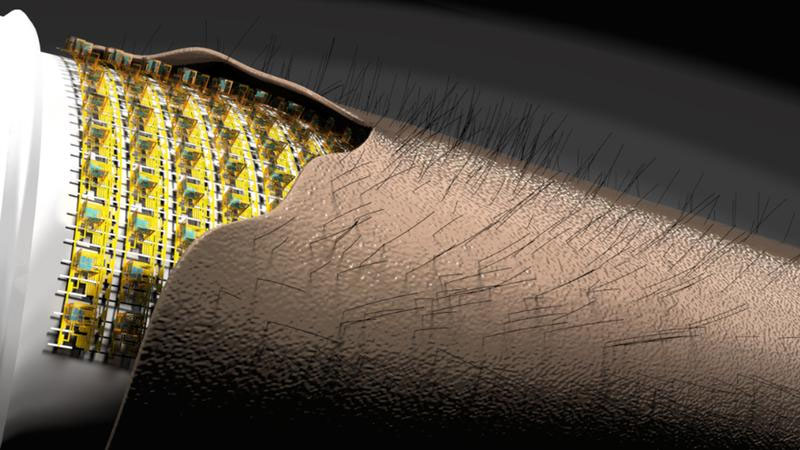
Artificial electronic skin (e-skin): Highly integrated flexible microelectronic 3D sensorics perceive movement of fine hairs on artificial skin. (Image: AG Prof. Dr. Oliver G. Schmidt)
A research team from Chemnitz and Dresden has taken a major step forward in the development of sensitive electronic skin (e-skin) with integrated artificial hairs. E-skins are flexible electronic systems that try to mimic the sensitivity of their natural human skin counterparts. Applications range from skin replacement and medical sensors on the body to artificial skin for humanoid robots and androids. Tiny surface hairs can perceive and anticipate the slightest tactile sensation on human skin and even recognize the direction of touch...
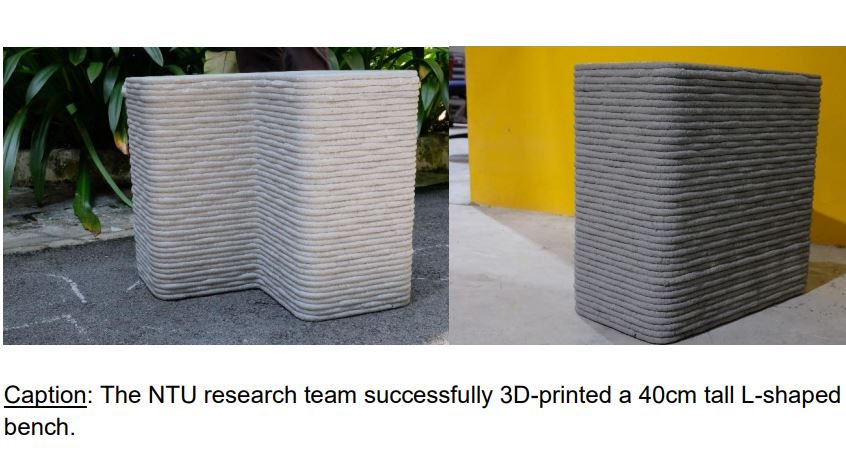
Researchers from Nanyang Technological University, Singapore (NTU Singapore) have developed the capability to use recycled glass in 3D printing, opening doors to a more environmentally sustainable way of building and construction.
Glass is one material that can be 100 per cent recycled with no reduction in quality, yet it is one of the least recycled waste types. Glass is made up of silicon dioxide, or silica, which is a major component of sand, and therefore it offers significant untapped potential to be recycled into other products.
At the same time, due to growing populations, urbanisation and infrastructure development, the world is facing a shortage of sand, with climate scientists calling it one of the greatest sustainability challenges of the 21st century.





Recent Comments