Category Physics

New Electronic Paper displays Brilliant Colors

New electronic paper displays brilliant colours

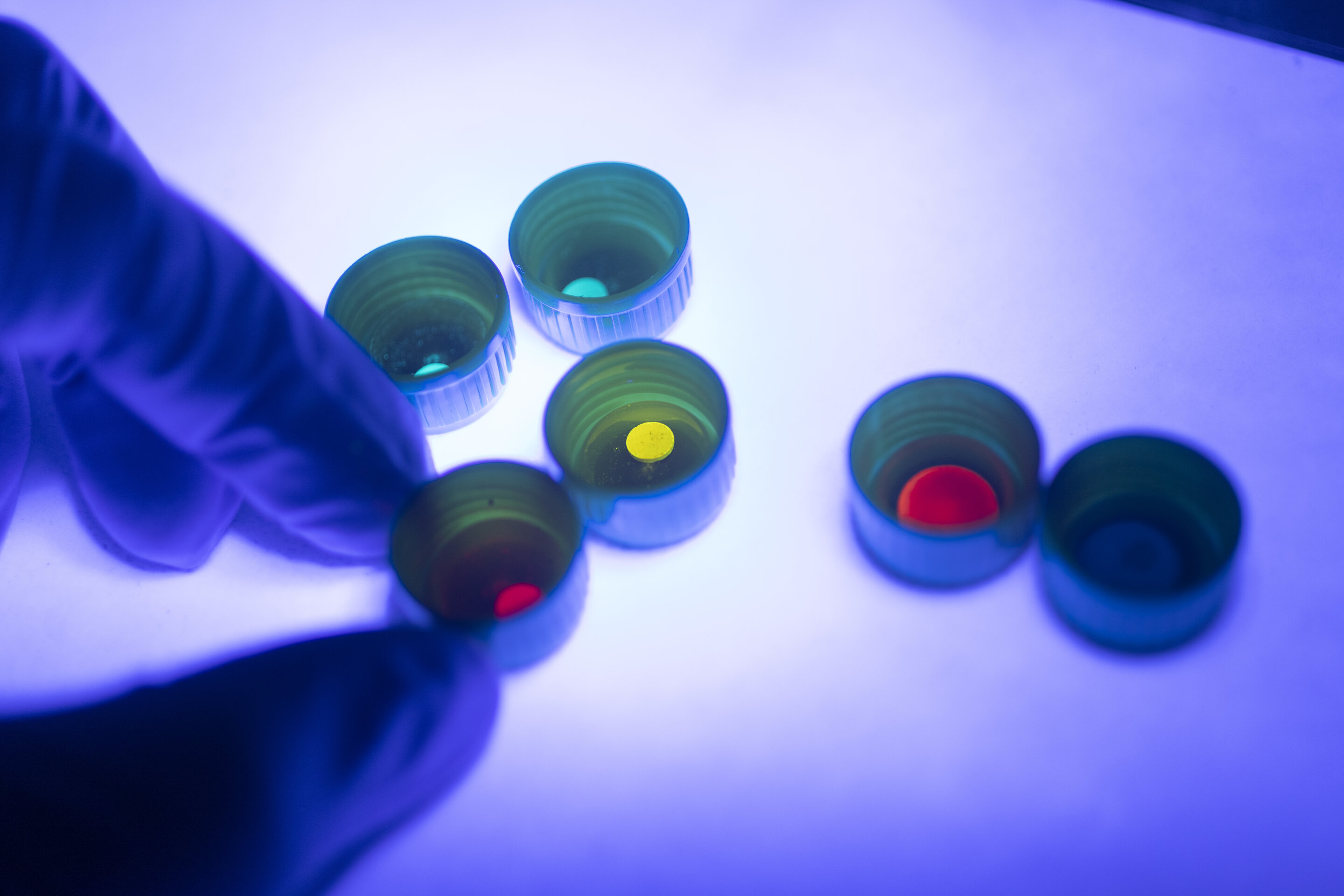
Imagine sitting out in the sun, reading a digital screen as thin as paper, but seeing the same image quality as if you were indoors. Thanks to research from Chalmers University of Technology, Sweden, it could soon be a reality. A new type of reflective screen — sometimes described as ‘electronic paper’ — offers optimal colour display, while using ambient light to keep energy consumption to a minimum.

Traditional digital screens use a backlight to illuminate the text or images displayed upon them. This is fine indoors, but we’ve all experienced the difficulties of viewing such screens in bright sunshine. Reflective screens, however, attempt to use the ambient light, mimicking the way our eyes respond to natural paper.

“For reflective screens to compete with the energy-intensive d...

Read More

Observation of D Coulomb drag between adjacent Quantum Spin Hall (QSH) Edges separated by an Air Gap

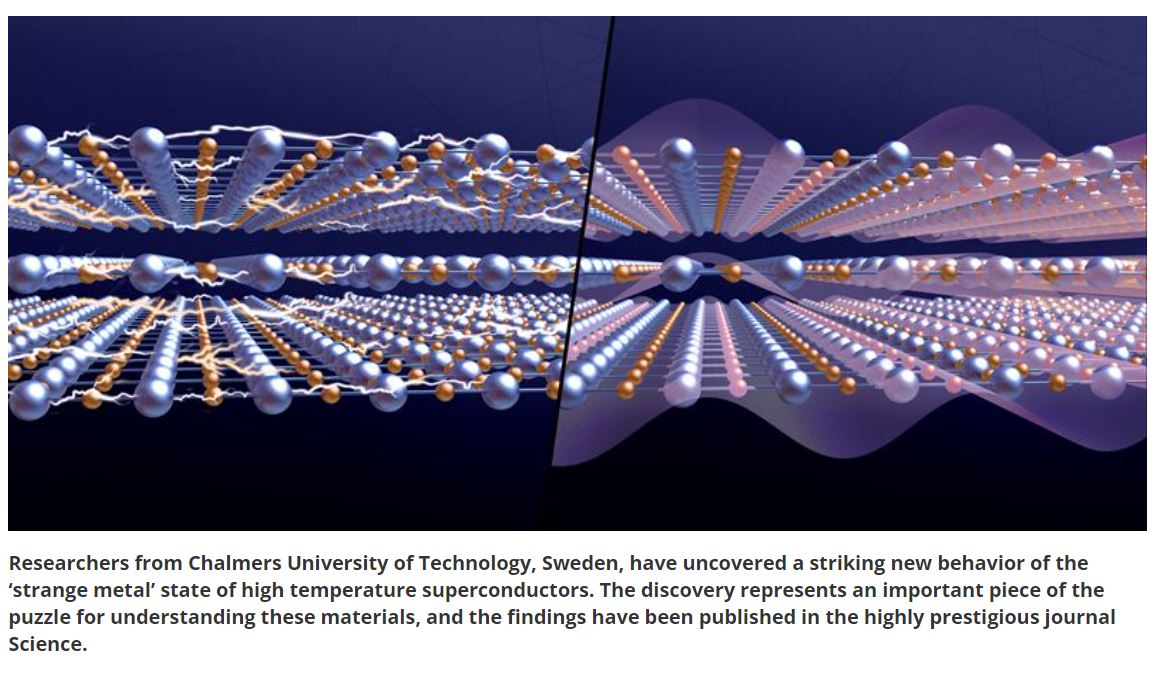
1D Coulomb drag in topological circuits. Credit: Du et al.

Two important factors limiting Moore’s Law are power consumption and Coulomb interactions. Coulomb interactions are interactions between electric charges that follow Coloumb’s law, an electrodynamics theory. These interactions can be a major challenge for the development of nanoelectronic circuits.

QSH insulators are particularly promising materials for the development of low-power electronics, yet so far the impact of Coulomb interactions on nanocircuits made by these materials have only been examined theoretically, rather than experimentally.

Researchers at Nanjing University and Peking University have recently observed one-dimensional (1D) Coulomb drag between adjacent QSH edges separated by an air gap...

Read More

Novel Heat-Management material keeps Computers Running Cool

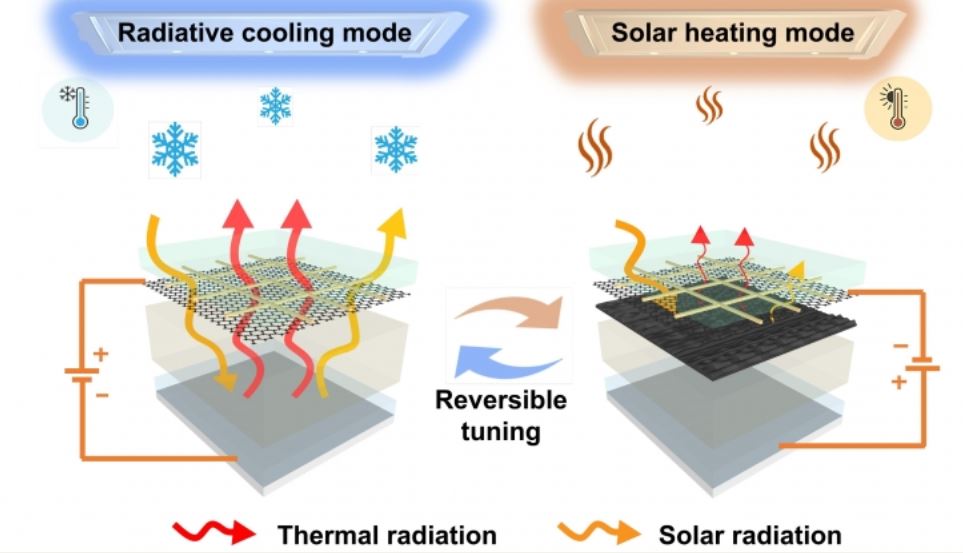
Schematic illustrating thermal management in electronics chip packaging

UCLA engineers have demonstrated successful integration of a novel semiconductor material into high-power computer chips to reduce heat on processors and improve their performance. The advance greatly increases energy efficiency in computers and enables heat removal beyond the best thermal-management devices currently available.

The research was led by Yongjie Hu, an associate professor of mechanical and aerospace engineering at the UCLA Samueli School of Engineering. Nature Electronics recently published the finding in this article.

Computer processors have shrunk down to nanometer scales over the years, with billions of transistors sitting on a single computer chip...

Read More

The First Commercially Scalable Integrated Laser and Microcomb on a Single Chip

Artist's concept illustration of electrically controlled optical frequency combs at wafer scale
Artist’s concept illustration of electrically controlled optical frequency combs at wafer scale
Photo Credit: 
ILLUSTRATION BY BRIAN LONG

Fifteen years ago, UC Jim Sanchezta Barbara electrical and materials professor John Bowers pioneered a method for integrating a laser onto a silicon wafer. The technology has since been widely deployed in combination with other silicon photonics devices to replace the copper-wire interconnects that formerly linked servers at data centers, dramatically increasing energy efficiency — an important endeavor at a time when data traffic is growing by roughly 25% per year.

For several years, the Bowers group has collaborated with the group of Tobias J...

Read More