Category Physics

A Tiny Device Incorporates a compound made from Starch and Baking Soda to Harvest Energy from Movement

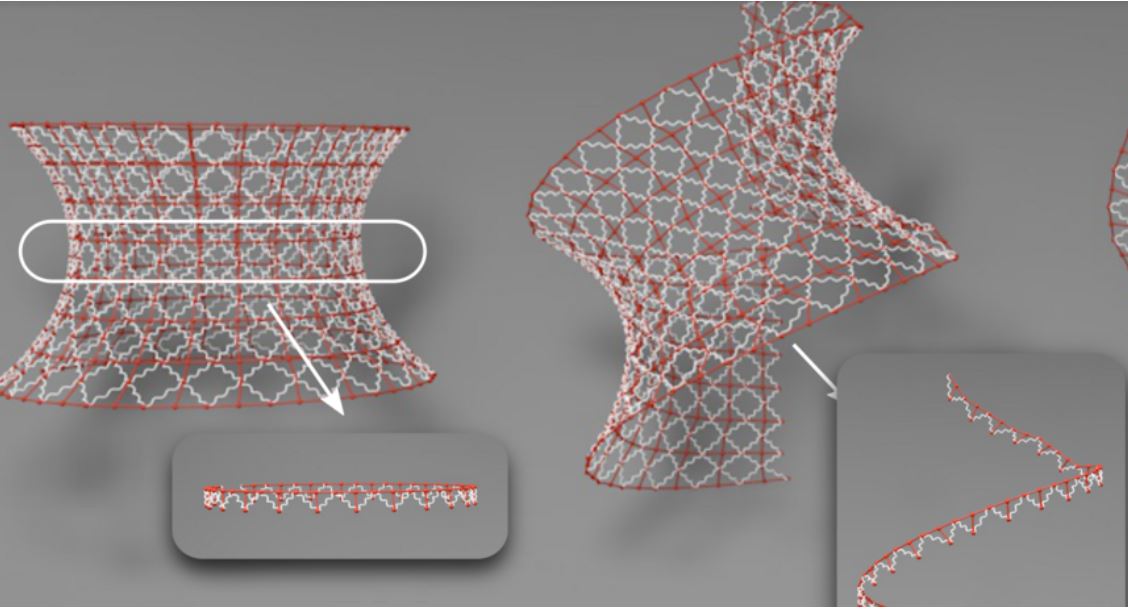
The triboelectric nanogenerator (above) is made using a MOF fabricated with cyclodextrin (circular molecule).
DGIST

Scientists have used a compound made from a starch derivative and baking soda to help convert mechanical to electrical energy. The approach, developed by scientists at Daegu Gyeongbuk Institute of Technology (DGIST), with colleagues in Korea and India, is cost-effective and biocompatible, and can help charge low-energy electronics like calculators and watches. The details were published in the journal Advanced Functional Materials.

“Triboelectric nanogenerators harvest mechanical energy and convert it into an electric current,” explains DGIST robotics engineer Hoe Joon Kim...

Read More

Compact Quantum Computer for Server Centers

Compact quantum computer for server centers
The centerpiece of the quantum computer: the ion trap in a vacuum chamber. Credit: University of Innsbruck

Quantum computers developed to date have been one-of-a-kind devices that fill entire laboratories. Now, physicists at the University of Innsbruck have built a prototype of an ion trap quantum computer that can be used in industry. It fits into two 19-inch server racks like those found in data centers throughout the world. The compact, self-sustained device demonstrates how this technology will soon be more accessible.

Over the past three decades, fundamental groundwork for building quantum computers has been pioneered at the University of Innsbruck, Austria...

Read More

Researchers uncover Unique Properties of a promising New Superconductor

A diagram depicting the different s-, p-, and d-wave superconducting states in the metal Niobium diselenide.
A team of physicists led by the University of Minnesota has discovered that the unique superconducting metal Niobium diselenide (NbSe2) is more resilient when used as a very thin layer. The above diagram depicts the different s-, p-, and d-wave superconducting states in the metal. Photo credit: Alex Hamill and Brett Heischmidt, University of Minnesota

Material could be used in future quantum computing applications. An international team of physicists led by the University of Minnesota has discovered that a unique superconducting metal is more resilient when used as a very thin layer. The research is the first step toward a larger goal of understanding unconventional superconducting states in materials, which could possibly be used in quantum computing in the future.

The collaboratio...

Read More

Researchers can Turn a Single Photo into a Video

A GIF that showcases symmetric splatting -- starts out with two waterfalls. On the right, the waterfall starts losing pixels at the top because they are moving to the bottom. On the left, the waterfall starts losing pixels at the bottom because they are moving to the top. At the end of this GIF, the two waterfalls are combined into one so that there are no holes.
To animate the image, the team created “symmetric splatting,” which predicts both the future and the past for an image and then combines them into one animation.Hołyński et al./CVPR

Researchers have developed a deep learning method that can produce a seamlessly looping, realistic looking video from a single photo. Sometimes photos cannot truly capture a scene. How much more epic would that vacation photo of Niagara Falls be if the water were moving?

Researchers at the University of Washington have developed a deep learning method that can do just that: If given a single photo of a waterfall, the system creates a video showing that water cascading down. All that’s missing is the roar of the water and the feeling of the spray on your face.

The team’s method can animate any fl...

Read More