Category Physics

Dog Training methods help researchers Teach Robots to learn New Tricks

Computer Science graduate student Andrew Hundt has developed a means to teach a robot to stack blocks. Photo: Will Kirk/Johns Hopkins University

With a training technique commonly used to teach dogs to sit and stay, Johns Hopkins University computer scientists showed a robot how to teach itself several new tricks, including stacking blocks. With the method, the robot, named Spot, was able to learn in days what typically takes a month.

By using positive reinforcement, an approach familiar to anyone who’s used treats to change a dog’s behavior, the team dramatically improved the robot’s skills and did it quickly enough to make training robots for real-world work a more feasible enterprise. The findings are newly published in a paper called, “Good Robot!”

“The question here was how ...

Read More

Charging Electric Cars up to 90% in 6 minutes

Charging electric cars up to 90% in six minutes | Businesblog
Minkyung Kim, Mihee Jeong, Won-Sub Yoon, Byoungwoo Kang. Ultrafast kinetics in a phase separating electrode material by forming an intermediate phase without reducing the particle sizeEnergy & Environmental Science, 2020; DOI: 10.1039/D0EE02518F

POSTECH Professor Byoungwoo Kang’s research team uncovers a new Li-ion battery electrode material that can achieve high-energy density and high power capability per volume without reducing particle size.

With Telsa in the lead, the electric vehicle market is growing around the world. Unlike conventional cars that use internal combustion engines, electric cars are solely powered by lithium ion batteries, so the battery performance defines the car’s overall performance...

Read More

Optical Wiring for Large Quantum Computers

Ion-trap chip with integrated waveguides

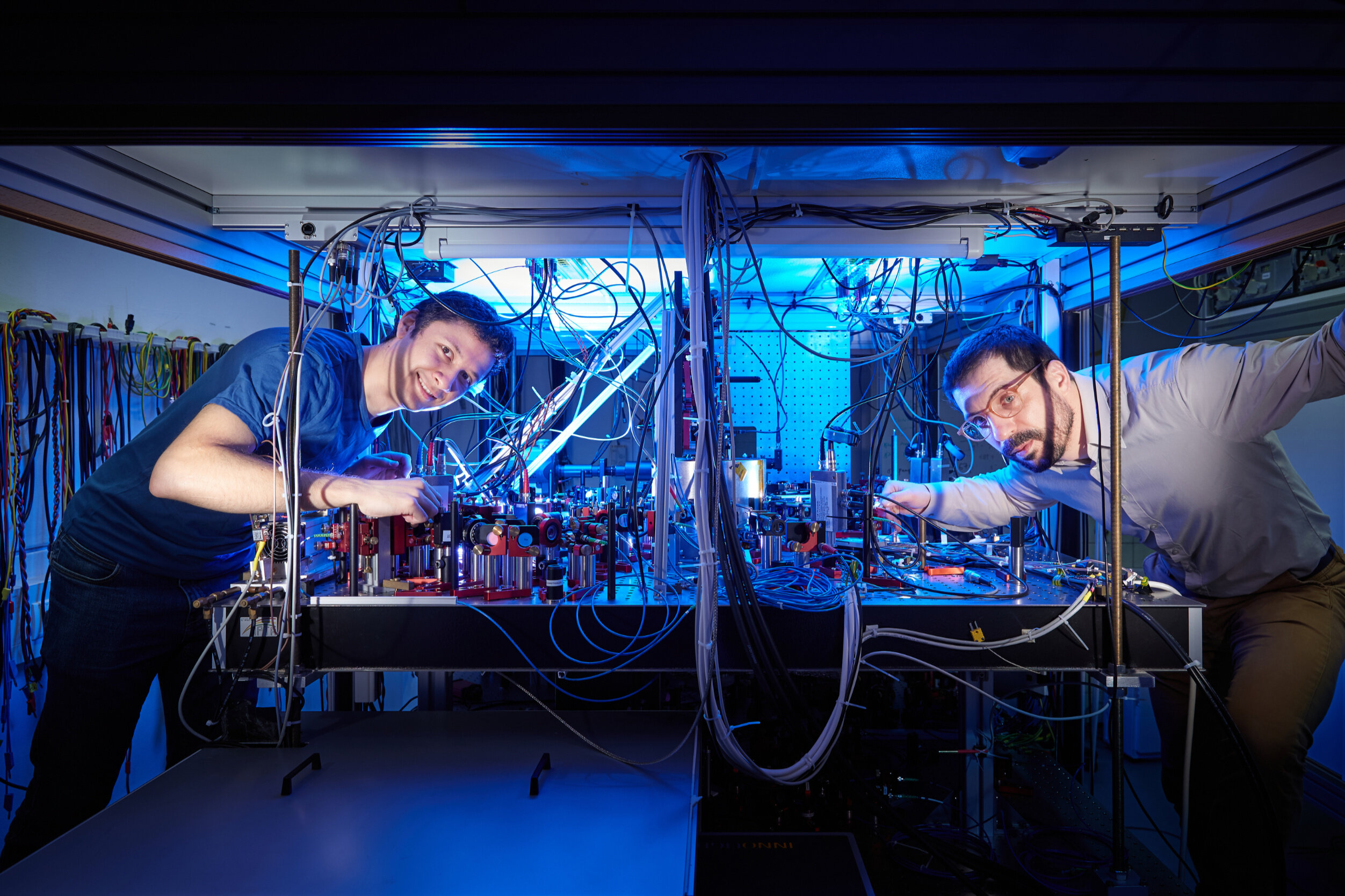
Researchers have demonstrated a new technique for carrying out sensitive quantum operations on atoms. In this technique, the control laser light is delivered directly inside a chip. This should make it possible to build large-scale quantum computers based on trapped atoms.

Hitting a specific point on a screen with a laser pointer during a presentation isn’t easy — even the tiniest nervous shaking of the hand becomes one big scrawl at a distance. Now imagine having to do that with several laser pointers at once. That is exactly the problem faced by physicists who try to build quantum computers using individual trapped atoms...

Read More

This Beetle can Survive getting Run Over by a Car. Engineers are figuring out how

Delamination
The diabolical ironclad beetle has puzzle piece-like blades in its abdomen that “delaminate” to prevent the beetle’s exoskeleton from suddenly failing under immense force. Purdue researchers simulated this mechanism using 3D-printed versions of the blades. (Purdue University video/Maryam Hosseini and Pablo Zavattieri)

Getting run over by a car is not a near-death experience for the diabolical ironclad beetle. How the beetle survives could inspire the development of new materials with the same herculean toughness, engineers show.

These materials would be stiff but ductile like a paper clip, making machinery such as aircraft gas turbines safer and longer-lasting, the researchers said.

The study, led by engineers at the University of California, Irvine (UCI) and Purdue Univers...

Read More