
Category Physics

Far-UVC Light Safely Kills Airborne Coronaviruses, study finds

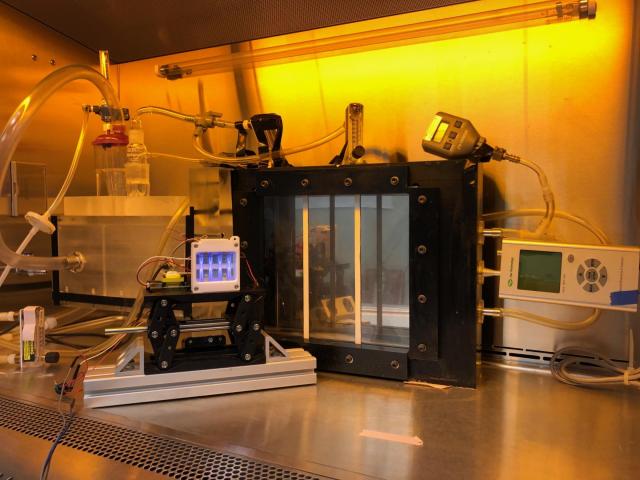
Equipment used to test the effect of far-UVC light on airborne coronaviruses. Photo: Center for Radiological Research at Columbia University.

More than 99.9% of seasonal coronaviruses present in airborne droplets were killed when exposed to a particular wavelength of ultraviolet light that is safe to use around humans, a new study at Columbia University Irving Medical Center has found.

“Based on our results, continuous airborne disinfection with far-UVC light at the current regulatory limit could greatly reduce the level of airborne virus in indoor environments occupied by people,” says the study’s lead author David Brenner, PhD, Higgins Professor of Radiation Biophysics at Columbia University Vagelos College of Physicians and Surgeons and director of the Center for Radiological Res...

Read More
Silicon Nanowire Transistors with both Learning and Memory Functions

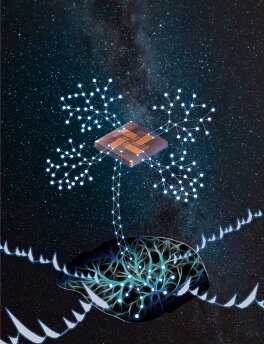
The brain-inspired dynamic neurotransistor chip developed by the researchers. Credit: Baek et al.

Neuromorphic computing entails building architectures inspired by elements of the human brain, such as neural organization and synapses. These architectures have proved to be highly promising and advantageous for a number of applications, as they can have both memory and learning functions.

Most current neuromorphic architectures artificially recreate the plasticity (i.e., ability to be easily shaped over time) of synapses, which are junctions between nerve cells that enable the propagation of impulses across brain regions...

Read More

Measuring a Tiny Quasiparticle is a major step forward for Semiconductor Technology

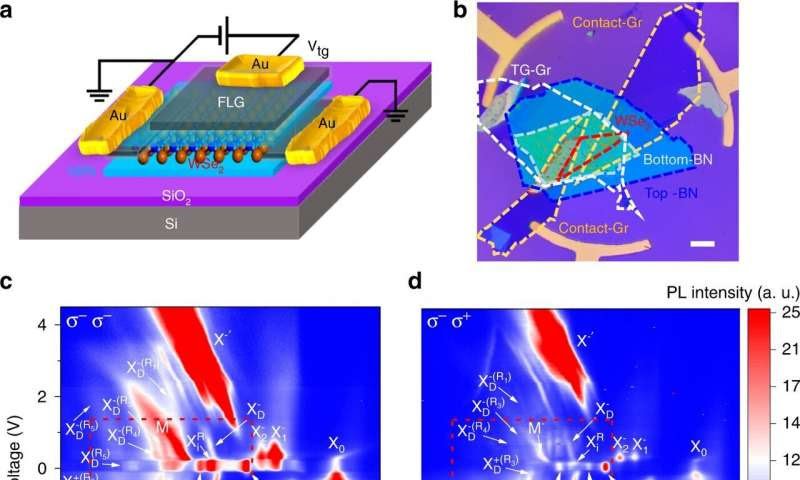
PL spectra of BN encapsulated monolayer WSe2 at 4.2 K. Credit: Nature Communications (2020). DOI: 10.1038/s41467-020-16934-x

A team of researchers led by Sufei Shi, an assistant professor of chemical and biological engineering at Rensselaer Polytechnic Institute, has uncovered new information about the mass of individual components that make up a promising quasiparticle, known as an exciton, that could play a critical role in future applications for quantum computing, improved memory storage, and more efficient energy conversion.

Published today in Nature Communications, the team’s work brings researchers one step closer to advancing the development of semiconductor devices by deepening their understanding of an atomically thin class of materials known as transitional metal dichal...

Read More

Graphene Smart Textiles developed for Heat Adaptive Clothing

Graphene Smart Textiles The University of Manchester
Using electro-optical tunability of graphene, adaptive optical textiles were made with electrically controlled reflectivity and emissivity covering the infrared and near-infrared wavelengths.

New research on the two-dimensional (2D) material graphene has allowed researchers to create smart adaptive clothing which can lower the body temperature of the wearer in hot climates.

A team of scientists from The University of Manchester’s National Graphene Institute have created a prototype garment to demonstrate dynamic thermal radiation control within a piece of clothing by utilising the remarkable thermal properties and flexibility of graphene. The development also opens the door to new applications such as, interactive infrared displays and covert infrared communication on textile.

T...

Read More