Category Physics

Toward Safer Disposal of PCBs

Researchers have developed a new, safer method to dispose of printed circuit boards.
Credit: junpiiiiiiiiiii/Shutterstock.com

Printed circuit boards are vital components of modern electronics. However, once they have served their purpose, they are often burned or buried in landfills, polluting the air, soil and water. Most concerning are the brominated flame retardants added to printed circuit boards to keep them from catching fire. Now, researchers reporting in ACS Sustainable Chemistry & Engineering have developed a ball-milling method to break down these potentially harmful compounds, enabling safer disposal.

Composed of 30% metallic and 70% nonmetallic particles, printed circuit boards support and connect all of the electrical components of a device...

Read More

Colloidal Quantum Dot Laser Diodes are just around the corner

Colloidal quantum dots operationg in LED mode.
Colloidal quantum dots operating in LED mode.

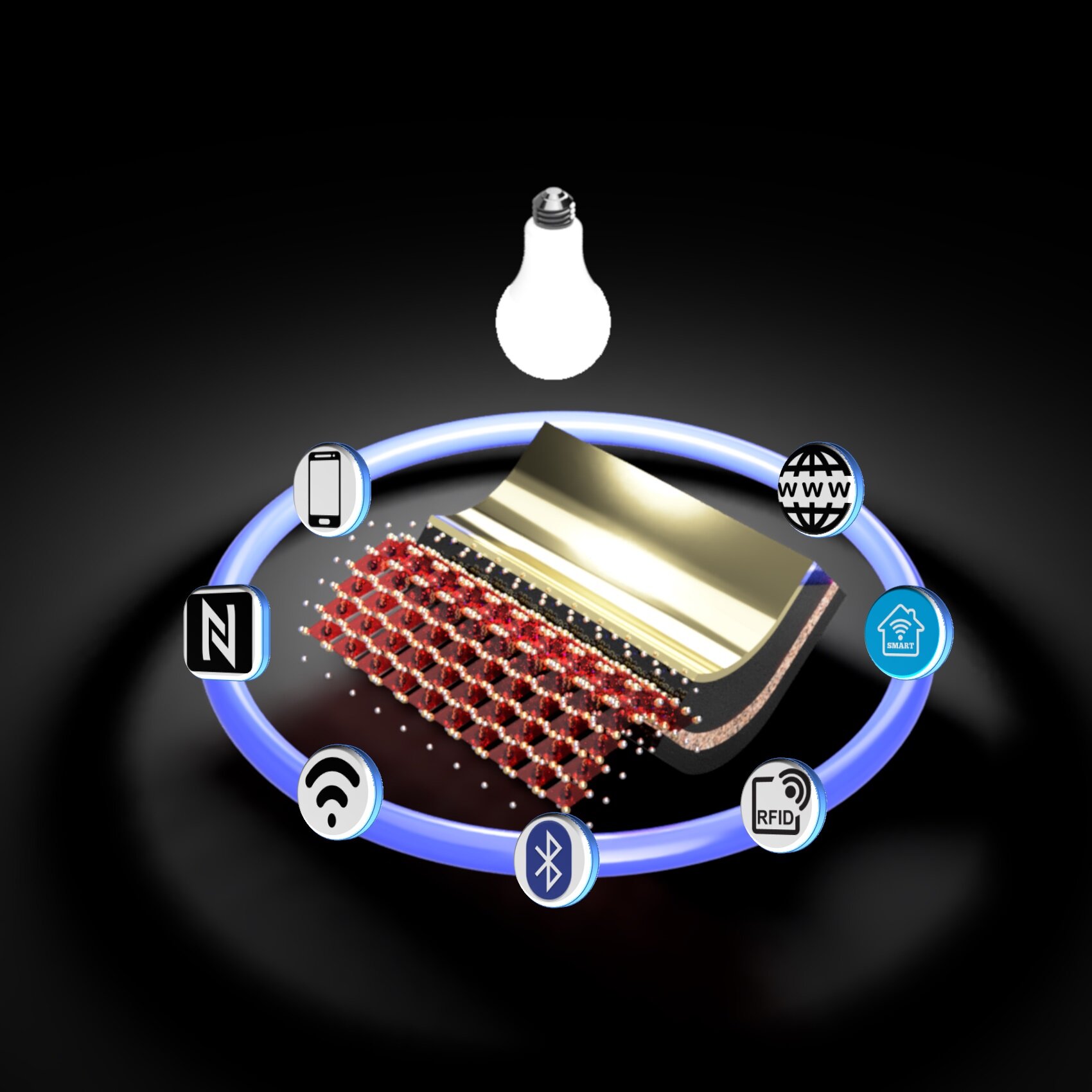
Los Alamos scientists have incorporated meticulously engineered colloidal quantum dots into a new type of light emitting diodes (LEDs) containing an integrated optical resonator, which allows them to function as lasers. These novel, dual-function devices clear the path towards versatile, manufacturing-friendly laser diodes. The technology can potentially revolutionize numerous fields from photonics and optoelectronics to chemical sensing and medical diagnostics.

“This latest breakthrough along with other recent advances in quantum dot chemistry and device engineering that we have achieved suggest that laser diodes assembled from solution may soon become a reality,” said Victor Klimov, head of the quantum dot group at Los Alamos Nationa...

Read More

Living Robots built using Frog Cells

Computer-designed organisms. Left is simulated design, right is deployed physical green and red organism.
On the left, the anatomical blueprint for a computer-designed organism, discovered on a UVM supercomputer. On the right, the living organism, built entirely from frog skin (green) and heart muscle (red) cells. The background displays traces carved by a swarm of these new-to-nature organisms as they move through a field of particulate matter. (Credit: Sam Kriegman, UVM)

Tiny ‘xenobots’ assembled from cells promise advances from drug delivery to toxic waste clean-up. Scientists repurposed living frog cells – and assembled them into entirely new life-forms. These tiny ‘xenobots’ can move toward a target and heal themselves after being cut. These novel living machines are neither a traditional robot nor a known species of animal...

Read More

‘Superdiamond’ carbon-boron cages can trap and tap into different properties

The bipartite sodalite type clathrate structure, which consists of truncated octahedral “host” cages that trap strontium “guest” atoms, was synthesized under high-pressure and high-temperature conditions using a laser heating technique. Image is courtesy of Tim Strobel.

A long-sought-after class of “superdiamond” carbon-based materials with tunable mechanical and electronic properties was predicted and synthesized by Carnegie’s Li Zhu and Timothy Strobel. Their work is published by Science Advances.

Carbon is the fourth-most-abundant element in the universe and is fundamental to life as we know it. It is unrivaled in its ability to form stable structures, both alone and with other elements.

A material’s properties are determined by how its atoms are bonded and the structural ar...

Read More