

Credit: N. Hanacek/NIST
Possible ‘topological superconductor’ could overcome industry’s problem of quantum decoherence...
Read More

August 17, 2019,
 Physics, Technology/Electronics
Possible ‘topological superconductor’ could overcome industry’s problem of quantum decoherence...
Read More
August 15, 2019,
Technology/Electronics, Physics

Researchers at the University of Waterloo have integrated the use of blockchain into energy systems, a development that could result in expanded charging infrastructure for electric vehicles. In a study that outlines the new blockchain-oriented charging system, the researchers found that there is a lack of trust among charging service providers, property owners and owners of electric vehicles (EVs).
With an open blockchain platform, all parties will have access to the data and can see if it has been tampered with...
Read More
August 15, 2019,
Physics, Technology/Electronics

New record with entangled quantum bits. Dead or alive, left-spinning or right-spinning – in the quantum world particles such as the famous analogy of Schrödinger’s cat can be all these things at the same time. An international team, together with experts from Forschungszentrum Jülich, have now succeeded in transforming 20 entangled quantum bits into such a state of superposition. The generation of such atomic Schrödinger cat states is regarded as an important step in the development of quantum computers.
Since the ea...
Read More
August 14, 2019,
Physics, Technology/Electronics, Biology/Biotechnology
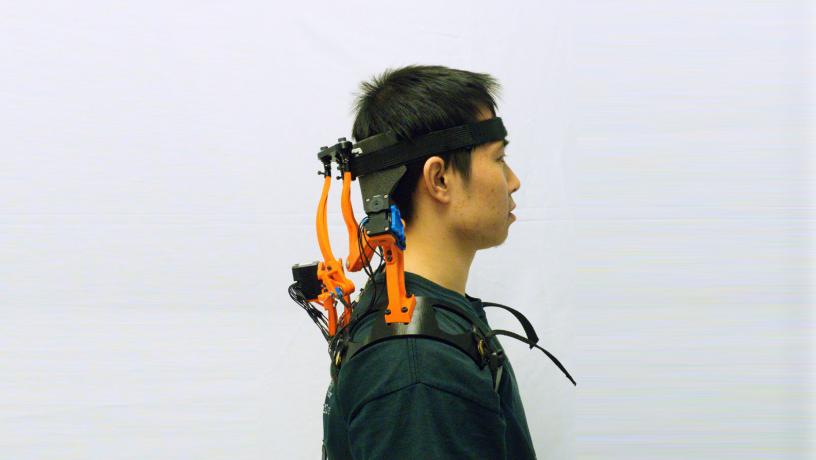
Comfortable brace incorporates both sensors and actuators to restore roughly 70% of the active range of motion. A novel neck brace, which supports the neck during its natural motion, was designed by Columbia engineers. This is the first device shown to dramatically assist patients suffering from Amyotrophic Lateral Sclerosis (ALS) in holding their heads and actively supporting them during range of motion. This advance would result in improved quality of life for patients, not only in improving eye contact during conversation, but also in facilitating the use of eyes as a joystick to control movements on a computer, much as scientist Stephen Hawkins famously did.
A team of engineers and neurologists led by Sunil Agrawal, professor of mecha...
Read More
Recent Comments