Photons in a dielectric resonator (yellow) interact with magnons in a YIG sphere (violet) via a microstrip (gray). This interaction acts as a ‘traffic light’ for microwave pulses—speeding them up (green) in one direction and slowing them down (red) in the other, controllable by a magnetic field. Credit: Yao et al.
The reliable manipulation of the speed at which light travels through objects could have valuable implications for the development of various advanced technologies, including high-speed communication systems and quantum information processing devices...
The process flow for creating Cu-LIG FHEs. Starting from top-left and clockwise to the right: creating a mixture of Pd and SU-8, spin-coating onto a polyimide film and drying, forming LIG from the Pd/SU-8 ink on a polyimide substrate and finally, electroless-copper plating to form conductive circuit elements. Credit: Advanced Materials Technologies (2025). DOI: 10.1002/admt.202401901
Boise State University researchers have unveiled a cutting-edge approach to manufacturing flexible hybrid circuits—reducing costs, waste, and environmental impact. Their work leverages the properties of laser-induced graphene and was recently featured on the cover of Advanced Materials Technologies.
Laser-induced graphene uses a single-step laser manufacturing process that converts carbon-rich mater...
As fast as modern electronics have become, they could be much faster if their operations were based on light, rather than electricity. Fiber optic cables already transport information at the speed of light; to do computations on that information without translating it back to electric signals will require a host of new optical components.
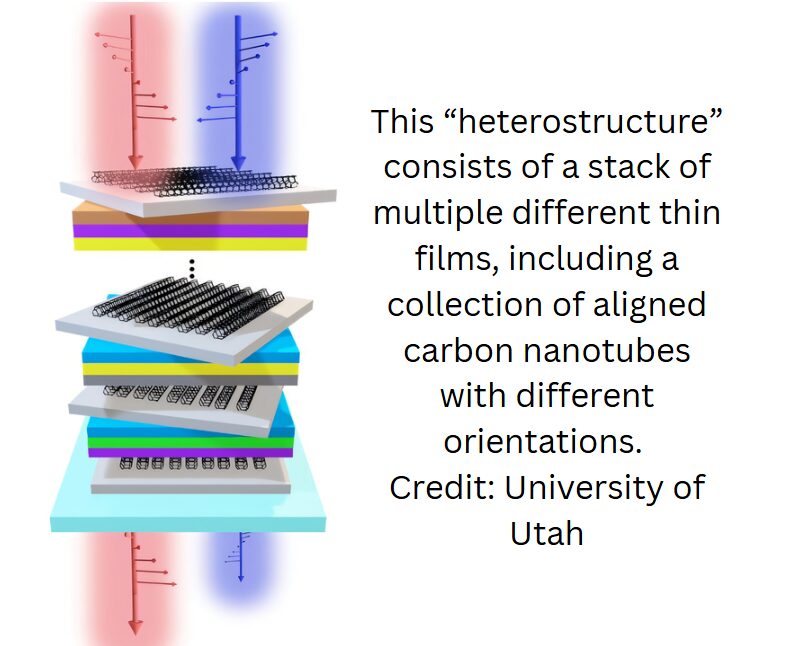
Researchers at the John and Marcia Price College of Engineering have now developed such a device: one that can be adjusted on the fly to give light different degrees of circular polarization. Because information can be stored in this chiral property of light, the researchers’ device could serve as a multifunctional, reconfigurable component of an optical computing system.
Led by Weilu Gao, assistant professor in the Department of Electrical & C...
Researchers inject an impurity into a one-dimensional ultracold gas, thereby generating a quasiparticle with exotic properties.
Scientists led by Hanns-Christoph Nägerl have observed anyons — quasiparticles that differ from the familiar fermions and bosons — in a one-dimensional quantum system for the first time. The results, published in Nature, may contribute to a better understanding of quantum matter and its potential applications.
Nature categorizes particles into two fundamental types: fermions and bosons. While matter-building particles such as quarks and electrons belong to the fermion family, bosons typically serve as force carriers — examples include photons, which mediate electromagnetic interactions, and gluons, which govern nuclear forces...






Recent Comments