Category Technology/Electronics

Researchers Send Data 4.5 million times Faster than Average Broadband

Aston University researchers send data 4.5 million times faster than average broadband
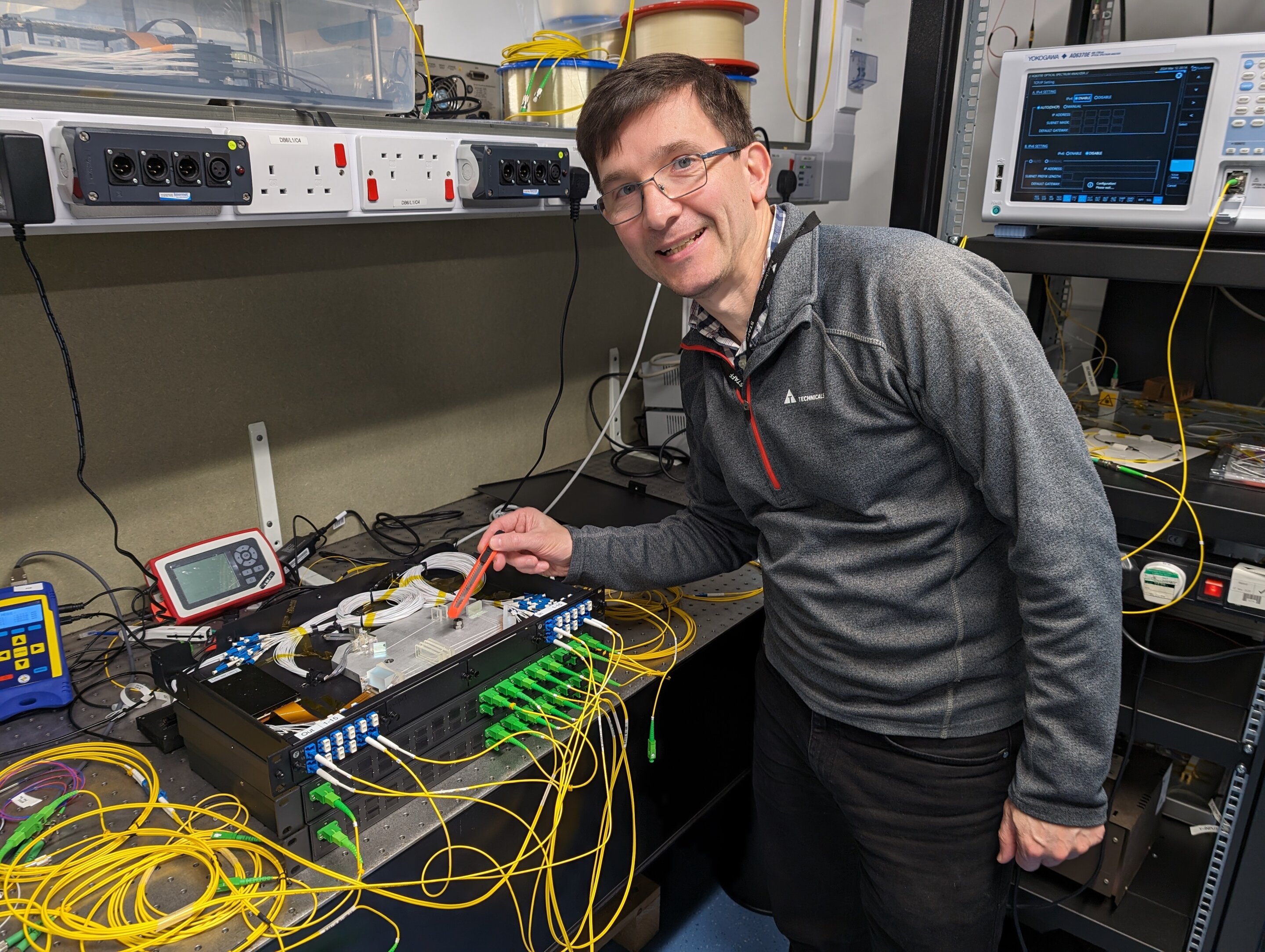
Dr. Ian Phillips with the wavelength management device. Credit: Dr. Ian Phillips

Aston University researchers have sent data at a speed that is 4.5 million times faster than the average home broadband. The rate is the fastest ever sent by opening up specific new wavelength bands that are not yet used in fiber optic systems.

As part of an international collaboration, the academics transferred data at a rate of 301 terabits or 301,000,000 megabits per second, using a single, standard optical fiber.

That’s compared to Ofcom’s UK home broadband performance report published in September 2023, which stated that the average broadband speed is just 69.4 Mbit/s megabits per second.

Professor Wladek Forysiak from Aston Institute of Photonic Technologies and Dr...

Read More

High-Quality Microwave Signals Generated from Tiny Photonic Chip

An illustration of the microwave signal-producing photonic integrated chip.
A high-level schematic of the photonic integrated chip, developed by the Gaeta lab, for all-optical optical frequency division, or OFD – a method of converting a high-frequency signal to a lower frequency. Credit: Yun Zhao/Columbia Engineering

In a new Nature study, Columbia Engineering researchers have built a photonic chip that is able to produce high-quality, ultra-low-noise microwave signals using only a single laser. The compact device—a chip so small, it could fit on a sharp pencil point—results in the lowest microwave noise ever observed in an integrated photonics platform.

The achievement provides a promising pathway towards small-footprint ultra-low-noise microwave generation for applications such as high-speed communication, atomic clocks, and autonomous vehicles.

...Read More

Two Artificial Intelligences Talk to Each Other

Two artificial intelligences talk to each other
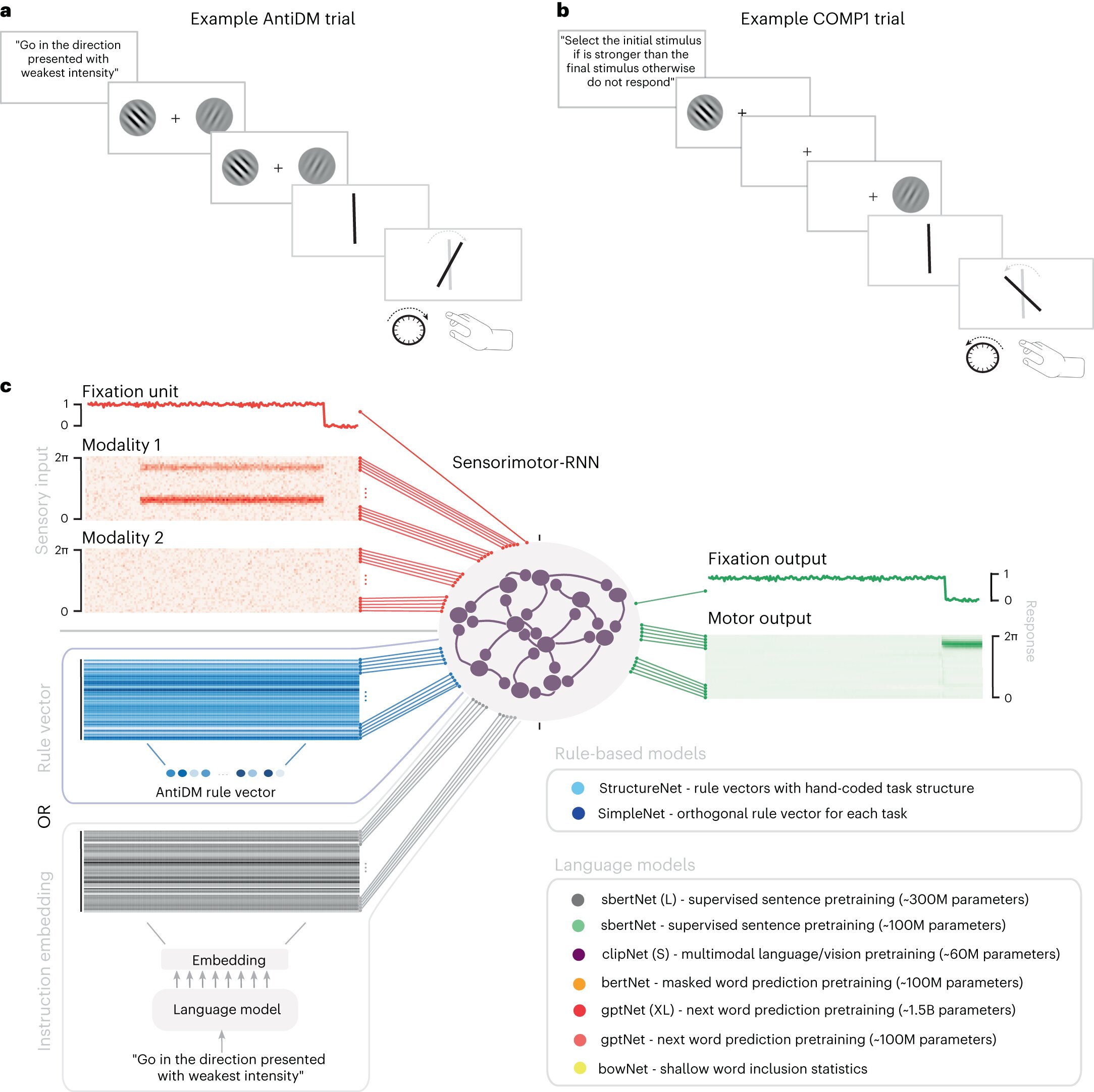
Tasks and models. Credit: Nature Neuroscience (2024). DOI: 10.1038/s41593-024-01607-5

Performing a new task based solely on verbal or written instructions, and then describing it to others so that they can reproduce it, is a cornerstone of human communication that still resists artificial intelligence (AI).

A team from the University of Geneva (UNIGE) has succeeded in modeling an artificial neural network capable of this cognitive prowess. After learning and performing a series of basic tasks, this AI was able to provide a linguistic description of them to a “sister” AI, which in turn performed them. These promising results, especially for robotics, are published in Nature Neuroscience.

Performing a new task without prior training, on the sole basis of verbal or written instruc...

Read More

Intel introduces approach to Boost Power Efficiency, Reliability of Packaged Chiplet Ecosystems

Intel introduces an approach to boost the power-efficiency and reliability of packaged chiplet ecosystems
Credit: Das Sharma et al

The integration of electronic chips in commercial devices has significantly evolved over the past decades, with engineers devising various integration strategies and solutions. Initially, computers contained a central processor or central processing unit (CPU), connected to memory units and other components via traditional communication pathways, known as front-side-bus (FSB) interfaces.

Technological advances, however, have enabled the development of new integrated circuit (IC) architectures relying on multiple chiplets and more sophisticated electronic components. Intel Corporation played a crucial role in these developments, by introducing new architectures and specifications for the design of systems with multiple packaged chiplets.

Researchers at Int...

Read More