Category Technology/Electronics

Developing ‘Indoor Solar’ to Power the Internet of Things

internet
Credit: Pixabay/CC0 Public Domain

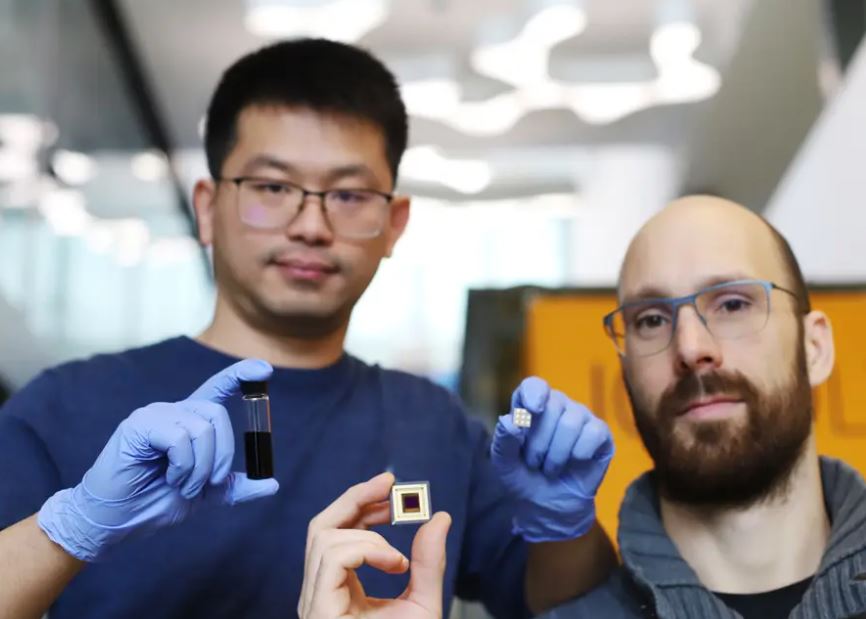
From Wi-Fi-connected home security systems to smart toilets, the so-called Internet of Things brings personalization and convenience to devices that help run homes. But with that comes tangled electrical cords or batteries that need to be replaced. Now, researchers reporting in ACS Applied Energy Materials have brought solar panel technology indoors to power smart devices. They show which photovoltaic (PV) systems work best under cool white LEDs, a common type of indoor lighting.

Indoor lighting differs from sunlight. Light bulbs are dimmer than the sun. Sunlight includes ultraviolet, infrared and visible light, whereas indoor lights typically shine light from a narrower region of the spectrum...

Read More

Late not great – Imperfect Timekeeping places Significant Limit on Quantum Computers

Late not great – imperfect timekeeping places significant limit on quantum computers

Quantum physicists show that imperfect timekeeping places a fundamental limit to quantum computers and their applications. The team claims that even tiny timing errors add up to place a significant impact on any large-scale algorithm, posing another problem that must eventually be solved if quantum computers are to fulfill the lofty aspirations that society has for them.

New research from a consortium of quantum physicists, led by Trinity College Dublin’s Dr Mark Mitchison, shows that imperfect timekeeping places a fundamental limit to quantum computers and their applications...

Read More

A Superatomic Semiconductor sets a Speed Record

Lattice structures with a jumpy hare and a smooth-moving tortoise overlain.
The quick-but-slow hare, representing an electron, versus the slow-and-steady moving tortoise, representing acoustic exciton-polarons. Credit: Jack Tulyag

The search is on for better semiconductors. Writing in Science, a team of chemists at Columbia University led by Jack Tulyag, a PhD student working with chemistry professor Milan Delor, describes the fastest and most efficient semiconductor yet: a superatomic material called Re6Se8Cl2.

Semiconductors — most notably, silicon — underpin the computers, cellphones, and other electronic devices that power our daily lives, including the device on which you are reading this article. As ubiquitous as semiconductors have become, they come with limitations...

Read More

Plant-based Materials give ‘Life’ to Tiny Soft Robots

Soft robot in a maze

A team of University of Waterloo researchers has created smart, advanced materials that will be the building blocks for a future generation of soft medical microrobots.

These tiny robots have the potential to conduct medical procedures, such as biopsy, and cell and tissue transport, in a minimally invasive fashion. They can move through confined and flooded environments, like the human body, and deliver delicate and light cargo, such as cells or tissues, to a target position.

The tiny soft robots are a maximum of one centimetre long and are bio-compatible and non-toxic. The robots are made of advanced hydrogel composites that include sustainable cellulose nanoparticles derived from plants.

This research, led by Hamed Shahsavan, a professor in the Department of Chemical Engine...

Read More