Category Technology/Electronics

Building Energy-Efficient Computing Platforms

Building energy-efficient computing platforms
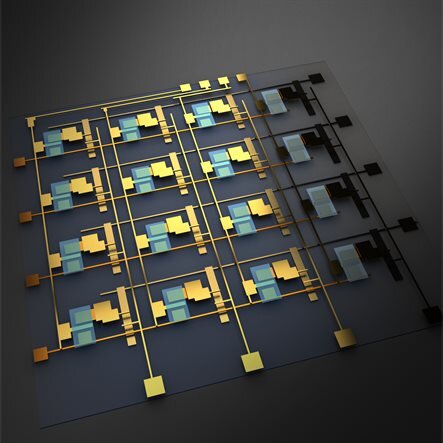
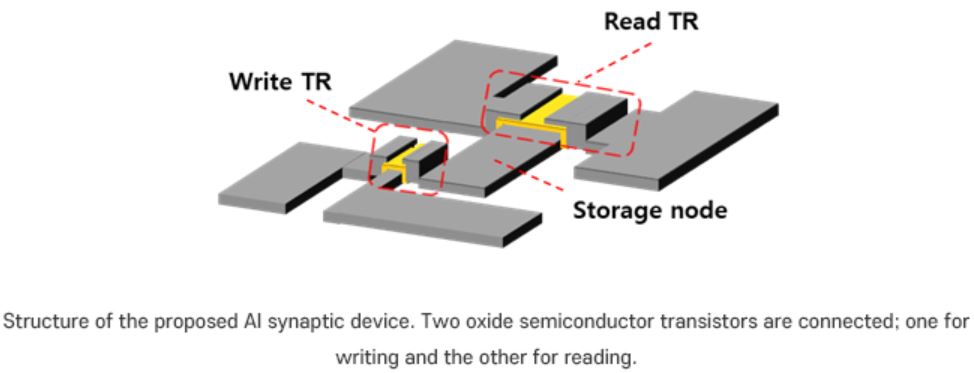
Images of the electronic platform used in the studies. Credit: CeNSE, IISc

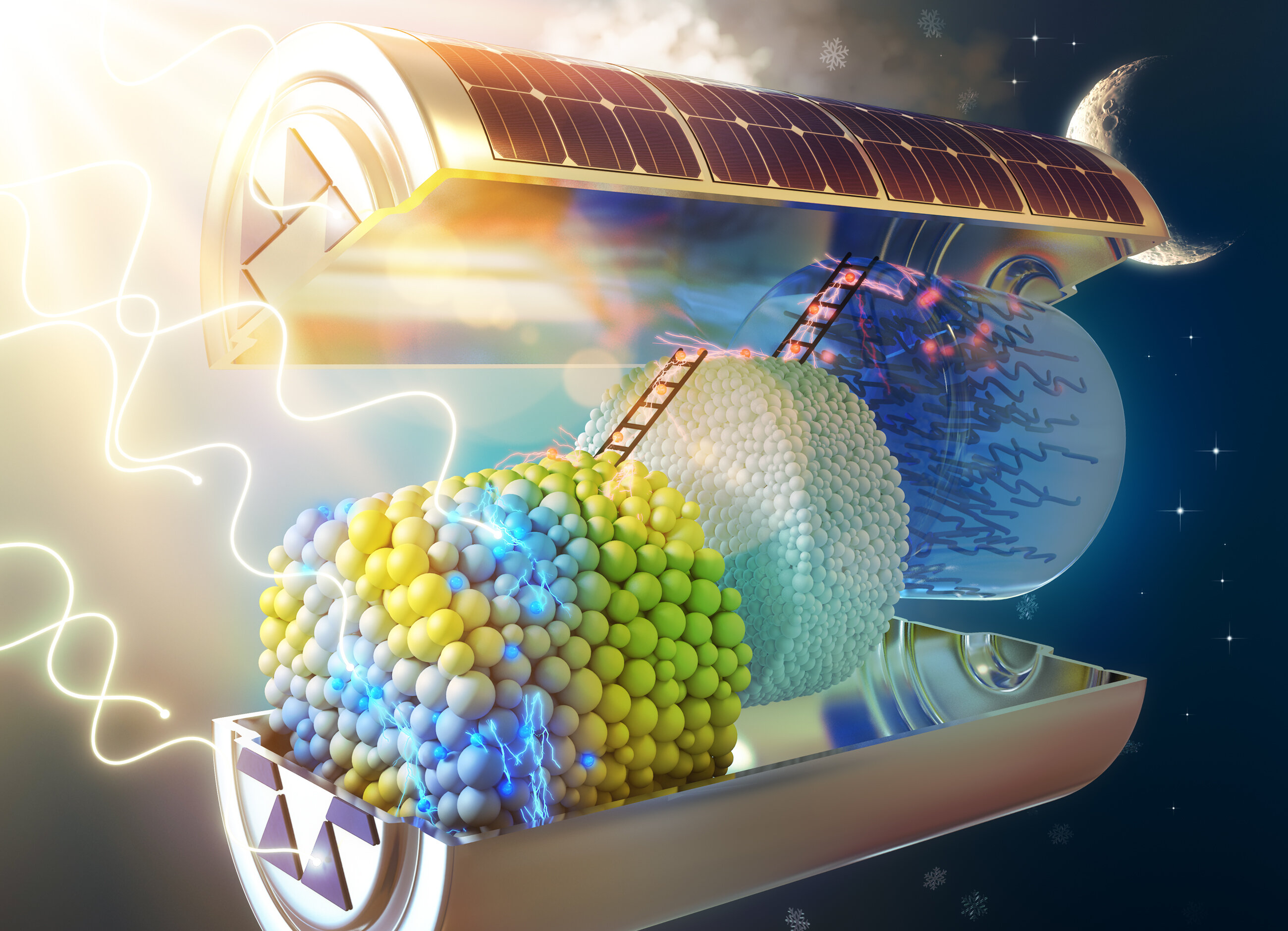
The massive growth of data centers that consume enormous amounts of energy has contributed significantly to power shortages worldwide. With rising demand for faster and more intelligent computers and devices, there is a pressing need to develop alternatives to traditional electronic components that will make these devices more energy-efficient.

In two recent studies, researchers at the Centre for Nano Science and Engineering (CeNSE), IISc, report the development of a highly energy-efficient computing platform that offers promise in building next-generation electronic devices.

Instead of using complementary metal-oxide semiconductors (CMOS) which are the building blocks of most electronic circuits today, th...

Read More

Changing the Color of Quantum light on an Integrated Chip

illustration of phase modulator.
Changing the color of single photons using an integrated phase modulator. (Credit: Loncar Lab/Harvard SEAS)

Optical photons are ideal carriers of quantum information. But to work together in a quantum computer or network, they need to have the same color—or frequency—and bandwidth. Changing a photon’s frequency requires altering its energy, which is particularly challenging on integrated photonic chips.

Recently, researchers from the Harvard John A. Paulson School of Engineering and Applied Sciences (SEAS) developed an integrated electro-optic modulator that can efficiently change the frequency and ‘bandwidth of single photons. The device could be used for more advanced quantum computing and quantum networks.

The research is published in Light: Science & Applications.

Conv...

Read More

Protons Fix a Long-Standing Issue in Silicon Carbide Electronics

image.jpg
Proton implantation prevents the expansion of stacking faults and solves the problem of bipolar degradation.
Electroluminescence images of PiN diodes made from silicon carbide after being subjected to electrical stress. In the first diode (a), on which proton implantation was not applied, expanded stacking faults show up as dark regions. The other three diodes (b, c, and d) undergo proton implantation at increasing hydrogen ion doses. Contrary to the first diode, these exhibit no stacking fault expansion and, in turn, bipolar degradation.
Image credit: Masashi Kato from Nagoya Institute of Technology

Silicon carbide (SiC) is a promising semiconductor material for power electronic devices, but it suffers from bipolar degradation, which severely limits its lifespan...

Read More

New Programming Tool Turns Sketches, Handwriting into Code

Programming tool turns handwriting into computer code
Programming tool turns handwriting into computer code / Cornell University

Cornell University researchers have created an interface that allows users to handwrite and sketch within computer code — a challenge to conventional coding, which typically relies on typing.

The pen-based interface, called Notate, lets users of computational, digital notebooks open drawing canvases and handwrite diagrams within lines of traditional, digitized computer code.

Powered by a deep learning model, the interface bridges handwritten and textual programming contexts: notation in the handwritten diagram can reference textual code and vice versa. For instance, Notate recognizes handwritten programming symbols, like “n,” and then links them up to their typewritten equivalents.

“A system like this w...

Read More