Category Technology/Electronics

AI-driven ‘Thermal Attack’ System Reveals Computer and Smartphone Passwords in Seconds

AI-driven 'thermal attack' system reveals computer and smartphone passwords in seconds
Dr Mohamed Khamis of the School of Computing Science demonstrates using a thermal camera on a computer keyboard. Credit: University of Glasgow

Computer security experts have developed a system capable of guessing computer and smartphone users’ passwords in seconds by analyzing the traces of heat their fingertips leave on keyboards and screens.

Researchers from the University of Glasgow developed the system, called ThermoSecure, to demonstrate how falling prices of thermal imaging cameras and rising access to machine learning are creating new risks for “thermal attacks.”

Thermal attacks can occur after users type their passcode on a computer keyboard, smartphone screen or ATM keypad before leaving the device unguarded...

Read More

Solar Harvesting System has Potential to Generate Solar Power 24/7

The sun
A new way to harvest solar energy breaks the efficiency record of all existing technologies and clears the way to use solar power 24/7.

A professor is reporting on a new type of solar energy harvesting that breaks the efficiency record of all existing technologies. And no less important, it clears the way to use solar power 24/7. Thomas Edison once said, “So long as the sun shines, man will be able to develop power in abundance.”

They’ve done an amazing job with photovoltaic cells which convert sunlight directly into energy. And still, with all the research, history and science behind it, there are limits to how much solar power can be harvested and used — as its generation is restricted only to the daytime.

A University of Houston professor is continuing the historic quest, repo...

Read More

Engineers discover new process for Synthetic Material Growth, enabling Soft Robots that Grow like Plants

Ph.D. student Matt Hausladen with a soft robot in the lab
University of Minnesota Twin Cities researchers have developed a plant-inspired extrusion process that allows soft robots to build their own solid bodies from liquid to navigate hard-to-reach places and complicated terrain.

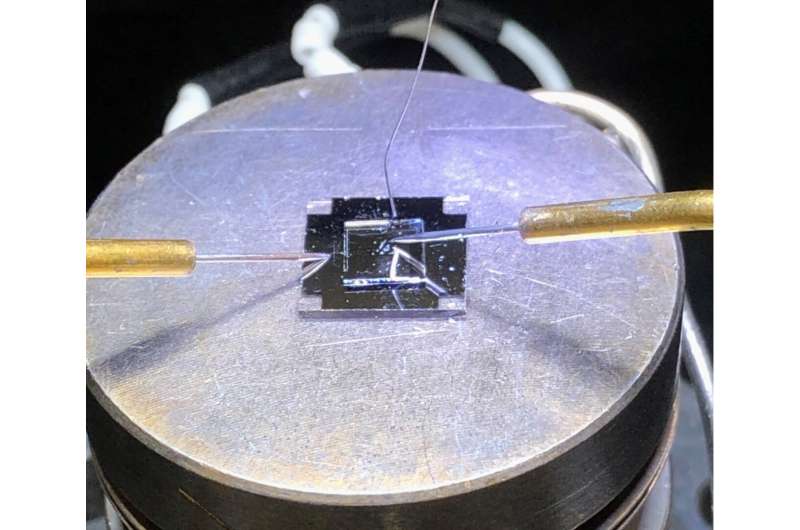
Soft robots can navigate hard-to-reach places like pipes or inside the human body. An interdisciplinary team of University of Minnesota Twin Cities scientists and engineers has developed a first-of-its-kind, plant-inspired extrusion process that enables synthetic material growth. The new approach will allow researchers to build better soft robots that can navigate hard-to-reach places, complicated terrain, and potentially areas within the human body.

The paper is published in the Proceedings of the National Academy of Sciences (PNAS).

“This is the first time t...

Read More

Scalable and Fully Coupled Quantum-inspired Processor Solves Optimization Problems

Scalable and Fully Coupled Quantum-inspired Processor Solves Optimization Problems
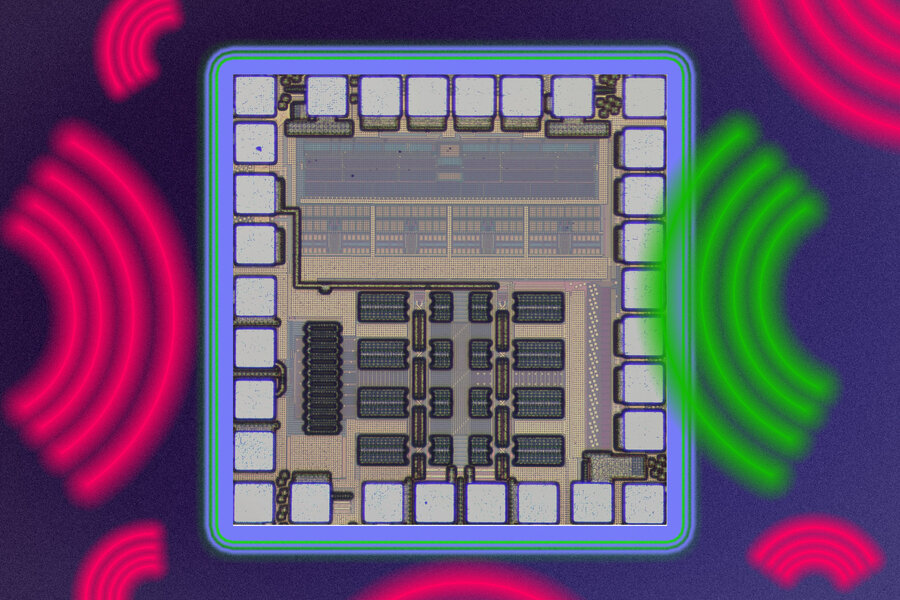
Solving combinatorial optimization problems with a scalable fully coupled annealing processor.

Researchers experimentally demonstrate the first fully connected annealing processor that can be scaled up across multiple chips. Annealing processors are more energy efficient and quicker at solving mathematical optimization problems than PCs. Researchers at Tokyo University of Science have now developed a new approach to realizing scalable fully coupled annealing processors. These quantum-inspired systems can model the interactions between magnetic spins and use it to solve complex optimization problems. The new method greatly outperforms modern CPUs and shows potential for applications in drug discovery, artificial intelligence, and materials science.

Have you ever been faced with a pro...

Read More