Category Technology/Electronics

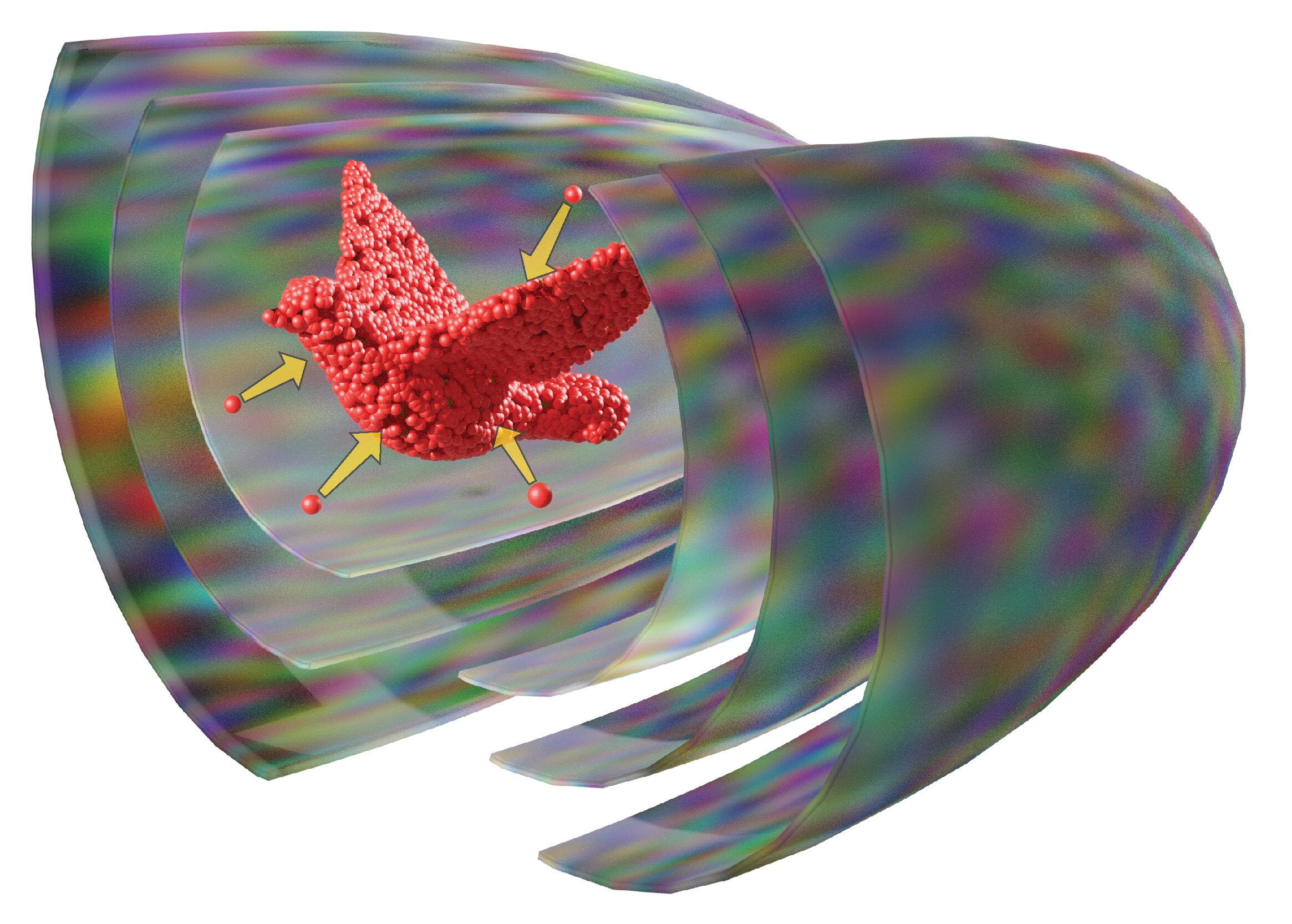
3D Printing Drones Work like Bees to Build and Repair Structures while Flying

Timelapse light trace demonstrating multi-agent coordination of Aerial AM robot team.
A simulation of potential future building projects. Credit: Autonomous Manufacturing Lab, UCL

The technology, which has been tested in the lab, could ultimately be used for manufacturing and building in difficult-to-access or dangerous locations such as tall buildings or help with post-disaster relief construction, say the researchers.

3D printing is gaining momentum in the construction industry. Both on-site and in the factory, static and mobile robots print materials for use in construction projects, such as steel and concrete structures.

This new approach to 3D printing – led in its development by Imperial and Empa, the Swiss Federal Laboratories of Materials Science and Technology – uses flying robots, known as drones, that use collective building methods inspired by natural ...

Read More

Tiny Soft Robot can Split into Tinier Bits then Reassemble after Passage Through Small Spaces

Tiny soft robot can be split into tinier bits to allow for passage through small spaces
Overview of trans-scale maneuver and scale reconfiguration strategies of the scale-reconfigurable miniature ferrofluidic robots (SMFRs). (A) Trans-scale control of the SMFR: locomotion of the centi-FR, milli-FR, and micro-FR based on magnetic gradient, both magnetic gradient and torque, and magnetic torque only, respectively. (B) Response behaviors of ferrofluid droplets in magnetic fields. (C) The SMFR is manipulated by a custom-designed magnetic actuation system (the M3RA system) composed of four electromagnets, a spherical permanent magnet (SPM), and a motorized translation stage. To easily observe the internal composition of the system, we hide a quarter of the structure...
Read More

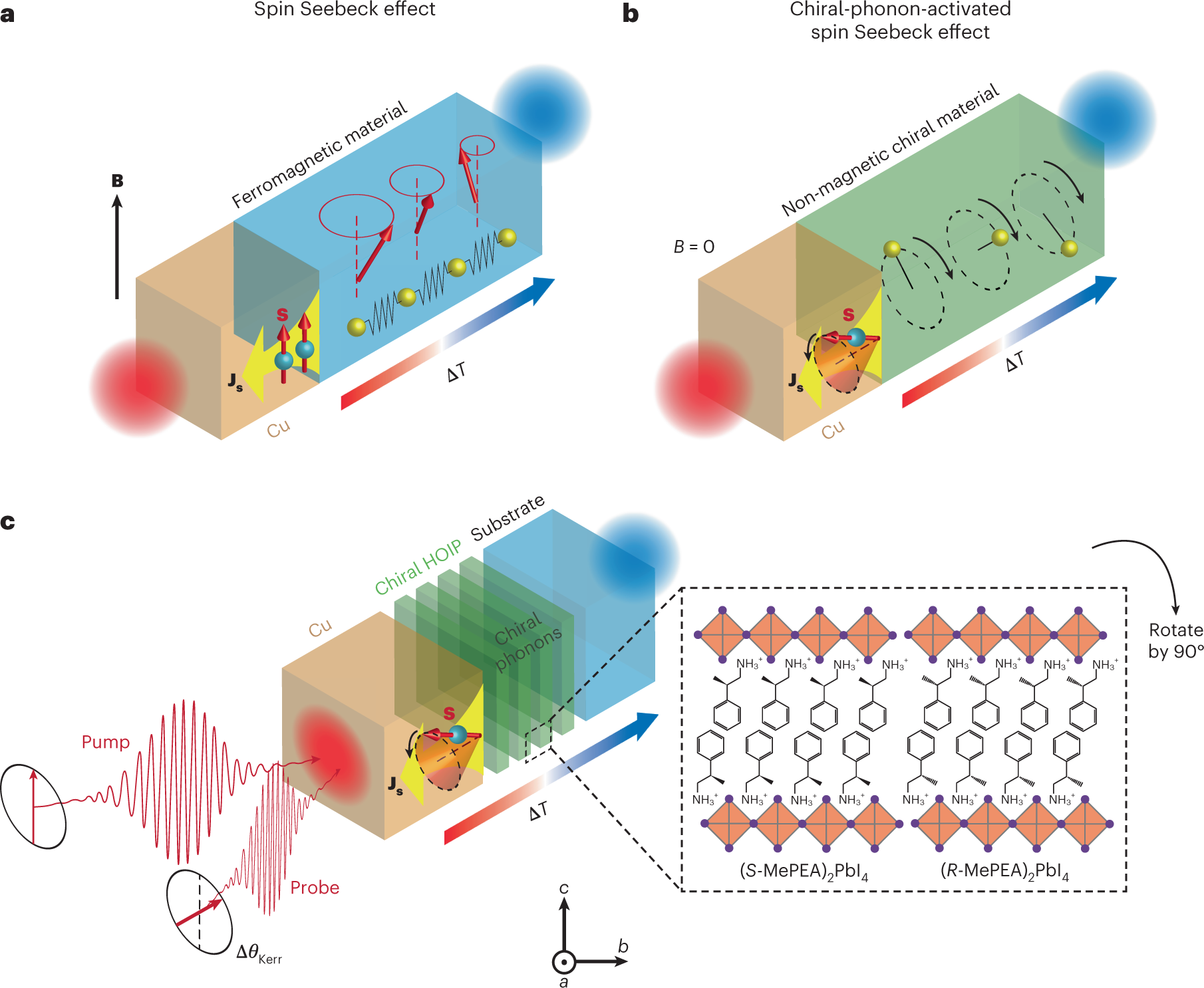
Physicists Generate New Nanoscale Spin Waves

Physicists generate new nanoscale spin waves
Illustration of the experiment. Credit: Dreyer et al, Nature Communications (CC-BY-SA 4.0)

Strong alternating magnetic fields can be used to generate a new type of spin wave that was previously just theoretically predicted. This was achieved for the first time by a team of physicists from Martin Luther University Halle-Wittenberg (MLU). They report on their work in the scientific journal Nature Communications and provide the first microscopic images of these spin waves.

The basic idea of spintronics is to use a special property of electrons – spin – for various electronic applications such as data and information technology. The Spin is the intrinsic angular momentum of electrons that produces a magnetic moment...

Read More

The Laser Breakthrough that could make Tech even Faster

The laser breakthrough that could make tech even faster
The laser tool developed by the UQ team. Credit: Dr Martin Plöschner

Lasers have become a major part of our day-to-day lives. From phones and tablets to self-driving cars and data communication—even the information you’re reading right now is likely being delivered to you via lasers.

The technology’s applications are so broad even the researchers who deal with lasers daily are continuously amazed.

Among them is University of Queensland Research Fellow Dr. Martin Plöschner from the School of Information Technology and Electrical Engineering (ITEE).

“I’ve been working with lasers for the past 15 years and yet I’m often surprised to find them in the most unexpected places,” Dr. Plöschner said.

“In many of their applications, lasers operate in part of the spectrum which is...

Read More