
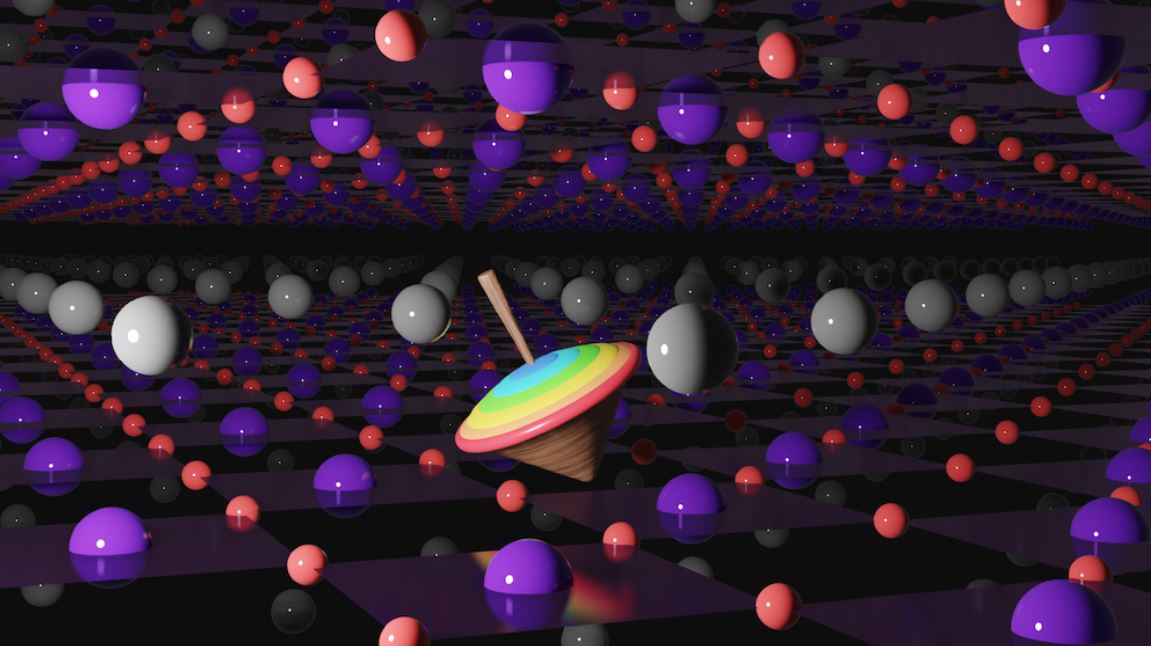
Waves of magnetic excitation sweep through this exciting new material whether it’s in superconducting mode or not — another possible...
Read More

August 2, 2022,
 Physics, Technology/Electronics
Waves of magnetic excitation sweep through this exciting new material whether it’s in superconducting mode or not — another possible...
Read More
July 28, 2022,
Physics, Technology/Electronics, Biology/Biotechnology

The damaging effects of daily, lifelong exposure to the blue light emanating from phones, computers and household fixtures worsen as a person ages, new research by Oregon State University suggests.
The study, published today in Nature Partner Journals Aging, involved Drosophila melanogaster, the common fruit fly, an important model organism because of the cellular and developmental mechanisms it shares with other animals and humans.
Jaga Giebultowicz, a researcher in the OSU College of Science who studies biological clocks, led a collaboration that examined the survival rate of flies kept in darkness and then moved at progressively older ages to an environment of constant blue light from light-emitting diodes, or LEDs.
The darkness-to-light transitions occurred at the ages of...
Read More
July 27, 2022,
Physics, Technology/Electronics
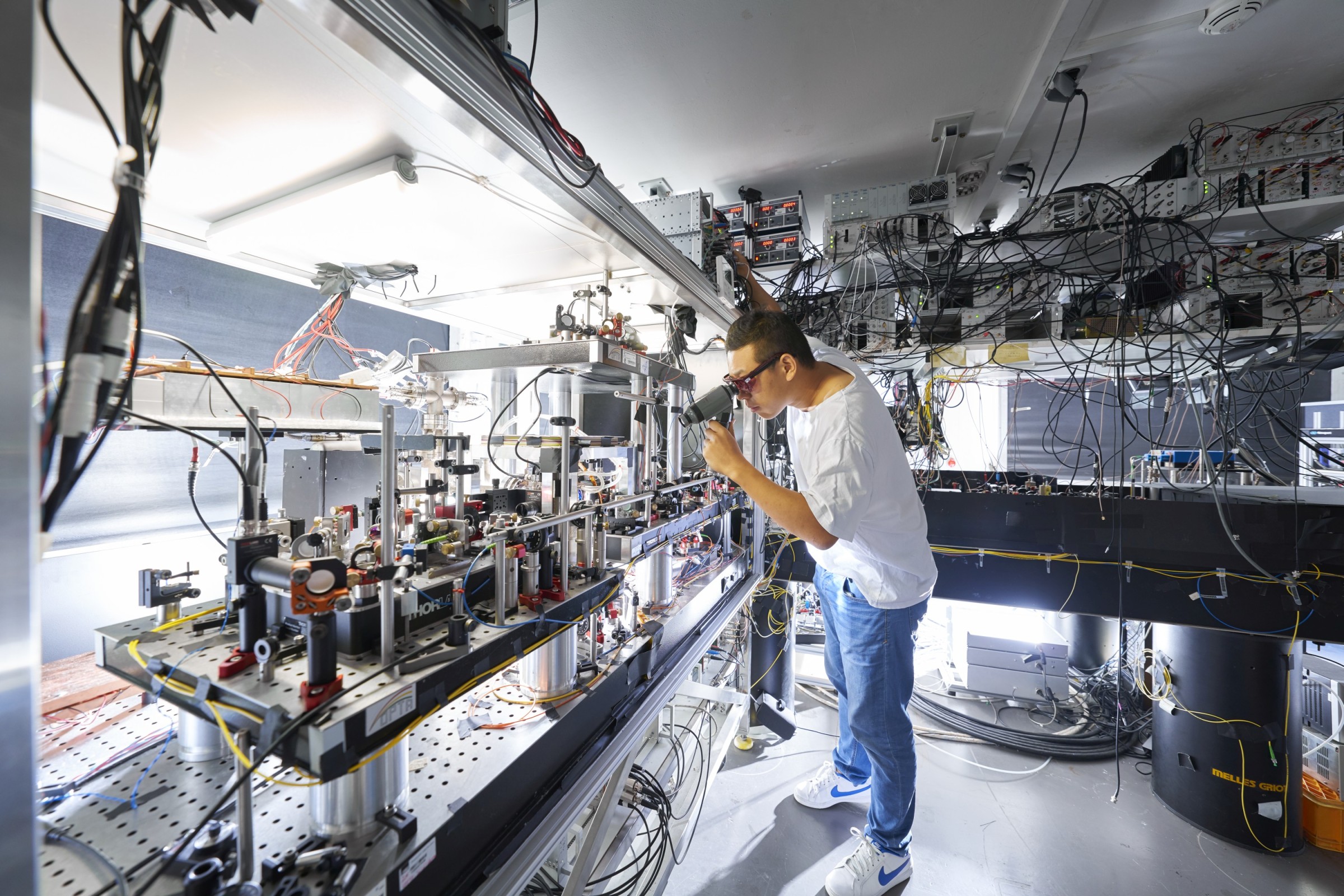
An international team has successfully implemented an advanced form of quantum cryptography for the first time. Moreover, encryption is independent of the quantum device used and therefore even more secure against hacking attempts.
The Internet is teeming with highly sensitive information. Sophisticated encryption techniques generally ensure that such content cannot be intercepted and read. But in the future high-performance quantum computers could crack these keys in a matter of seconds. It is just as well, then, that quantum mechanical techniques not only enable new, much aster algorithms, but also exceedingly effective cryptography.
Quantum key distribution (QKD) is secure against attacks on the communication channel, but not against attacks on or manipulations of the devices...
Read More
July 26, 2022,
Physics, Technology/Electronics
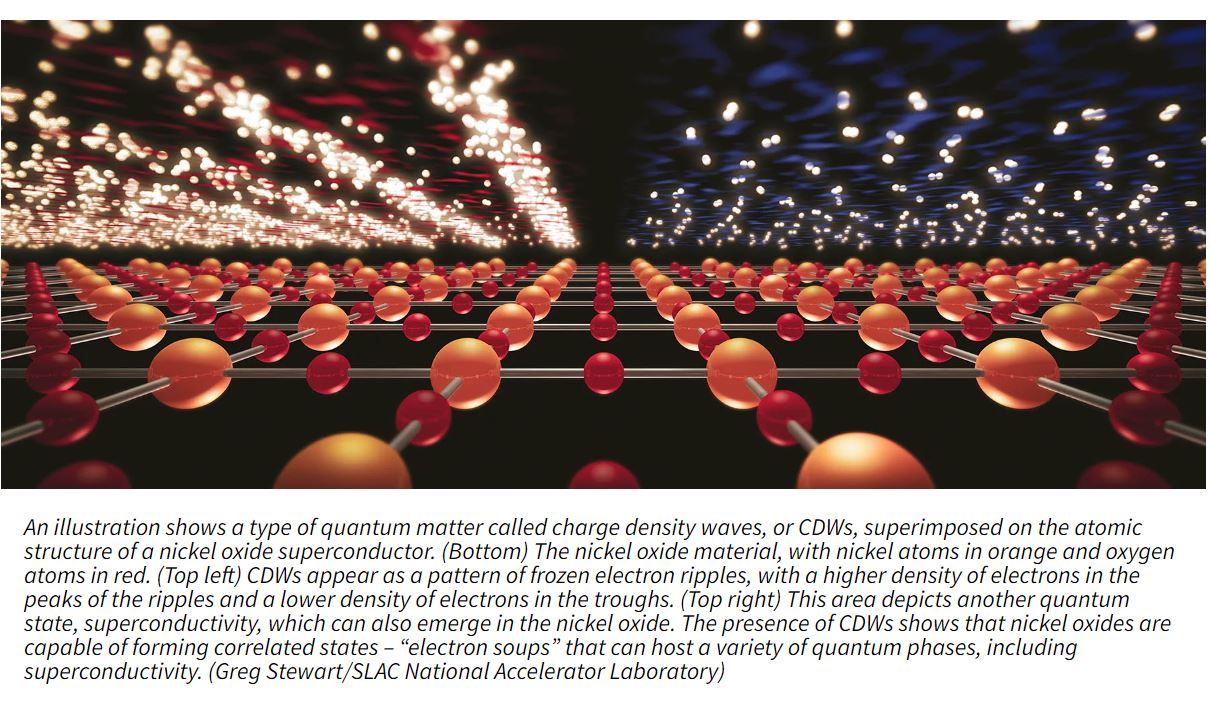
A new study shows that nickel oxide superconductors, which conduct electricity with no loss at higher temperatures than conventional superconductors do, contain a type of quantum matter called charge density waves, or CDWs, that can accompany superconductivity.
The presence of CDWs shows that these recently discovered materials, also known as nickelates, are capable of forming correlated states — “electron soups” that can host a variety of quantum phases, including superconductivity, researchers from the Department of Energy’s SLAC National Accelerator Laboratory and Stanford University reported in Nature Physics today.
“Unlike in any other superconductor we know about, CDWs appear even before we dope the material by replacing some atoms with others to change the number of elect...
Read More
Recent Comments