Category Technology/Electronics

Nanotech OLED electrode liberates 20% more light, could slash display power consumption

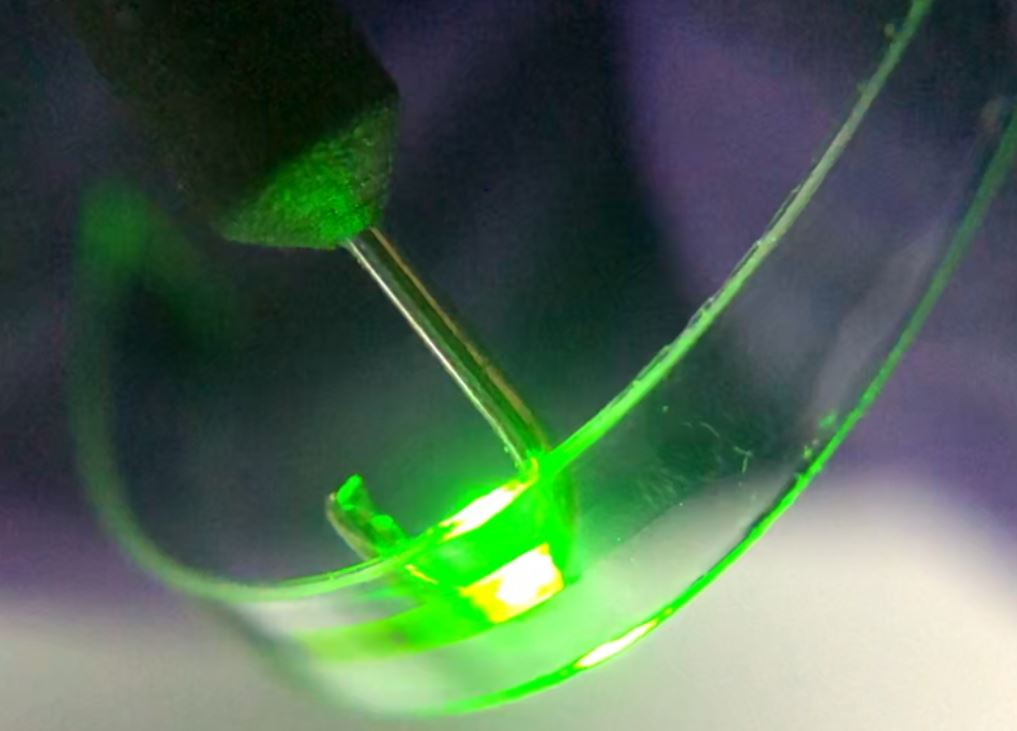
A new electrode that could free up 20% more light from organic light-emitting diodes has been developed at the University of Michigan. It could help extend the battery life of smartphones and laptops, or make next-gen televisions and displays much more energy efficient.

The approach prevents light from being trapped in the light-emitting part of an OLED, enabling OLEDs to maintain brightness while using less power. In addition, the electrode is easy to fit into existing processes for making OLED displays and light fixtures.

“With our approach, you can do it all in the same vacuum chamber,” said L. Jay Guo, U-M professor of electrical and computer engineering and corresponding author of the study.

Unless engineers take action, about 80% of the light produced by an OLED gets tr...

Read More

Sound-Induced Electric Fields Control the Tiniest Particles

This new biomedical device manipulates particles as small as DNA (2.5 nanometers) with sound-induced electric fields. Four transducers send sound waves into a substrate that creates electricity as it vibrates, producing patterns of electric-acoustic waves that control particles in the liquid-filled chamber above.

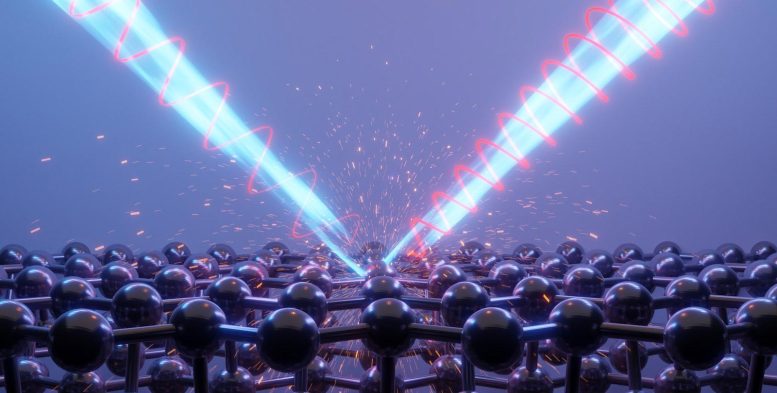
Acoustoelectronic tweezers gently manipulate biological nanoparticles just a few nanometers wide. Engineers at Duke University have devised a system for manipulating particles approaching the miniscule 2.5 nanometer diameter of DNA using sound-induced electric fields. Dubbed “acoustoelectronic nanotweezers,” the approach provides a label-free, dynamically controllable method of moving and trapping nanoparticles over a large area...

Read More

Low-Cost Imaging technique shows how Smartphone Batteries could Charge in Minutes

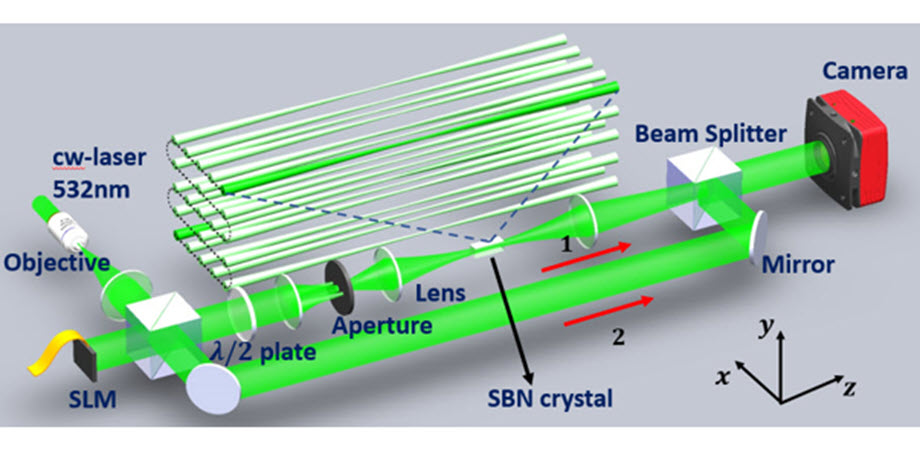
Researchers have developed a simple lab-based technique that allows them to look inside lithium-ion batteries and follow lithium ions moving in real time as the batteries charge and discharge, something which has not been possible until now.

Using the low-cost technique, the researchers identified the speed-limiting processes which, if addressed, could enable the batteries in most smartphones and laptops to charge in as little as five minutes.

The researchers, from the University of Cambridge, say their technique will not only help improve existing battery materials, but could accelerate the development of next-generation batteries, one of the biggest technological hurdles to be overcome in the transition to a fossil fuel-free world...

Read More

Exotic Superconductors: The Secret that wasn’t there

two people in the lab
Experiments in the lab at TU Wien

The mystery of an exotic kind of superconductivity has been solved — by showing that it just does not exist. An effect, which has been celebrated since the 1990s has now been shown to be standard superconductivity. Still, this realization leads to important new ideas.

A single measurement result is not a proof — this has been shown again and again in science. We can only really rely on a research result when it has been measured several times, preferably by different research teams, in slightly different ways. In this way, errors can usually be detected sooner or later.

However, a new study by Prof...

Read More