Category Technology/Electronics

Sound Waves power New Advances in Drug Delivery and Smart Materials

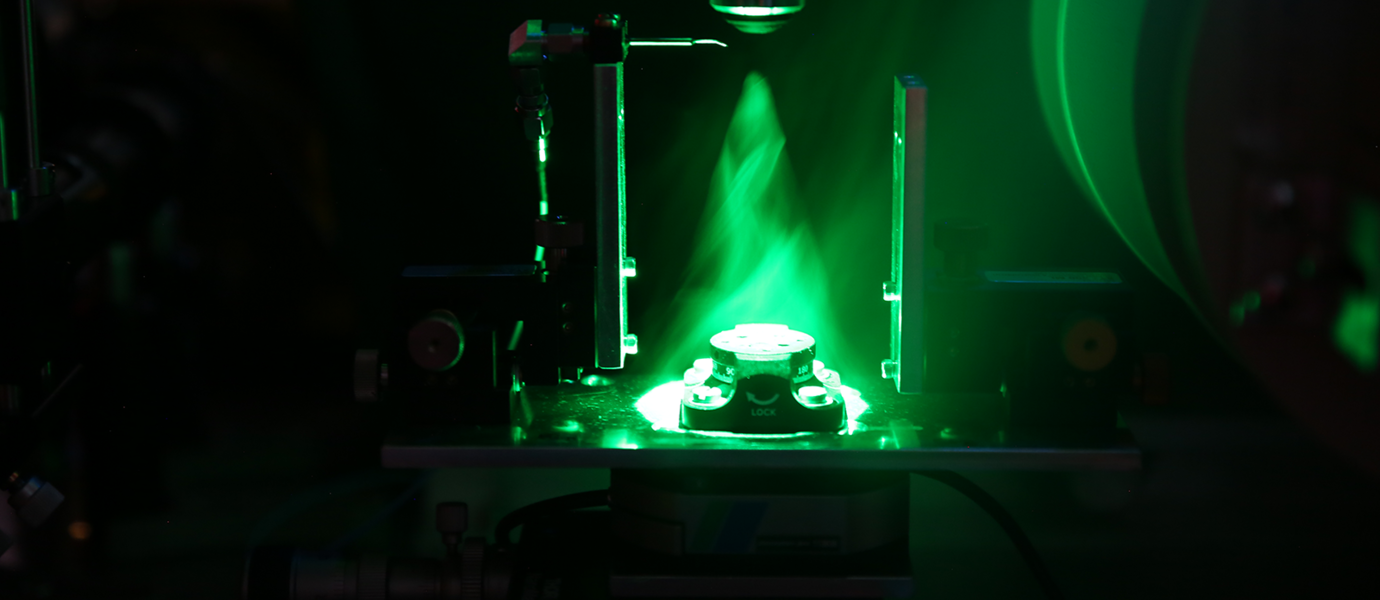
The patented ‘Respite’ nebuliser uses high-frequency sound waves to precisely deliver drugs to the lungs.

Researchers have revealed how high-frequency sound waves can be used to build new materials, make smart nanoparticles and even deliver drugs to the lungs for painless, needle-free vaccinations.

While sound waves have been part of science and medicine for decades — ultrasound was first used for clinical imaging in 1942 and for driving chemical reactions in the 1980s — the technologies have always relied on low frequencies.

Now researchers at RMIT University in Melbourne, Australia, have shown how high frequency sound waves could revolutionise the field of ultrasound-driven chemistry.

A new review published in Advanced Science reveals the bizarre effects of these sound w...

Read More

World’s Smallest Atom-Memory Unit created

image003

Faster, smaller, smarter and more energy-efficient chips for everything from consumer electronics to big data to brain-inspired computing could soon be on the way after engineers at The University of Texas at Austin created the smallest memory device yet. And in the process, they figured out the physics dynamic that unlocks dense memory storage capabilities for these tiny devices.

The research published recently in Nature Nanotechnology builds on a discovery from two years ago, when the researchers created what was then the thinnest memory storage device. In this new work, the researchers reduced the size even further, shrinking the cross section area down to just a single square nanometer.

Getting a handle on the physics that pack dense memory storage capability into these devi...

Read More

A 2D Perspective: Stacking Materials to realize a Low Power Consuming Future

Scientists have designed a 2D material-based multi-stacked structure comprising tungsten disulfide (WS2) layer sandwiched between hexagonal boron nitride (hBN) layers that displays long-range interaction between successive WS2 layers with potential for reducing circuit design complexity and power consumption.

2D materials have been popular among materials scientists owing to their lucrative electronic properties, allowing their applications in photovoltaics, semiconductors, and water purification. In particular, the relative physical and chemical stability of 2D materials allow them to be “stacked” and “integrated” with each other...

Read More

New Electronic Chip delivers Smarter, Light-powered AI

An electronic chip on a coloured background
The prototype technology brings together imaging, processing, machine learning and memory in one electronic chip, powered by light.

Prototype tech shrinks AI to deliver brain-like functionality in one powerful device.

Researchers have developed artificial intelligence technology that brings together imaging, processing, machine learning and memory in one electronic chip, powered by light.

The prototype shrinks artificial intelligence technology by imitating the way that the human brain processes visual information. The nanoscale advance combines the core software needed to drive artificial intelligence with image-capturing hardware in a single electronic device.

With further development, the light-driven prototype could enable smarter and smaller autonomous technologies like d...

Read More