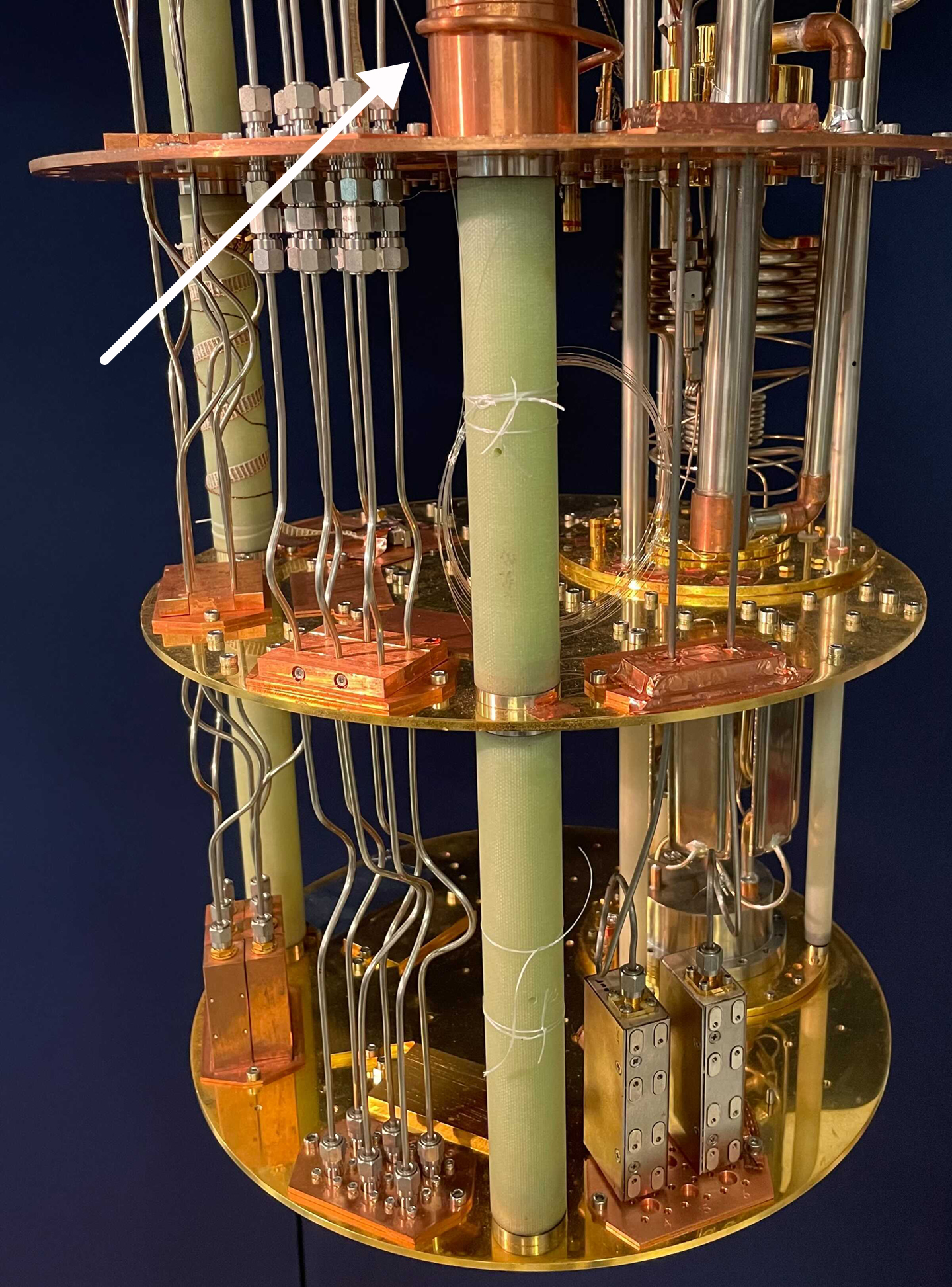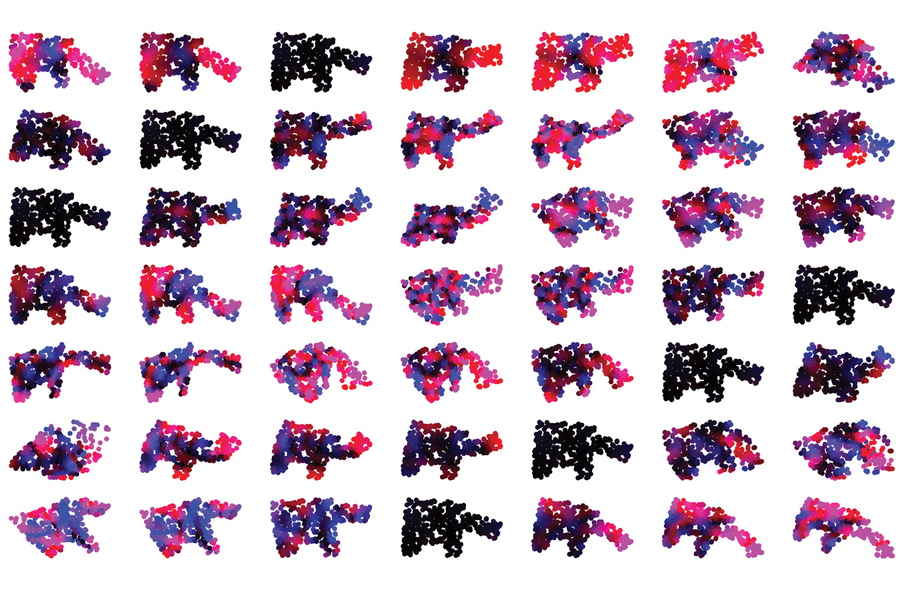
An illustration showing how highly nanostructured 3-D superconducting materials can be created based on DNA self-assembly.An illustration showing how highly nanostructured 3-D superconducting materials can be created based on DNA self-assembly.
A platform for making 3D superconducting nano-architectures with a prescribed organization could find application in quantum computing and sensing.
3-D nanostructured materials — those with complex shapes at a size scale of billionths of a meter — that can conduct electricity without resistance could be used in a range of quantum devices...
This image shows cells adhering to a titanium alloy created by cold-spray 3D printing, which demonstrates the material’s biocompatibility.
Forget glue, screws, heat or other traditional bonding methods. A Cornell University-led collaboration has developed a 3D printing technique that creates cellular metallic materials by smashing together powder particles at supersonic speed.
This form of technology, known as “cold spray,” results in mechanically robust, porous structures that are 40% stronger than similar materials made with conventional manufacturing processes. The structures’ small size and porosity make them particularly well-suited for building biomedical components, like replacement joints.
The team’s paper, “Solid-State Additive Manufacturing of Porous Ti-6Al-4V by Supe...
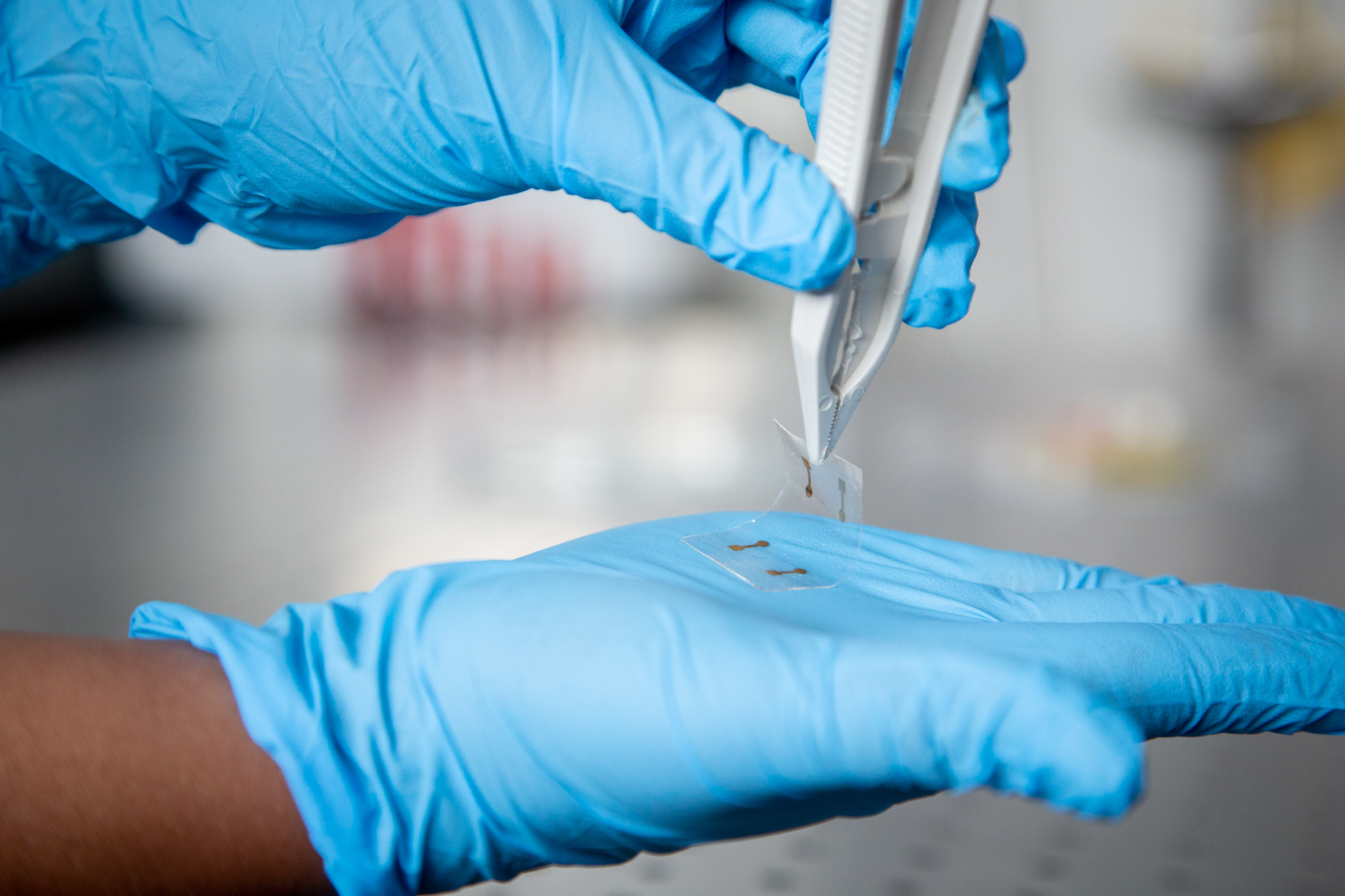
Georgia Tech principal research scientist Canek Fuentes-Hernandez holds rigid and flexible large-area organic photodiodes whose performance is comparable to that of silicon-based photodiodes. (Credit: Canek Fuentes-Hernandez, Georgia Tech)
The performance of flexible large-area organic photodiodes has advanced to the point that they can now offer advantages over conventional silicon photodiode technology, particularly for applications such as biomedical imaging and biometric monitoring that require detecting low levels of light across large areas.
The low-noise, solution-processed, flexible organic devices offer the ability to use arbitrarily shaped, large-area photodiodes to replace complex arrays that would be required with conventional silicon photodiodes, which can be expensive ...
This graphic depicts molybdenum disulfide growth on Gorilla glass, the process that turns normal glass into a photodetector. IMAGE: JENNIFER M. MCMANN – PENN STATE MATERIALS RESEARCH INSTITUTE
Though we may not always realize it, photodetectors contribute greatly to the convenience of modern life. Also known as photosensors, photodetectors convert light energy into electrical signals to complete tasks such as opening automatic sliding doors and automatically adjusting a cellphone’s screen brightness in different lighting conditions.
A new paper, published by a team of Penn State researchers in ACS Nano, seeks to further advance photodetectors’ use by integrating the technology with durable Gorilla glass, the material used for smart phone screens that is manufactured by Corning Incor...
Recent Comments