
Category Technology/Electronics

Cheap, Nontoxic Carbon Nanodots poised to be Quantum Dots of the Future

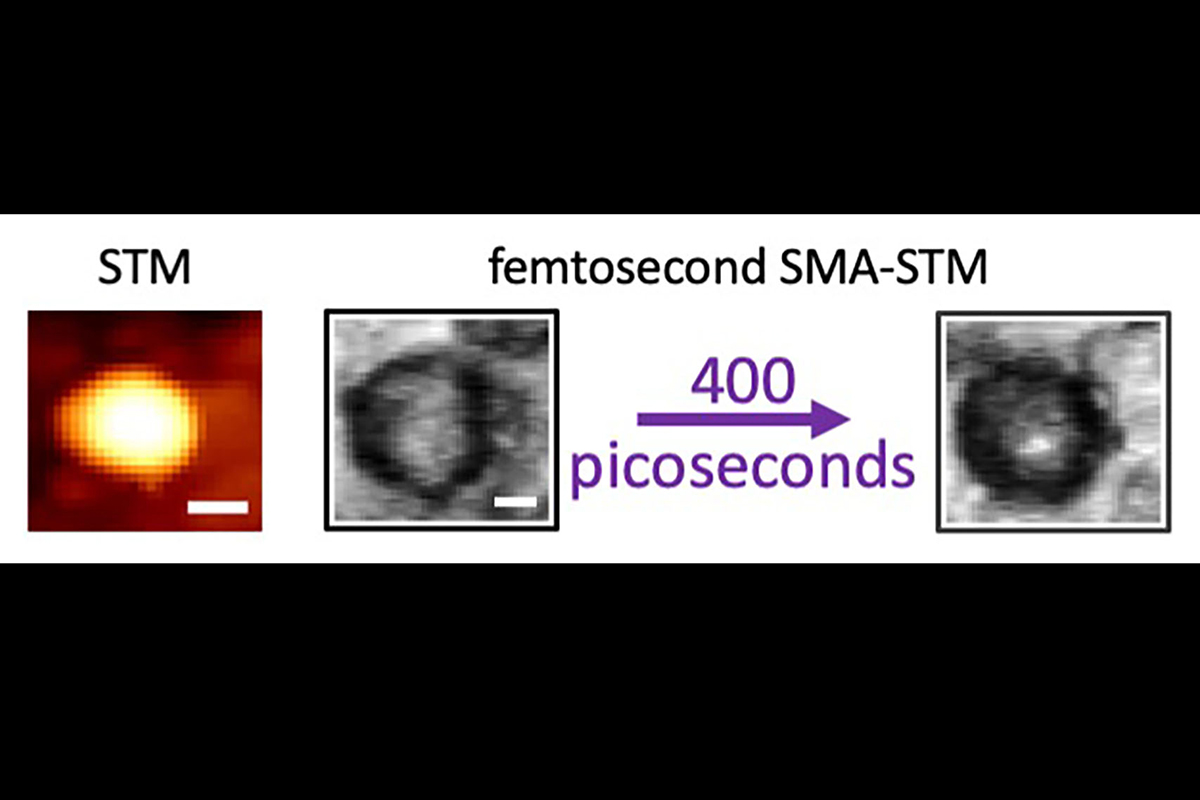
Tiny fluorescent semiconductor dots, called quantum dots, are useful in a variety of health and electronic technologies but are made of toxic, expensive metals. Nontoxic and economic carbon-based dots are easy to produce, but they emit less light. A new study that uses ultrafast nanometric imaging found good and bad emitters among populations of carbon dots. This observation suggests that by selecting only super-emitters, carbon nanodots can be purified to replace toxic metal quantum dots in many applications, the researchers said.

The findings, published in the Proceedings of the National Academy of Sciences, brought together researchers from the University of Illinois Urbana-Champaign and the University of Delaware, Baltimore County in a collaborative project through the Beckman ...

Read More
Life’s rich pattern: Researchers use Sound to Shape the Future of Printing

material swirling in a circle of speakers
Utrasound and computer algorithms control how material settles into shape

Researchers in the UK have developed a way to coax microscopic particles and droplets into precise patterns by harnessing the power of sound in air. The implications for printing, especially in the fields of medicine and electronics, are far-reaching.

The scientists from the Universities of Bath and Bristol have shown that it’s possible to create precise, pre-determined patterns on surfaces from aerosol droplets or particles, using computer-controlled ultrasound. A paper describing the entirely new technique, called ‘sonolithography’, is published in Advanced Materials Technologies.

Professor Mike Fraser from the Department of Computer Science at the University of Bath, explained: “The power of ultrasound h...

Read More

Speeding up Commercialization of Electric Vehicles

Speeding up commercialization of electric vehicles
Credit: Pohang University of Science & Technology (POSTECH)

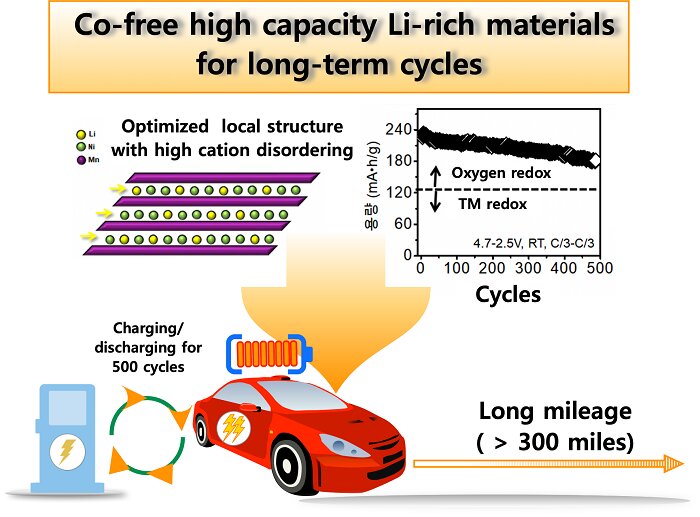
Professor Byoungwoo Kang develops a high-density cathode material through controlling local structures of the Li-rich layered materials.

Researchers in Korea have developed a high-capacity cathode material that can be stably charged and discharged for hundreds of cycles without using the expensive cobalt (Co) metal. The day is fast approaching when electric vehicles can drive long distances with Li- ion batteries.

The research team achieved this by controlling the local structure via developing the simple synthesis process for the Li-rich layered material that is attracting attention as the next-generation high-capacity cathode material...

Read More

‘Egg Carton’ Quantum Dot Array could lead to Ultralow Power Devices

An illustration of the egg crate electronic structure, shown between two mirrors so that the red laser light resonates. The polaritons, trapped in the pockets, are represented by the sum of their parts: a green exciton, with electron and hole shown inside, attached to a red lightwave. Even with just a few excitons in the wells, the energy required to add a new one begins to jump
  An illustration of the egg crate electronic structure, shown between two mirrors so that the red laser light resonates. The polaritons, trapped in the pockets, are represented by the sum of their parts: a green exciton, with electron and hole shown inside, attached to a red lightwave. Even with just a few excitons in the wells, the energy required to add a new one begins to jump. Credit: Long Zhang, Deng Lab, University of Michigan.

A new path toward sending and receiving information with single photons of light has been discovered by an international team of researchers led by the University of Michigan...

Read More