Category Technology/Electronics

Turning Faces into Thermostats: Autonomous HVAC system could provide more Comfort with Less Energy

Credit: Pixabay/CC0 Public Domain

As lockdown requirements ease, COVID-19 is changing the way we use indoor spaces. That presents challenges for those who manage those spaces, from homes to offices and factories.

Not least among these challenges is heating, ventilation and cooling (Heating, Ventilation, and Air Conditioning—HVAC), which is the largest consumer of energy in American homes and commercial buildings. There’s a need for smarter, more flexible climate control that keeps us comfortable without heating and cooling entire empty buildings.

Now, a group of researchers at the University of Michigan has developed a solution that could provide more efficient, more personalized comfort, completely doing away with the wall-mounted thermostats we’re accustomed to...

Read More

Beetle that can Survive in Volcanic Areas inspires new Cooling Materials

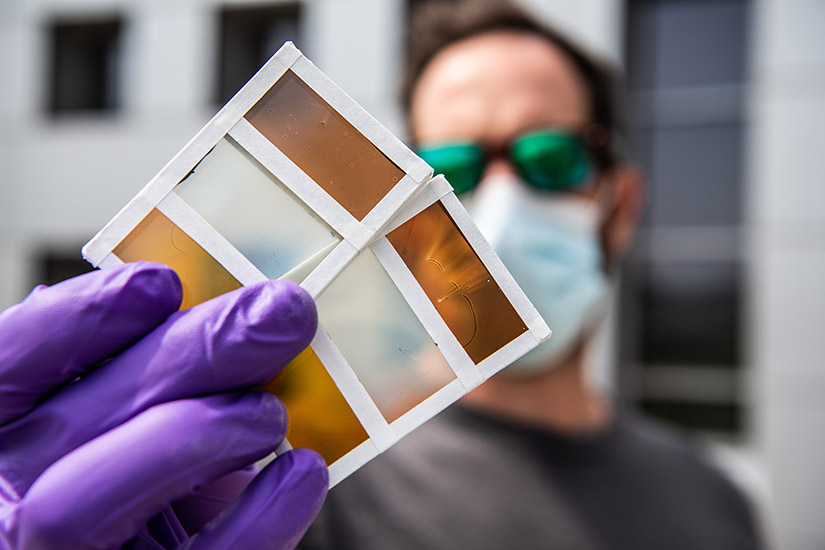
Photo of the fabricated Bio-RC film. Credit: University of Texas at Austin.

A type of beetle capable of regulating its body temperature in some of the hottest places on Earth is the centerpiece of new research with major potential implications for cooling everything from buildings to electronic devices in an environmentally friendly manner.

Researchers in the Cockrell School of Engineering at The University of Texas at Austin, with teams from Shanghai Jiao Tong University in China and KTH Royal Institute of Technology in Sweden, have discovered new information about a species of longicorn beetle that can cool its body enough to survive in volcanic areas in Southeast Asia...

Read More

Scientists apply ‘Twistronics’ to Light Propagation and make a Breakthrough Discovery

illustrated rendering of light propagation across two layers of molybdenum trioxide
A bilayer of molybdenum trioxide supports highly unusual light propagation along straight paths when the two layers are rotated with respect to each other at the photonic magic angle. (credit: ASRC)


Promising pathway for leapfrog advancement in imaging, optical-computing technologies, biosensing and more. A research team led by scientists at the Advanced Science Research Center at The Graduate Center, CUNY (CUNY ASRC), in collaboration with National University of Singapore, University of Texas at Austin and Monash University, has employed “twistronics” concepts (the science of layering and twisting two-dimensional materials to control their electrical properties) to manipulate the flow of light in extreme ways...

Read More

Engineers put Tens of Thousands of Artificial Brain Synapses on a Single chip

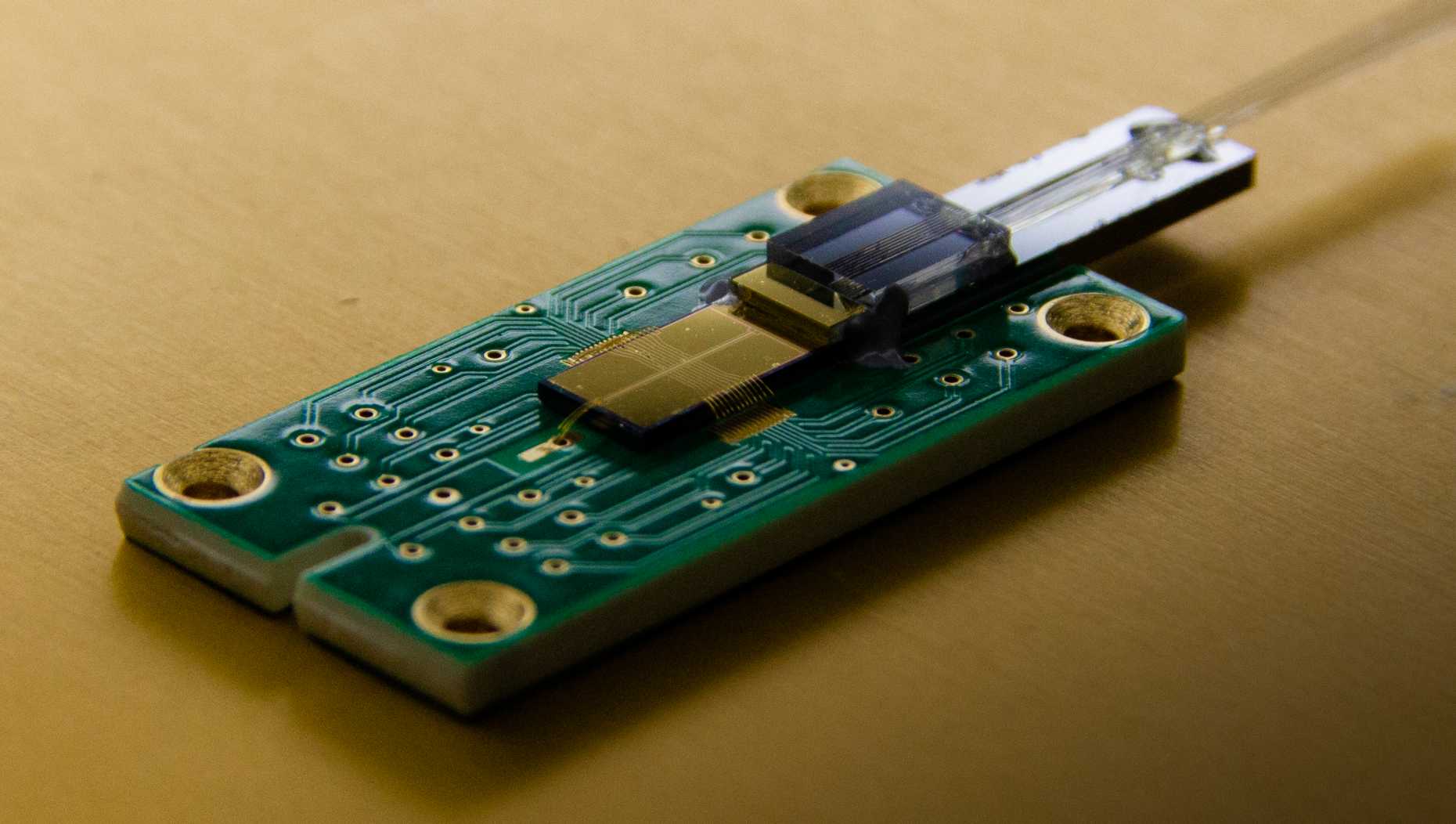
The new chip (top left) is patterned with tens of thousands of artificial synapses, or “memristors,” made with a silver-copper alloy. When each memristor is stimulated with a specific voltage corresponding to a pixel and shade in a gray-scale image (in this case, a Captain America shield), the new chip reproduced the same crisp image, more reliably than chips fabricated with memristors of different materials.
Image courtesy of the researchers

The design could advance the development of small, portable AI devices. MIT engineers have designed a “brain-on-a-chip,” smaller than a piece of confetti, that is made from tens of thousands of artificial brain synapses known as memristors — silicon-based components that mimic the information-transmitting synapses in the human brain.

The res...

Read More