MIT graduate student Will Langford developed a machine that’s like a cross between a 3-D printer and the pick-and-place machines that manufacture electronic circuits, but that can produce complete robotic systems directly from digital designs. (Video in “Related” sidebar below shows the assembly of a machine from five standard parts.) Photo by Will Langford
Mobile motor could pave the way for robots to assemble complex structures – including other robots. Researchers have assembled microrobots from a small set of standardized components, as a step toward self-replicating systems. Years ago, MIT Professor Neil Gershenfeld had an audacious thought...
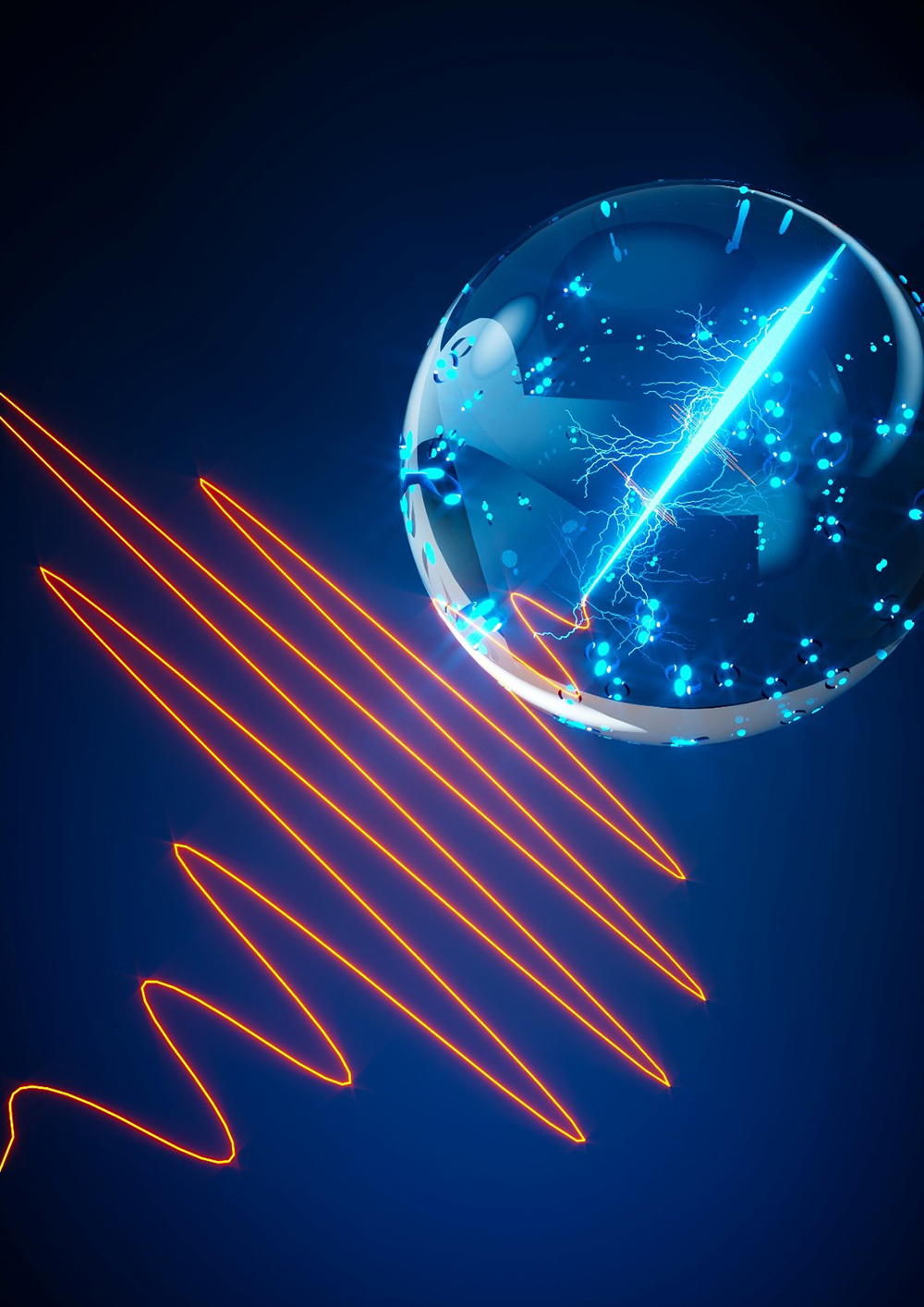
Jigang Wang and his collaborators have demonstrated light-induced acceleration of supercurrents, which could enable practical applications of quantum mechanics such as computing, sensing and communicating. Larger image.Image courtesy of Jigang Wang.
Scientists have discovered that terahertz light – light at trillions of cycles per second – can act as a control knob to accelerate supercurrents. That can help open up the quantum world of matter and energy at atomic and subatomic scales to practical applications such as ultrafast computing.
Jigang Wang patiently explained his latest discovery in quantum control that could lead to superfast computing based on quantum mechanics: He mentioned light-induced superconductivity without energy gap...
Schematic illustration of the sources of energy loss (inefficiency) and heat generation during inductive charging.
Researchers at WMG at the University of Warwick have found that use of inductive charging, whilst highly convenient, risks depleting the life of mobile phones using typical LIBs (Lithium-ion batteries).
Consumers and manufacturers have ramped up their interest in this convenient charging technology, abandoning fiddling with plugs and cables in a favour of just setting the phone directly on a charging base.
Standardisation of charging stations, and inclusion of inductive charging coils in many new smartphones has led to rapidly increasing adoption of the technology...
A new type of quasiparticle is discovered in graphene double-layer structure. This so-called composite fermion consists of one electron and two different types of magnetic flux, illustrated as blue and gold colored arrows in the figure. Composite fermions are capable of forming pairs, such unique interaction leads to experimental discovery of unexpected new quantum Hall phenomena.
Researchers from Brown and Columbia Universities have demonstrated previously unknown states of matter that arise in double-layer stacks of graphene, a 2D nanomaterial. These new states, known as the fractional quantum Hall effect, arise from the complex interactions of electrons both within and across graphene layers.
“The findings show that stacking 2D materials together in close proximity generates en...






Recent Comments