A new AI agent developed by researchers at the University of Texas at Austin takes a few “glimpses” of its surroundings, representing less than 20 percent of the full 360 degree view, and infers the rest of the whole environment. What makes this system so effective is that it’s not just taking pictures in random directions but, after each glimpse, choosing the next shot that it predicts will add the most new information about the whole scene. Credit: David Steadman/Santhosh Ramakrishnan/University of Texas at Austin.
Computer scientists at The University of Texas at Austin have taught an artificial intelligence agent how to do something that usually only humans can do – take a few quick glimpses around and infer its whole environment, a skill necessary for the development o...
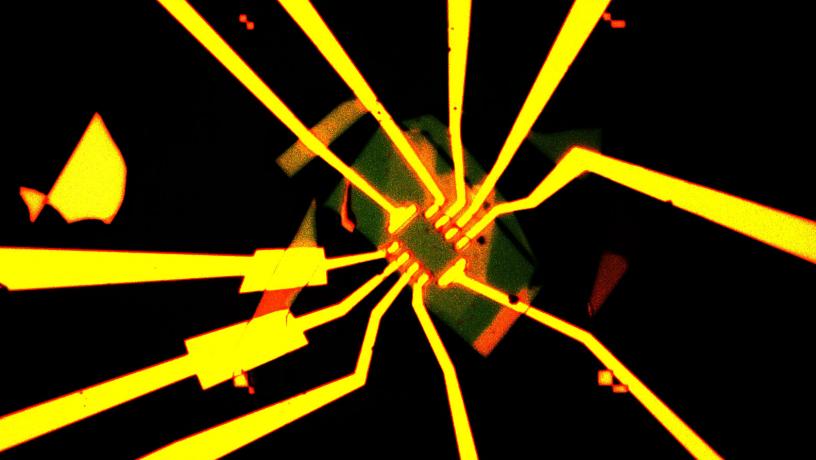
An enhanced optical microscope image of a Hall-bar structure used to characterize transistor properties for devices made with ultraclean transferred contacts. The long radial lines, made from deposited gold, connect the small contacts at the center of the device to large probe pads for easy measurements.
Columbia Engineering researchers report that they have demonstrated a nearly ideal transistor made from a 2D material stack – with only a two-atom-thick semiconducting layer – by developing a completely clean and damage-free fabrication process. Their method shows vastly improved performance compared to 2D semiconductors fabricated with a conventional process, and could provide a scalable platform for creating ultra-clean devices in the future.
The invention uses magnets to record computer data which consume virtually zero energy, solving the dilemma of how to create faster data processing speeds without the accompanying high energy costs. Today’s data centre servers consume between 2 to 5% of global electricity consumption, producing heat which in turn requires more power to cool the servers.
The problem is so acute that Microsoft has even submerged hundreds of its data centre services in the ocean in an effort to keep them cool and cut costs. Most data are encoded as binary information (0 or 1 respectively) through the orientation of tiny magnets, called spins, in magnetic hard-drives...
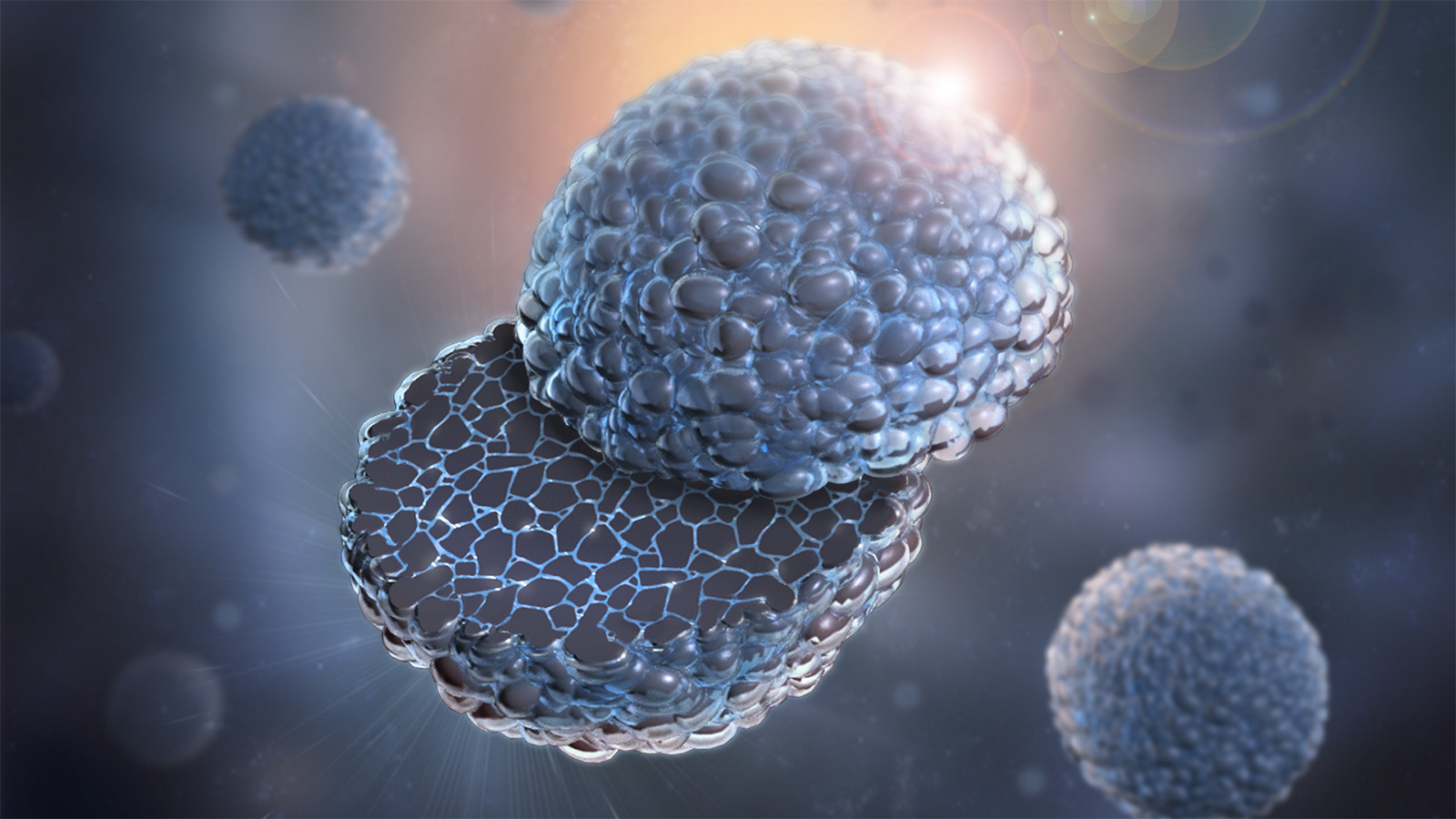
Argonne scientists have developed a new coating (shown in blue) for battery cathodes that can improve the electronic and ionic conductivity of a battery while improving its safety and cycling performance. (Image by Argonne National Laboratory.)
Coating provides extra layer of protection for battery cathodes. Scientists have developed a new cathode coating by using an oxidative chemical vapor deposition technique. It can keep a battery’s cathode electrically and ionically conductive and ensures that the battery stays safe after many cycles. “The coating we’ve discovered really hits five or six birds with one stone.” Khalil Amine, Argonne distinguished fellow and battery scientist.
In the research, Amine and his fellow researchers took particles of Argonne’s pioneering nickel-mangan...







Recent Comments