Category Technology/Electronics

AI model uses glucose spikes to reveal hidden diabetes risk before symptoms appear

AI model detects hidden diabetes risk by reading glucose spikes
Multimodal data collection in PROGRESS. Credit: Nature Medicine (2025). DOI: 10.1038/s41591-025-03849-7

To diagnose either type 2 diabetes or pre-diabetes, clinicians typically rely on a lab value known as HbA1c. This test captures a person’s average blood glucose levels over the previous few months. But HbA1c cannot predict who is at highest risk of progressing from healthy to prediabetic, or from prediabetic to full-blown diabetes.

Now, scientists at Scripps Research have discovered that artificial intelligence can use a combination of other data—including real-time glucose levels from wearable monitors—to provide a more nuanced view of diabetes risk.

The new model, described in Nature Medicine, uses continuous glucose monitor (CGM) data alongside gut microbiome, diet, ph...

Read More

Freestanding hafnium zirconium oxide membranes can enable advanced 2D transistors

A strategy to integrate hafnium zirconium oxide membranes into 2D transistors as high-k dielectrics
Fabrication and characterization of ferroelectric freestanding HZO membranes. Credit: Nature Electronics (2025). DOI: 10.1038/s41928-025-01398-y

To further reduce the size of electronic devices, while also improving their performance and energy efficiency, electronics engineers have been trying to identify alternative materials that outperform silicon and other conventional semiconductors. Two-dimensional (2D) semiconductors, materials that are just a few atoms thick and have a tunable electrical conductivity, are among the most promising candidates for the fabrication of smaller and better performing devices.

Past studies showed that these materials could be used to fabricate miniaturized transistors, electronic components that amplify or switch electrical signals, particularly f...

Read More

Physicists discover new state of quantum matter

Professor Luis Jauregui
Professor Luis Jauregui of the UC Irvine Department of Physics & Astronomy described how the new material he and his lab developed only exists in their labs. Steve Zylius / UC Irvine

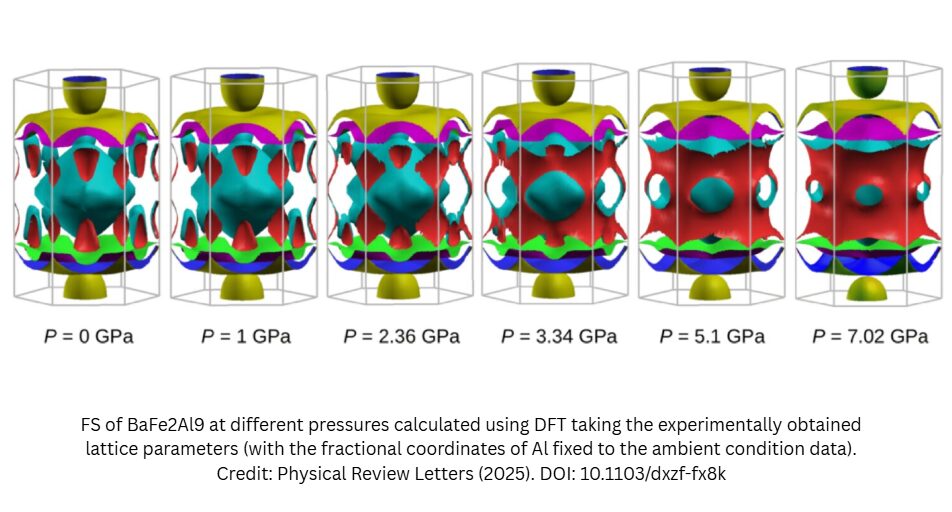
Researchers at the University of California, Irvine have discovered a new state of quantum matter. The state exists within a material that the team reports could lead to a new era of self-charging computers and ones capable of withstanding the challenges of deep space travel.

“It’s a new phase of matter, similar to how water can exist as liquid, ice or vapor,” said Luis A. Jauregui, professor of physics & astronomy at UC Irvine and corresponding author of the new paper in Physical Review Letters.

“It’s only been theoretically predicted—no one has ever measured it until now.”

This new phase is li...

Read More

Quantum internet moves closer as researchers teleport light-based information

Study demonstrates quantum teleportation from telecom photons to an erbium ion-based quantum memory
Quantum teleportation from telecom photons to erbium-ion ensembles. Credit: Group of Prof. Xiao-Song Ma at Nanjing University.

Quantum teleportation is a fascinating process that involves transferring a particle’s quantum state to another distant location, without moving or detecting the particle itself. This process could be central to the realization of a so-called “quantum internet,” a version of the internet that enables the safe and instant transmission of quantum information between devices within the same network.

Quantum teleportation is far from a recent idea, as it was experimentally realized several times in the past. Nonetheless, most previous demonstrations utilized frequency conversion rather than natively operating in the telecom band.

Researchers at Nanjing Univer...

Read More