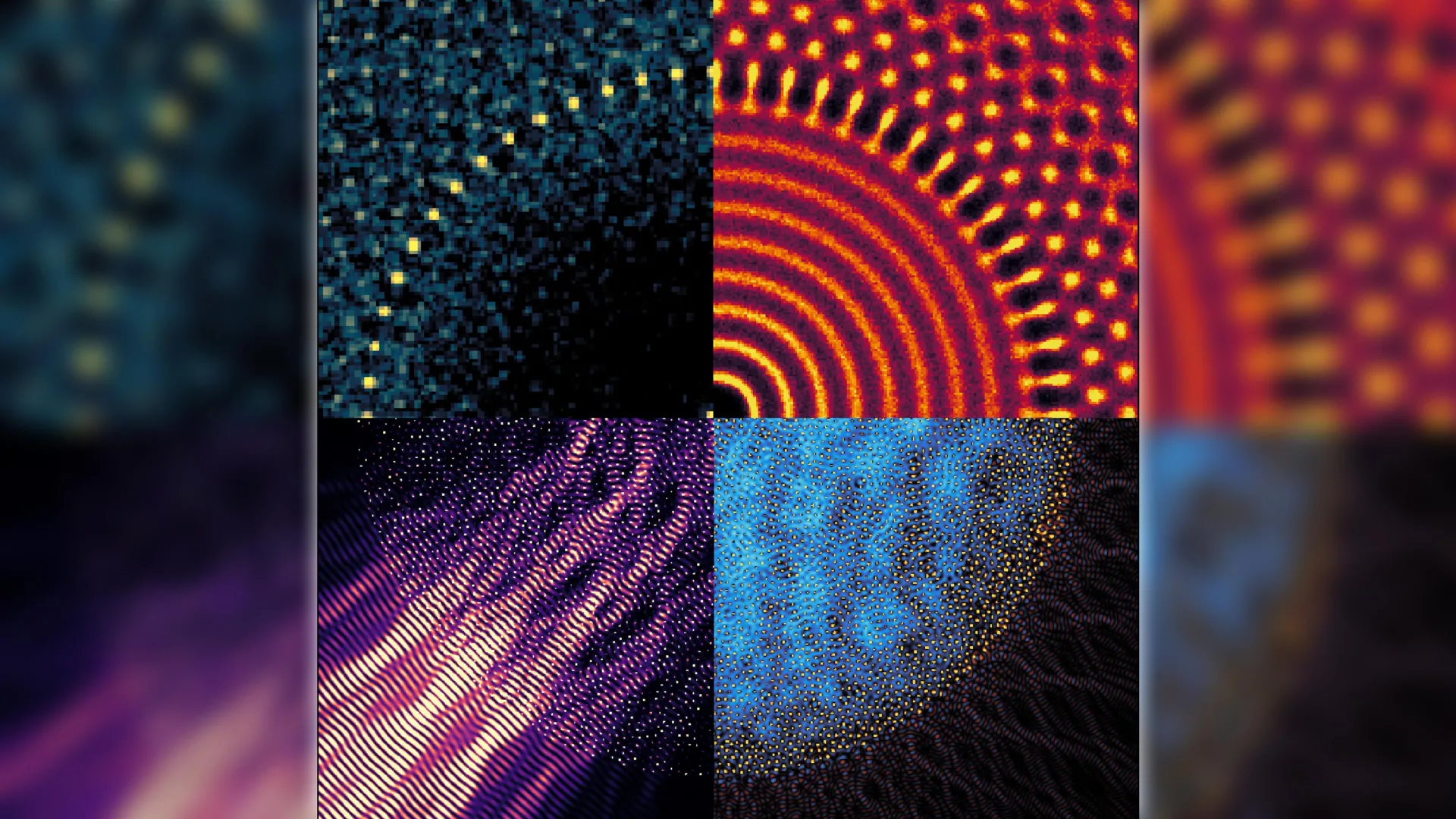
Image comparing the lossless compression rates of LMCompress with the traditional state-of-the-art methods and the large-model-based method that was proposed independently by a DeepMind-Meta&INRIA team. The comparison is done on four types of data: image, video, audio, and text. It shows that LMCompress consistently outperforms the others on all data types. Note that the DeepMind result on video is not available. Credit: Li et al.
People store large quantities of data in their electronic devices and transfer some of this data to others, whether for professional or personal reasons. Data compression methods are thus of the utmost importance, as they can boost the efficiency of devices and communications, making users less reliant on cloud data services and external storage devices.
To compute faster, a predictor in the computer processor anticipates certain calculation steps. Hackers can exploit these anticipations to bypass security barriers and access confidential information. In the illustration, a hacker manages to overcome the protective measures (privileges) at step 3. Credit: ETH Zurich / COMSEC, HK
Anyone who speculates on likely events ahead of time and prepares accordingly can react quicker to new developments. What practically every person does every day, consciously or unconsciously, is also used by modern computer processors to speed up the execution of programs. They have so-called speculative technologies which allow them to execute instructions on reserve that experience suggests are likely to come next...
Prof. Thomas F. Fässler in his laboratory at the Chair of Inorganic Chemistry with a Focus on Novel Materials. Credit: Wenzel Schuermann / TUM
Researchers at TUM and TUMint.Energy Research have taken a significant step towards improving solid-state batteries. They developed a new material made of lithium, antimony and scandium that conducts lithium ions more than 30% faster than any previously known material. The work is published in the journal Advanced Energy Materials.
The team led by Prof. Thomas F. Fässler from the Chair of Inorganic Chemistry with a Focus on Novel Materials partially replaced lithium in a lithium antimonide compound with the metal scandium. This creates specific gaps, so-called vacancies, in the crystal lattice of the conductor material...
MIGHTY MORPHING: “MagicTime is a step toward AI that can better simulate the physical, chemical, biological, or social properties of the world around us,” says computer science PhD student Jinfa Huang. (University of Rochester GIF created using MagicTime)
Using time-lapse videos as training data, computer scientists have developed video generators that simulate the physical world more accurately. While text-to-video artificial intelligence models like OpenAI’s Sora are rapidly metamorphosing in front of our eyes, they have struggled to produce metamorphic videos. Simulating a tree sprouting or a flower blooming is harder for AI systems than generating other types of videos because it requires the knowledge of the physical world and can vary widely.
Recent Comments