Category Technology/Electronics

AI thinks like us—flaws and all: Study finds ChatGPT mirrors human decision biases in half the tests

AI bias
Credit: AI-generated image

Can we really trust AI to make better decisions than humans? A new study says … not always. Researchers have discovered that OpenAI’s ChatGPT, one of the most advanced and popular AI models, makes the same kinds of decision-making mistakes as humans in some situations—showing biases like overconfidence of hot-hand (gambler’s) fallacy—yet acting inhuman in others (e.g., not suffering from base-rate neglect or sunk cost fallacies).

Published in the Manufacturing & Service Operations Management journal, the study reveals that ChatGPT doesn’t just crunch numbers—it “thinks” in ways eerily similar to humans, including mental shortcuts and blind spots...

Read More

New superconducting state discovered: Cooper-pair density modulation

Superconductivity is a quantum physical state in which a metal is able to conduct electricity perfectly without any resistance. In its most familiar application, it enables powerful magnets in MRI machines to create the magnetic fields that allow doctors to see inside our bodies. Thus far, materials can only achieve superconductivity at extremely low temperatures, near absolute zero (a few tens of Kelvin or colder).

But physicists dream of superconductive materials that might one day operate at room temperature. Such materials could open entirely new possibilities in areas such as quantum computing, the energy sector, and medical technologies.

“Understanding the mechanisms leading to the formation of superconductivity and discovering exotic new superconducting phases is not only...

Read More

A safe nuclear battery that could last a lifetime

A safe nuclear battery that could last a lifetime
A small dye-sensitized betavoltaic cell has radiocarbon on both the cathode and anode, which increases its energy-conversion efficiency. Credit: Su-Il In

Sometimes cell phones die sooner than expected or electric vehicles don’t have enough charge to reach their destination. The rechargeable lithium-ion (Li-ion) batteries in these and other devices typically last hours or days between charging. However, with repeated use, batteries degrade and need to be recharged more frequently.

Now, researchers are considering radiocarbon as a source for safe, small and affordable nuclear batteries that could last decades or longer without charging.

Su-il In, a professor at Daegu Gyeongbuk Institute of Science & Technology, presents his results at the spring meeting of the American Chemical Soc...

Read More

Supercomputing memory management tool makes data storage more efficient

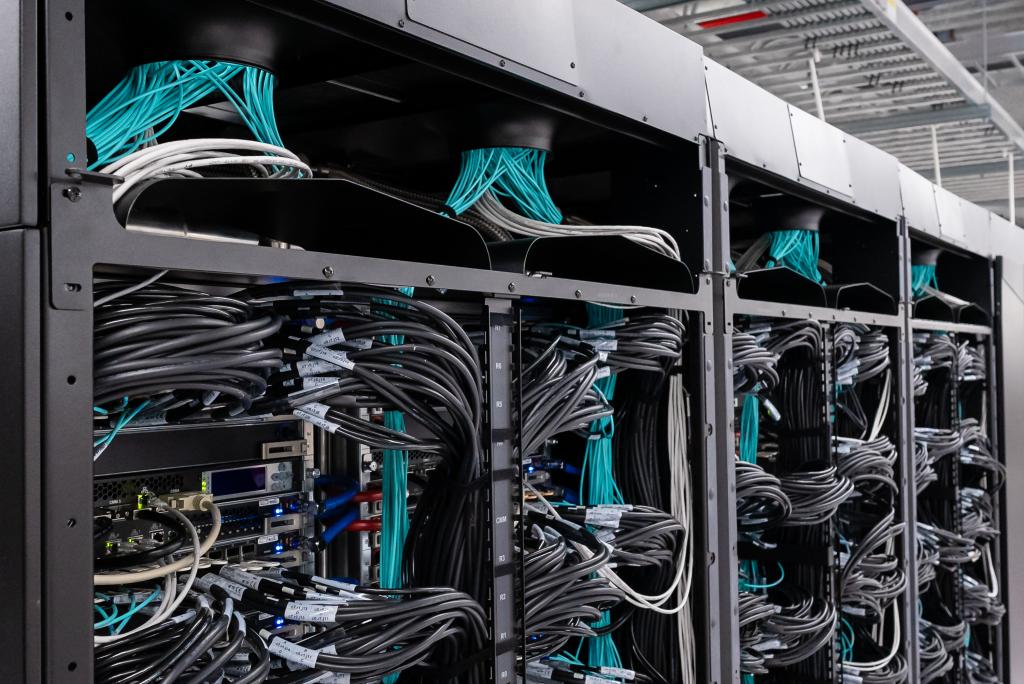
Wall of black computer chords with blue wiring

Researchers from the Department of Energy’s Oak Ridge National Laboratory have developed a new application to increase efficiency in memory systems for high-performance computing.

Rather than allow data to bog down traditional memory systems in supercomputers and impact performance, the team from ORNL, along with researchers from the University of Tennessee, Knoxville, created a framework to manage data more efficiently with memory systems that employ more complex structures. Research papers detailing their work were recently accepted in ACM Transactions on Architecture and Code Optimization and the International Journal of High-Performance Computing Applications.

Working under the Exascale Computing Project, or ECP, a multi-year software research, development and deployment pro...

Read More